
Pink Floyd’s Quiet Farewell to Syd
The meaning of Shine On You Crazy Diamond, Pts. 6-9 Pink Floyd becomes clearer when they hear it as the album’s last goodbye. These closing sections of Wish You Were Here do not just repeat the opening idea. They deepen it.
"Shine On You Crazy Diamond, Pts. 6-9" - Pink Floyd
How near or how far
Shine on, you crazy diamond
Loading lyrics...
Unable to load lyrics
We're unable to display the lyrics at this time. Please try again later.
Factually, the nine-part composition appeared on Pink Floyd’s 1975 album Wish You Were Here, with Parts VI–IX closing side two, and it is widely understood as a tribute to former bandmate Syd Barrett, whose decline haunted the group’s history. The basic release and recording details are well documented in standard references on the song and album history.[1]
What These Final Parts Are Really Saying
At the simplest level, Parts 6–9 turn grief into a send-off. Earlier sections of the suite introduce Barrett as a lost figure. Here, the band sounds less shocked and more accepting.
That shift matters. The words are brief, but they frame Barrett as someone both loved and unreachable. When the song returns to Shine on
, it is not a demand for a comeback. It sounds more like a blessing.
Interpretation: these sections are about memory after the damage is done. They hold two ideas at once: Barrett was brilliant, and Barrett was slipping away. The music lets both truths sit together.
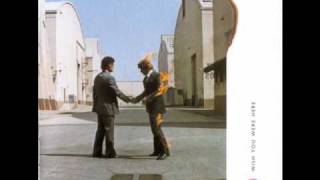
Watch the official Shine On You Crazy Diamond, Pts. 6-9
music video
A Portrait of Someone Near and Far
The lyric writing in Part VII is direct but still careful. The speaker addresses a person who cannot quite be reached. Phrases like How near or how far
and you boy child
make Barrett feel both intimate and distant.
That balance is central to the song’s emotion. They are not talking about an abstract fallen star. They are talking to someone they knew.
Another key line, winner and loser
, captures the contradiction. Barrett is remembered as gifted and important, but also as someone crushed by pressure, illness, and disconnection. The suite refuses to turn him into only a hero or only a tragedy.
How the Ending of the Album Changes the Meaning
Because Parts VI–IX close Wish You Were Here, they also close the album’s larger themes of absence, alienation, and the music business. The album starts with distance and ends with ritual.
One especially telling image is the shadow of yesterday’s triumph
. In plain terms, it suggests living under the weight of former greatness. That applies to Barrett, but it also reflects Pink Floyd’s own discomfort with success after The Dark Side of the Moon.
Interpretation: the song is not only about Barrett as an individual. It is also about what happens when inspiration becomes memory, and when fame leaves people emotionally stranded.
Why the Music Feels Like a Eulogy
The production carries much of the meaning. Parts VI–IX begin by flowing out of the title track’s wind effect, which makes the album feel continuous rather than broken apart.[1]
From there, the arrangement moves through several moods:
- a spacious bass-led opening
- a long lap steel solo from David Gilmour
- a tighter, funk-leaning groove in Part VIII
- a slow, solemn close in Part IX
That final move is crucial. David Gilmour described Part IX as a funeral march
and a musical farewell to Syd.[1] That short comment is one of the clearest factual clues to intent.
The lap steel in Part VI sounds searching and wordless, almost like a voice trying to reach someone beyond language. Richard Wright’s keyboards answer and surround it, giving the section a drifting, dreamlike feel. Then Part VIII briefly becomes more physical and grounded, as if life and movement return for a moment.
After that, the suite settles into resignation. Part IX does not explode. It recedes. That choice makes the grief feel mature rather than dramatic.
The Barrett Context Behind the Emotion
The history around the recording adds weight, though the song stands on its own. During the Wish You Were Here sessions at Abbey Road in 1975, Syd Barrett unexpectedly visited the studio. Accounts from band members describe how changed he looked and how upsetting the moment was, especially because he appeared while they were working on material about him.[1]
That story matters because it shows this was not a myth invented later. Barrett was a living emotional presence in the room.
Still, readers should separate fact from inference. It is a fact that the suite is connected to Barrett and that the studio visit happened during those sessions.[1] It is interpretation to say every musical detail mirrors that meeting. What can be said with confidence is that the song’s sadness matches the band’s public memories of him.
A Small Musical Ghost at the End
One of the most moving details is near the fade, when the keyboards briefly quote Barrett’s See Emily Play melody.[1] It passes quickly, but it changes the ending.
Instead of closing on pure abstraction, Pink Floyd leave a trace of the younger Barrett behind. It is like a memory surfacing at the edge of silence.
That is why the meaning of Shine On You Crazy Diamond, Pts. 6-9 Pink Floyd feels so lasting. These final movements do not try to solve Barrett. They honor the brilliance, the loss, and the distance left behind.
The Last Takeaway
Parts 6–9 work as Pink Floyd’s quiet act of mourning. The lyrics are sparse, but the arrangement says what words cannot: affection remains even when connection is gone.
For many listeners, that is why this ending hits so hard. It sounds like they are not asking Barrett to return. They are simply letting him be remembered.
Disclaimer: Song meaning is always part fact, part interpretation. This reading is based on documented context and the music itself, but listeners may hear different layers in the song.








