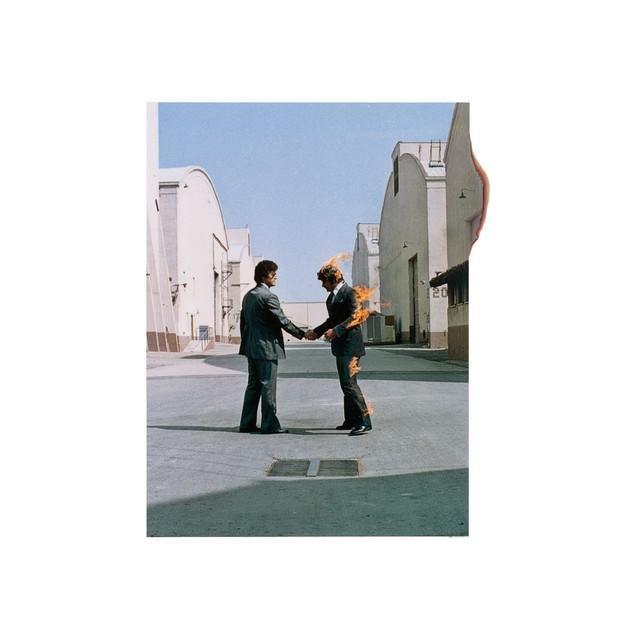
Wish You Were Here by Pink Floyd
Pink Floyd turned a simple acoustic song into one of rock’s clearest statements about absence: missing a person, missing yourself, and missing real life while still living it.
"Wish You Were Here" - Pink Floyd
Provided by LyricFind(Yes, and disciplinary remains mercifully)
(Yes, and um, I'm with you Derek, this star nonsense)
(Yes, yes)Loading...Loading lyrics...
Unable to load lyrics
We're unable to display the lyrics at this time. Please try again later.
Why the meaning of Wish You Were Here Pink Floyd still matters
The meaning of Wish You Were Here Pink Floyd starts with absence. On the surface, the song sounds like a message to someone who is gone. But its deeper power comes from how many kinds of absence it holds at once: emotional distance, lost friendship, burnout, and the fear of becoming numb.
Factually, the song was released on 12 September 1975 as the title track of the album Wish You Were Here, written by David Gilmour and Roger Waters and produced by Pink Floyd. It was recorded at Abbey Road during sessions shaped by pressure after The Dark Side of the Moon became a huge success. Sources describing those sessions and the song’s background include American Songwriter and standard reference summaries in the provided research.
The track is often linked to former bandmate Syd Barrett. That reading is strongly supported by the album’s wider concept and by David Gilmour’s comments that he cannot sing it without thinking of Barrett. Still, Roger Waters later explained that the song also spoke to a broader struggle: staying engaged with life instead of drifting into comfort or emotional shutdown.

Watch the official Wish You Were Here
music video
A song about missing someone—and missing reality
The first verse is built from questions. Instead of giving answers, the song asks whether a person can still tell truth from illusion, joy from pain, or freedom from confinement. Short phrases like Heaven from hell
and a smile from a veil
are not just poetic contrasts. They suggest a mind trying to test what is real.
Interpretation: This is one reason the song reaches beyond a single tribute. It is not only asking where a lost friend has gone. It is asking what happens when people stop feeling fully present in their own lives.
That idea becomes sharper in the next set of questions. The lyric about trading your heroes for ghosts
and accepting a lead role in a cage
paints compromise as a kind of spiritual trap. Waters said in The Story of Wish You Were Here that he wrote songs partly to encourage himself not to accept that kind of trapped life. In that sense, the song is both mourning and self-warning.
Syd Barrett is central, but not the only answer
Any article on this song should be clear about the facts. Pink Floyd’s history with Syd Barrett matters here. Barrett was the band’s original frontman, and after mental health struggles and heavy LSD use, he became absent from the group’s creative life years before this album. The Wish You Were Here album repeatedly circles that absence, especially in “Shine On You Crazy Diamond.”
A famous studio moment deepened that connection. During the 1975 sessions, Barrett unexpectedly visited Abbey Road, and his changed appearance reportedly shocked the band. That story has become part of how listeners hear the title track.
Interpretation: Even so, reducing the song to “only about Syd” makes it smaller than it is. Gilmour’s emotional link to Barrett gives the performance its ache, while Waters’ words widen the target. The song can speak to a lost friend, a broken self, or anyone who feels emotionally unreachable.
The chorus turns loneliness into something universal
The chorus is one of the simplest in rock, and that simplicity is the point. The brief line Wish you were here
sounds almost ordinary. But after the verses question reality itself, that plain sentence lands with unusual weight.
The image of two lost souls
keeps the song from sounding superior or preachy. The singer is not standing above the missing person. They are in the same trap, circling the same fears. That shared weakness is why the song feels intimate instead of dramatic.
We're just two lost souls
Swimming in a fishbowl
Year after year
In just a few words, the song turns private grief into a picture of routine, repetition, and emotional confinement. They are not simply separated by distance. They are stuck in patterns.
How the music makes distance audible
Part of the song’s genius is in the arrangement. According to the research provided, the opening guitar was processed to sound like an AM radio, reportedly sourced from Gilmour’s car radio before the fuller acoustic enters. That production choice matters because it stages the song as something half-heard, distant, and fragile.
Gilmour later called it a very simple country song
, and that plainness helps. The acoustic strumming, relaxed tempo, and unforced vocal make the emotion feel human rather than theatrical. The band avoids a huge climax. Instead, they let the melody carry resignation and warmth at the same time.
There are also subtle details in the full recording: keyboard color from Richard Wright, restrained drumming from Nick Mason, and even a faint violin contribution by Stéphane Grappelli in the outro on some versions. None of this crowds the song. The arrangement leaves space, which fits a song about someone not being fully there.
Why the song still endures
The song remains one of Pink Floyd’s most celebrated recordings, appearing high in major rankings and staying central to the band’s legacy. Its lasting appeal comes from that double meaning. It is specific enough to feel personal, yet open enough to fit many losses.
For some listeners, it is about Barrett. For others, it is about depression, friendship, fame, or the deadening comfort of modern life. Those readings can all coexist because the lyric is carefully built from questions, not fixed answers.
The lasting takeaway
The meaning of Wish You Were Here Pink Floyd is not just homesickness for a person. It is grief for connection itself. The song asks what people lose when they trade presence for habit, sincerity for appearance, or risk for safety.
That is why it still hurts decades later. It misses someone, yes, but it also fears becoming someone who is no longer fully there.
Disclaimer: This interpretation combines documented artist context with informed reading of the lyrics and sound. Like many great songs, “Wish You Were Here” remains open to more than one valid meaning.