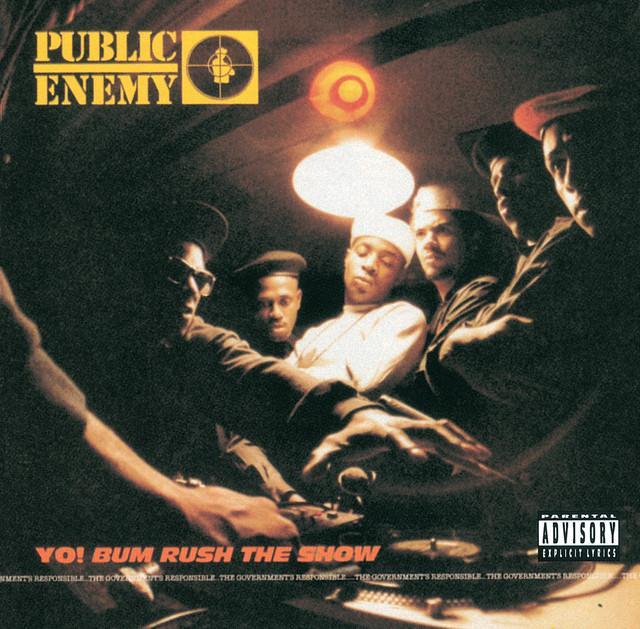
Too Much Posse by Public Enemy
A rough early warning from Public Enemy
The meaning of Too Much Posse Public Enemy starts with a simple idea: power gets scary when it comes from numbers, loyalty, and fear instead of trust. On the song, they describe a world where groups move like street armies. If someone is outside that group, they are exposed.
"Too Much Posse" - Public Enemy
A force so strong that you can't resist
You may as well join'em, you know you can't beat'em
Loading lyrics...
Unable to load lyrics
We're unable to display the lyrics at this time. Please try again later.
This matters because Public Enemy were never just another rap act. The group formed in the mid-1980s and became known for combining hard beats with social and political focus. Their debut album Yo! Bum Rush the Show arrived in 1987, before the bigger breakthroughs that made them legends. In that early phase, they were already interested in force, systems, and control, even when the writing was framed as neighborhood storytelling.
Watch the official Too Much Posse
music video
What the song is about beneath the surface
On the surface, “Too Much Posse” is about crews. The hook keeps stressing that some people have too much posse
, meaning they have overwhelming backup. The song shows how that changes everything.
In the first verse, they paint a picture of a local network that seems impossible to challenge. The line about join'em
because you can't beat'em
suggests that power has become self-reinforcing. People are not joining out of love. They are joining to survive.
Interpretation: this can be heard as a street-level lesson about intimidation. But it also fits a larger Public Enemy theme: institutions and groups often protect themselves by making resistance feel useless.
How the story unfolds line by line
The song works in two parts.
Verse one: a system built on fear
The first half sounds almost like a report from inside a hostile neighborhood order. They mention money, pressure, and punishment. A phrase like beat down
makes the stakes plain. If someone refuses the rules, violence or humiliation follows.
The line about the system is down by law
is especially interesting. It sounds like normal authority has failed, or has been replaced by another kind of order. Instead of justice, there is muscle. Instead of fairness, there is a crew economy.
Interpretation: they may be saying that once official systems lose credibility, unofficial powers rush in to fill the gap.
Verse two: a private moment turns public fast
The second half shrinks the story to one room and one social mistake. A party scene turns tense when a woman’s boyfriend and his crew burst in. Suddenly, personal drama becomes group conflict.
my homeboy came
pulled out a gun
we got posse
That short moment sums up the song’s worldview. One confrontation triggers another. Nobody stands alone. The answer to one posse is another posse.
Why the chorus matters so much
The hook is repetitive on purpose. By the time they keep saying too much posse
, it stops sounding playful and starts sounding like a warning siren.
That repetition gives the song its main point: numbers become a kind of weapon. The chorus does not celebrate unity in a healthy sense. It highlights imbalance. One side has too many people, too much reach, and too much confidence.
This is part of what makes the meaning of Too Much Posse Public Enemy more uneasy than triumphant. Even when the delivery is lively, the message is tense.
Sound, production, and why it feels confrontational
The song was written by Carlton Ridenhour, William Drayton, and Hank Shocklee. That matters because Shocklee was central to the production style that helped define Public Enemy’s early sound. The group’s wider catalog became famous for dense, aggressive production, often linked to the Bomb Squad’s collage-like approach.
Even on an earlier track like this one, the feel is already hard-edged. The beat pushes forward instead of relaxing. The vocal delivery is blunt and declarative. There is little softness in the performance, which fits the song’s message about pressure and escalation.
Public Enemy’s music has often been described by critics as ferocious and layered, with influences from funk, noise, and experimental collage. That larger context helps explain why “Too Much Posse” does not sound like a casual party record, even when the second verse begins at a party. The production turns social space into conflict space.
Artist context sharpens the meaning
Public Enemy later became one of hip-hop’s most influential groups, known for political messages and confrontational sound. That later reputation can shape how listeners hear this song now.
It would be a mistake to call “Too Much Posse” one of their major political statements. Factually, it is an early album cut, and it works first as a street narrative. Still, their broader body of work makes the song feel like an early sketch of ideas they would expand later: power blocs, pressure from the crowd, and the danger of systems built on fear.
Interpretation: the posse here can stand for more than a literal crew. It can represent any group that gains enough force to make individuals feel small.
Final takeaway on the song’s message
The meaning of Too Much Posse Public Enemy is about what happens when group power becomes its own law. Through two scenes, one public and one personal, they show how intimidation spreads and how quickly conflict multiplies when everyone arrives with backup.
What makes the song memorable is not just the story. It is the mood: crowded, tense, and unstable. Public Enemy turn the idea of having people around you into something dangerous rather than comforting.
Disclaimer: This article offers a good-faith interpretation based on the lyrics, recording context, and Public Enemy’s broader style. Song meaning can remain open to listener interpretation.







