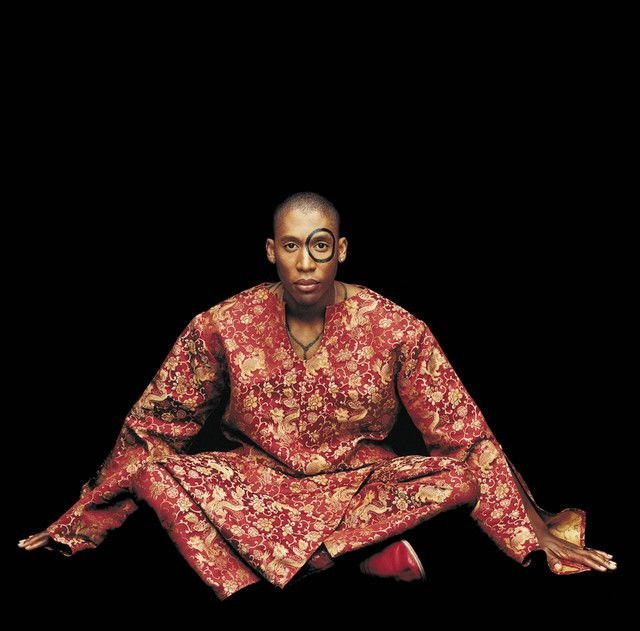
Be Here by Raphael Saadiq
The meaning of Be Here Raphael Saadiq starts with a simple plea: someone is absent, and their absence turns everyday life into a fantasy. On the surface, the song is bluntly seductive. But under that flirtation, it is also about loneliness, ego, and the need to be wanted back.
"Be Here" - Raphael Saadiq
You should be here with me, baby
You should be here with me, baby
Loading lyrics...
Unable to load lyrics
We're unable to display the lyrics at this time. Please try again later.
Released in 2002 during Saadiq’s Instant Vintage era, “Be Here” was issued as a duet with D’Angelo and later earned Grammy nominations for Best R&B Song and Best Urban/Alternative Performance, a sign of how strongly it landed in the neo-soul moment. Saadiq’s broader career context matters too. As a member of Tony! Toni! Toné! and later a solo artist and producer, he built a reputation for modern songs shaped by classic soul textures, as noted in his career overview.
A Love Song That Sounds Like a Demand
At its core, “Be Here” is a song about craving physical and emotional closeness so intensely that desire spills into persuasion. The repeated hook, You should be here
, is not subtle. It sounds less like a quiet confession and more like a constant argument aimed at an absent lover.
That matters because the song never presents distance as neutral. The speaker treats separation as a problem that should be fixed now. He imagines the other person in the morning, at night, and in bed, folding daily routine and fantasy into one stream of wanting.
Interpretation: This is why the song feels bigger than a simple bedroom track. It is not only about sex. It is about trying to fill an empty space with confidence, charm, and pressure.
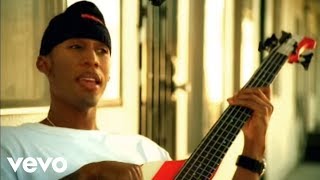
Watch the official Be Here
music video
The Voice Behind the Hook
The narrator speaks in first person, but the emotional force comes from how directly he addresses the other person. He praises himself, sells the experience of being with him, and tries to erase her objections before she can voice them.
When he says I'm a good man
, he is making a case for himself. When he insists she is missin' every day
, he frames absence as her loss, not just his pain. This is flirtation with a salesman’s rhythm.
There is also a revealing turn near the end, when the song admits I don't like bein' lonely
. That line helps decode the swagger. For most of the track, the speaker sounds sure of himself. But that brief confession suggests the bragging may be covering vulnerability.
Morning, Evening, Fantasy
How the Verses Build the Story
The song does not tell a complicated plot, but it does move through a clear emotional pattern:
- The hook announces absence and obsession.
- The verses imagine shared domestic and sexual scenes.
- The chorus returns as a stronger sales pitch.
- The ending becomes more repetitive, almost dreamlike.
Early lines place the missing partner in ordinary life, especially around breakfast and waking up. That detail is important. It suggests he does not only want a late-night encounter. He wants her woven into the shape of the day.
Later, the lyrics become more openly erotic and playful. He promises pleasure, excitement, and even a future. By the time the song reaches lines about dreams and wanting her “alone,” fantasy has taken over reality.
Interpretation: The movement from breakfast to bed to dream life shows escalation. The absent person goes from a missing companion to an all-consuming idea.
Seduction, Control, and Uneasy Edges
Part of what makes “Be Here” interesting is that it is charming and a little pushy at the same time. The speaker keeps insisting that once she returns, she will not want to leave. That can sound romantic, but it also introduces possession.
A short multi-line passage captures that tension:
Let me show you what you're missin'
Once I get you
you ain't never gonna walk away
Here, the song moves beyond longing into control language. He is not just asking for connection; he is promising an experience so complete that refusal disappears.
Interpretation: Readers can hear this in two ways. One reading hears playful, exaggerated seduction in the tradition of classic soul. Another hears insecurity trying to sound dominant. Both fit the text.
Why the Duet Matters So Much
Although the lyric is centered on one desire, the duet format deepens it. D’Angelo’s presence gives the song a shared masculine atmosphere, almost like two shades of the same inner monologue. Instead of softening the message, the duet thickens the mood: smoky, assured, and slightly restless.
That pairing also places the track firmly in the early-2000s neo-soul lane. “Be Here” was recognized by the Recording Academy, and its 2003 nominations reflect how well it connected songwriting craft with atmosphere. Saadiq’s Instant Vintage period marked an early solo breakthrough, while D’Angelo’s involvement linked the song to one of the era’s most influential R&B circles.
The Sound Carries the Meaning
Saadiq’s production style often leans on organic instruments and classic soul feel, and that approach fits this song perfectly. Rather than sounding polished in a cold way, “Be Here” feels warm, live, and bodily. The groove loops with patience, making the repeated plea feel hypnotic instead of rushed.
The arrangement supports the theme of obsession. Repetition in the chorus mirrors a mind stuck on one person. The laid-back beat suggests confidence, while the layered vocals add hunger and heat. That contrast is key: the music glides, but the lyrics ache.
This balance reflects what critics often note about Saadiq’s work: he can make retro soul forms carry complicated emotions. NPR’s Ken Tucker once described him as a singer of romance under pressure, and that idea fits here. Even in a sensual track, there is strain beneath the smoothness.
What “Be Here” Is Really Saying
In the end, the meaning of Be Here Raphael Saadiq is about more than wanting someone nearby. It is about how desire can turn absence into a story: a story where the missing person becomes the answer to loneliness, fantasy, pride, and need all at once.
The song works because it never fully chooses between romance and lust, confidence and insecurity. It lives in that blur. The speaker sounds powerful, yet his repetition suggests he is trying to convince himself as much as the person he wants.
That tension is what gives “Be Here” its staying power. It is smooth, sexy, and catchy, but also revealing in ways it may not intend.
Disclaimer: This interpretation is based on the lyrics, performance, and available context around the song. As with any piece of music, listeners may hear different meanings in “Be Here.”







