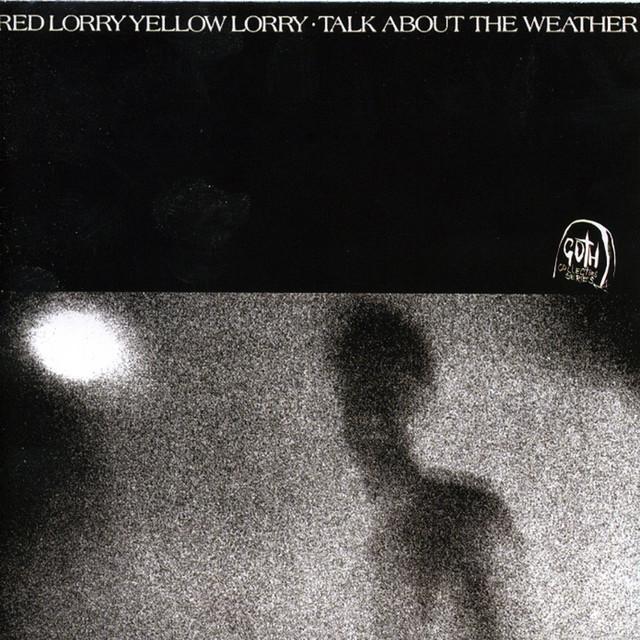
Why “Talk About The Weather” Feels So Cold
For listeners searching for the meaning of Talk About The Weather Red Lorry Yellow Lorry, the song lands as a tense portrait of emotional avoidance. It sounds like a love song at first, but not a warm one. Instead, it turns a basic social habit—small talk about the weather—into a symbol for everything the other person will not say.
"Talk About The Weather" - Red Lorry Yellow Lorry
You keep saying that it's up to me
You ain't nothing but a true embrace
Loading lyrics...
Unable to load lyrics
We're unable to display the lyrics at this time. Please try again later.
Released on the band’s 1985 album Talk About the Weather, the track sits right in Red Lorry Yellow Lorry’s early style: hard-edged, repetitive, and emotionally bruised. The Leeds band were often grouped with goth, though they pushed back on that label and pointed more toward punk and Wire-like minimalism. That context matters, because this song is not romantic in a dreamy way. It is stark, physical, and confrontational.
Beneath the Small Talk, a Broken Connection
At its core, the song is about one person trying to force honesty out of another person who keeps hiding behind polite distance. The title phrase, talk about the weather
, works like an accusation. Instead of speaking about fear, love, or doubt, the other person stays on the safest possible subject.
The verses make that emotional gap feel painful. The speaker sees mixed signals: attraction, hesitation, and disguise. When they describe a hidden face
, the point is not literal concealment. It suggests a person who only reveals what they want others to see.
Interpretation: The song’s drama comes from that imbalance. One person wants a raw, exposed moment; the other wants control. That is why the track feels less like a conversation and more like a standoff.

Watch the official Talk About The Weather
music video
Rain as Truth, Exposure, and Pressure
The strongest image in the song is water. Rain is not gentle here. It stands for exposure, emotional honesty, and the loss of protection. The repeated line soaked to the skin
turns feeling into something bodily. This speaker does not want half-measures. They want emotions felt all the way through.
That idea becomes even clearer when the song contrasts open and sheltered spaces. The speaker wants openness, even if it hurts. The other person prefers walls, cover, and delay.
Soaked to the skin
You want to talk about the weather
Those lines capture the whole conflict in miniature. One side is already overwhelmed by feeling; the other still stays at the surface.
The Chorus Turns Weather Into a Defense Mechanism
The hook is memorable because it sounds simple, but its meaning is sharp. Weather talk is usually casual and harmless. Here, it becomes proof of emotional evasion.
When the chorus returns, it reframes everything before it. This is not just a difficult relationship. It is a relationship where language itself has broken down. One person speaks in urgency, the other in deflection.
Interpretation: The title may also imply a wider social criticism. In many post-punk songs, personal distance reflects a colder culture. The weather can suggest emotional climate as much as literal rain: gray, hard, and numb.
A Push-Pull Between Desire and Frustration
Part of what makes the lyric effective is how often it swings between wanting closeness and expressing anger. The speaker asks whether the other person truly cares, but also pushes them to stop hiding. They want intimacy, yet they describe that desire in forceful terms.
That tension matters. This is not a balanced love duet. It is one-sided, impatient, and unstable. Phrases like not quite yet
show delay, while images of shelter and walls suggest a person who keeps postponing emotional risk.
The song never offers a clean resolution. Instead, it circles the same hurt. That repetition mirrors the experience of trying to get a real answer from someone who refuses to go deeper.
How the Sound Carries the Meaning
Red Lorry Yellow Lorry’s music gives the lyric much of its force. Their early sound was known for guitar drone, heavy bass, pounding rhythm, and Chris Reed’s deep, echoing vocal style, as noted in accounts of the band’s history and reception at the official website and reference sources. That sonic design makes the song feel trapped and relentless.
The rhythm does not float like pop. It drives forward with a mechanical insistence, almost like pressure building in a closed room. The guitars scrape and repeat instead of resolving sweetly. That choice matches the lyric’s emotional gridlock.
Reed’s vocal delivery is especially important. He does not sound tender or confessional. He sounds burdened, stern, and nearly submerged in the mix. That makes the plea for honesty feel harsher, as if tenderness has already been damaged by too much frustration.
Why the Song Still Connects
The song reached listeners because its central idea is easy to recognize. Many people know what it feels like when somebody keeps things pleasant, vague, and distant while a real emotional issue sits underneath. This track takes that familiar moment and gives it a dark physical shape.
It also arrived at a key point for the band. The 1985 album became an important early release for them and reached No. 3 on the NME independent albums chart. That success helped fix their image as one of the tougher, moodier bands in the UK post-punk scene.
Final Reading: Weather as Emotional Evasion
The best way to understand the meaning of Talk About The Weather Red Lorry Yellow Lorry is this: it is a song about wanting emotional truth from someone who would rather stay protected. Rain means exposure. Shelter means avoidance. And the title phrase means small talk used as a shield.
That is why the song still hits so hard. It is not really about weather at all. It is about what people say when they cannot bear to say what they feel.
Disclaimer: This interpretation is based on the lyrics, the recording, and available band context. As with many post-punk songs, ambiguity is part of the design, so other readings are possible.








