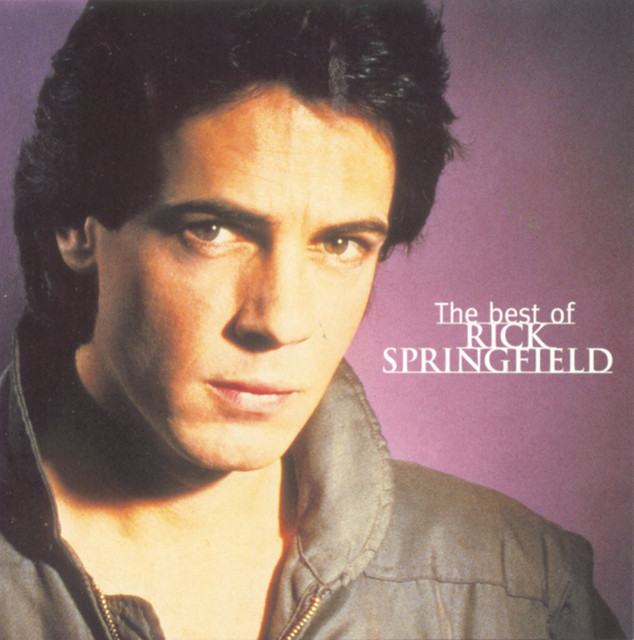
Why 'Jessie's Girl' Still Feels So Restless
The meaning of Jessie's Girl Rick Springfield comes down to one sharp emotional setup: a person wants what their friend already has, and they know that desire is both unfair and impossible.
"Jessie's Girl" - Rick Springfield
Yeah I know he's been a good friend of mine
But lately something's changed that ain't hard to define
Loading lyrics...
Unable to load lyrics
We're unable to display the lyrics at this time. Please try again later.
That is why the song still lands. It is not a sweet love song. It is a jealous, nervous, self-aware pop song about wanting someone unavailable and feeling worse the longer that feeling lasts.
Released on Working Class Dog in 1981, the track became Rick Springfield's biggest hit and his only No. 1 on the Billboard Hot 100, while also winning the Grammy for Best Male Rock Vocal Performance. Those facts help explain its reach, but not its staying power. Its real force comes from how clearly it captures envy, shame, and fantasy in just over three minutes.
A Love Triangle With No Hero
On the surface, the plot is simple. The narrator says Jessie is a friend, then admits he wants Jessie's girlfriend. That confession arrives fast, and the song never pretends the feeling is noble.
Instead, it presents a person stuck between loyalty and desire. They are close enough to watch the couple together, but not close enough to change anything. That makes the whole song feel trapped.
Interpretation: what makes the lyric strong is that the narrator does not just want love. They want a specific woman partly because she seems chosen, desirable, and out of reach. In other words, this is not only romance. It is comparison.
Watch the official Jessie's Girl
music video
The Hook Turns Wanting Into Obsession
The chorus is one of the most famous in pop because it says the forbidden thought out loud: I wish that I had Jessie's girl
.
That line matters because it is more blunt than poetic. There is no disguise, no metaphor, and no moral defense. The wish sounds impulsive and immature, which is exactly why it feels believable.
The follow-up question, Where can I find a woman like that?
, adds irony. He has already found her. The real problem is that she is unavailable. So the chorus is not really a search. It is frustration pretending to be a question.
Small Details, Big Insecurity
The verses deepen the song by showing how jealousy changes the narrator's behavior. He says he will play along with the charade
, which suggests social performance. He acts normal around the couple while privately wanting their relationship to disappear.
Then comes the song's most revealing turn: looking in the mirror
. That image shifts the conflict inward. Now the problem is not only Jessie or the girl. It is also the narrator's bruised ego.
They wonder what she does not see in them. That thought is common and painfully human. Rejection often turns into self-audit: Am I not attractive enough? Not funny enough? Not chosen enough?
This is why the song feels bigger than a love triangle. It is also about status and self-worth.
Where the Song Came From
There is real-life context behind the story. Springfield has said the song grew out of a crush he developed during a stained-glass class in Pasadena, where he became fixated on a woman who was with someone else. He later explained that he almost used the real man's name, but chose Jessie because it sang better and because he had seen football player Ron Jessie's name on a T-shirt.
That origin matters because it shows how ordinary the spark was. This was not a grand affair. It was a familiar, slightly embarrassing situation that Springfield turned into a pop anthem.
He also told Oprah that he was basically admiring the woman from a distance. That fits the lyric perfectly. The song is driven less by actual intimacy than by projection.
Why the Music Feels So Urgent
Part of the meaning of Jessie's Girl Rick Springfield lives in the arrangement. The track is usually described as power pop, and that label fits: bright guitars, tight rhythm, big hook, fast momentum.
But the smart part is the contrast between verse and chorus. Springfield told American Songwriter that he had been chasing a small verse/big chorus
design in his demos so the refrain would explode. That is exactly what happens here.
The verses feel tense and boxed in, like private thoughts. The chorus blows open with guitars and vocal force, which sounds like bottled-up jealousy finally bursting out. Producer Keith Olsen helped give that dynamic shape, while Springfield's vocal sells the mix of confidence and desperation.
So the music does not just support the lyric. It acts out the emotion.
Why It Endured for Decades
The song lasted because its central feeling is timeless. Many listeners may never steal a glance at a friend's partner and build a fantasy around them, but most know the ache of wanting what is unavailable.
It also helps that the song never overexplains itself. It gives listeners enough story to understand the situation and enough emotional mess to recognize themselves in it.
That is why it has survived in movies, TV, covers, and even sequel-style play. The premise is simple, but the emotional mix is rich: lust, envy, admiration, guilt, and insecurity all at once.
The Final Take on Its Meaning
So what is the song saying? At its core, it shows how desire can become distorted when it is filtered through comparison. The narrator does not just want connection; they want proof that they could be chosen too.
Interpretation: that may be the deepest reason the song still hits. Under the catchy hook is a person measuring their value against someone else's happiness and losing that battle in real time.
That reading is an interpretation, not a confirmed author statement. But it matches both the lyric's tension and the way the music turns private envy into a public shout.








