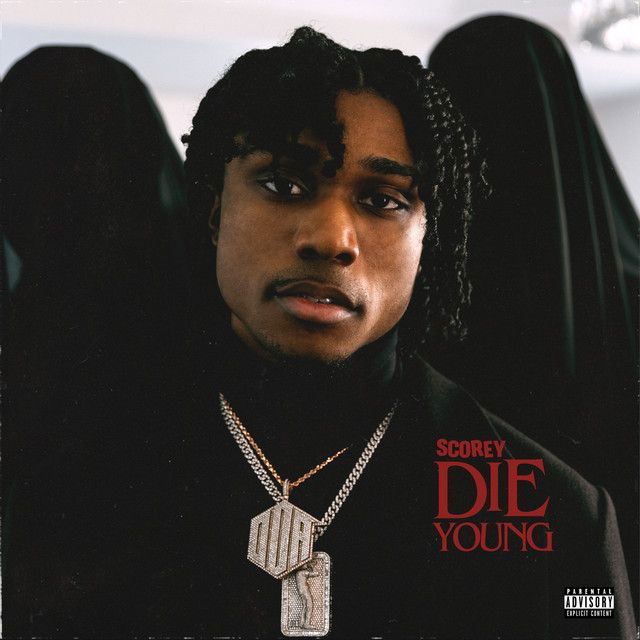
Die Young by Scorey
A hook about death, set against street grief
The meaning of Die Young Scorey centers on a painful idea: they are living in a world where early death feels normal, and music becomes the place where fear, mourning, and survival all meet. The song blends a familiar funeral image with Scorey’s own memories of violence and loss. That contrast is what gives the track its force.
"Die Young" - Scorey
If I die young
Uh-uh, uh, uh, uh-uh
Loading lyrics...
Unable to load lyrics
We're unable to display the lyrics at this time. Please try again later.
The chorus borrows from The Band Perry’s hit If I Die Young
, written by Kimberly Perry. In Scorey’s version, that soft, ceremonial language is not dreamy or romantic. It sounds haunting. When the song returns to images like bed of roses
and sound of a love song
, it frames death as something the speaker has already had to think through.

Watch the official Die Young
music video
Where the verses take the song
Once the hook ends, the record drops into a much harsher reality. Scorey describes dead friends, revenge cycles, and the shock of watching young lives get cut short. A key line points to a broken future: they were 'posed to graduate together
, but that plan is gone because a best friend was killed. That detail matters because it turns the song from a general street anthem into a story about interrupted youth.
This is one of the clearest parts of the meaning of Die Young Scorey. The song is not only about death itself. It is about the way violence steals ordinary milestones like school, friendship, and growing up.
The voice: scared, proud, and mourning at once
Scorey’s narrator speaks in first person, but the emotional range is wide. They sound numb in some bars, angry in others, and briefly peaceful when imagining what happens after death. That mix feels realistic. People who live with danger often talk in several emotional languages at once.
There is grief in the memorial references, including a direct tribute to a lost friend. There is also bravado in lines about retaliation and carrying weapons. Those two sides are not separate. In this song, they feed each other. Loss creates rage, and rage becomes part of survival.
Interpretation: the record may be heard as both confession and self-protection. When Scorey talks tough, they may be stating facts about their environment, but they may also be building emotional armor.
Why the chorus hits so hard
The chorus works because it sounds almost sacred beside the verses. It is gentle, melodic, and ceremonial, while the rap sections are blunt and full of detail. That contrast creates the song’s main tension.
If I die young
bury me in satin
bed of roses
Those phrases suggest dignity in death. But after hearing the verse, the listener understands that this is not abstract funeral imagery. It is preparation. The chorus becomes a way of asking for peace in a life that offers very little of it.
Memory, violence, and unfinished life
A major theme in the song is unfinished life. Graduation is mentioned as a future that should have happened. Friendship is remembered not as comfort but as something violently interrupted. Even success is described like a narrow escape route: the speaker believes they had the best chance
to make it out.
That matters because the song is not fatalistic in a simple way. It does not say death is welcome. It says death feels close enough that they have to speak about it before it arrives. The song lives in that terrible middle space between ambition and doom.
Another recurring idea is loyalty. The narrator keeps returning to friends, crew, and people who are gone. Their identity is tied to the group. So when death enters the story, it affects not only one person but the whole social world around them.
How the production deepens the meaning
Production is a big part of why the song lands emotionally. The beat is sparse and melodic, leaving room for the chorus to feel ghostly. The sample-like use of the older hook adds a hymn quality, almost as if a funeral song is echoing over modern drill and melodic rap textures.
Scorey became known for melodic pain rap around the time of releases tied to Genius artist notes and later projects including 1420. In that context, “Die Young” fits their style well: sad melody up front, hard detail underneath. Their vocal delivery is key too. They do not over-sing the pain. They let the words sit in a tired, steady tone, which makes the threats and grief sound lived-in rather than theatrical.
Artist context matters here
Scorey came up in a lane shaped by trauma-centered street rap, where artists often turn personal loss into public testimony. That does not mean every line should be taken as literal autobiography, but it does mean the emotional setting is important. Listeners heard this song not just as a catchy flip of an older chorus, but as another example of young rappers documenting how common death can feel in their communities.
Kimberly Perry’s writing credit is important because the borrowed chorus changes meaning in this new setting. What was once country-pop reflection becomes urban elegy. Same words, different world.
A few possible readings
Interpretation 1: The song is a eulogy in advance. The narrator imagines their own funeral because they believe the streets may decide it for them.
Interpretation 2: It is also a survivor’s guilt song. The focus on dead friends and missed milestones suggests they are asking why they are still here when others are not.
Interpretation 3: The song doubles as an artistic mission statement. When they say they left life “on the beat,” they suggest music is how they will be remembered if death comes early.
Final takeaway
The meaning of Die Young Scorey is about more than fearing death. It is about living so close to loss that funeral language becomes everyday thought. The song’s power comes from its split identity: soft chorus, brutal verse, hope and hopelessness in the same breath.
That is why it stays with listeners. It sounds like a prayer, but it also sounds like a warning.
Disclaimer: This article offers informed interpretation based on the lyrics, credits, and release context. Song meaning can remain open, and listeners may hear it differently.








