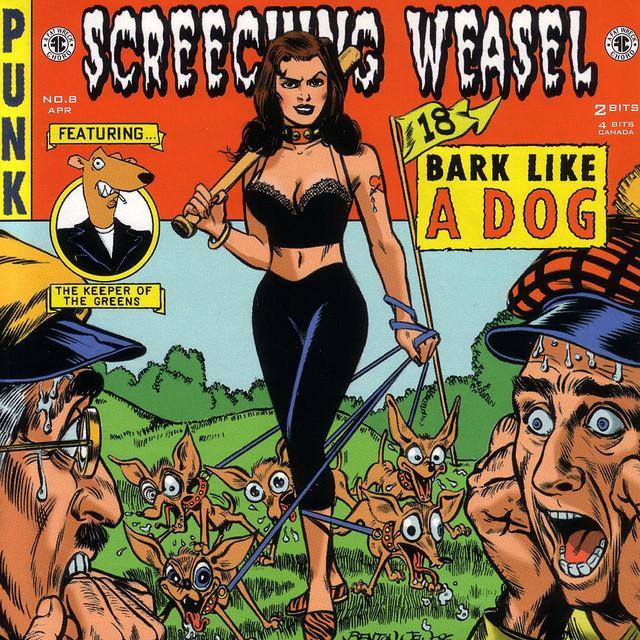
Cool Kids by Screeching Weasel
The meaning of Cool Kids Screeching Weasel is less about admiration than exposure. On the surface, the song describes a group of popular kids with their own social club. But the more the song talks, the uglier that club looks. What sounds “cool” is really just a circle built on ridicule, insecurity, and keeping other people out.
"Cool Kids" - Screeching Weasel
Where the real cool kids go to sit around
And talk bad about the other kids
Loading lyrics...
Unable to load lyrics
We're unable to display the lyrics at this time. Please try again later.
Screeching Weasel came out of the American punk scene in the late 1980s, a movement known for fast songs, sharp humor, and distrust of social posing. That context matters. Even without a formal statement attached to this specific track, the band’s broader style and history point toward satire rather than celebration. According to AllMusic, the group became known for stripped-down pop-punk and sneering wit, both of which fit this song closely.
A Punk Song About Who Gets Shut Out
At its core, the song is about exclusion. The lyrics introduce a clique on the “other side of town,” a phrase that makes the group sound distant, self-important, and separate from ordinary people. The club is presented as desirable at first, but that image collapses almost immediately. Its members mostly sit around and talk bad
about everyone else.
That is the key idea: their identity depends on putting others down. They are not cool because they create anything, care about anyone, or stand for something meaningful. They are only “cool” because they have agreed on who does not belong.
Interpretation: The song suggests that popularity is often a performance. The clique acts powerful, but its power comes from repetition, mockery, and group approval rather than real confidence.

Watch the official Cool Kids
music video
Why the Song Uses Second Person So Effectively
One of the smartest things about the lyric is its direct address. Instead of speaking from a distance, the song keeps aiming its insults at you
. That makes the listener feel the sting of being singled out.
The named characters—Millie, Pickles, Pattycakes, and Cubby—sound cartoonish, almost like a mean yearbook come to life. Their goofy names matter because they shrink the clique’s power. The song makes them seem petty and childish, not glamorous.
Still, the insults hurt. Lines about being mocked for clothes, appearance, and intelligence capture the logic of schoolyard cruelty. The detail about Sears-bought “toughskins” is especially sharp because it grounds the song in class and embarrassment. It is not just about being unpopular. It is about being visibly marked as uncool by the things a kid cannot fully control.
The Hook Turns “Cool” Into a Joke
The repeated line about a real cool club
does most of the song’s heavy lifting. Every time it comes back, the phrase sounds less believable. By the end, “cool” feels completely hollow.
real cool club
not part of it
That tiny refrain captures the song’s central emotional loop: exclusion keeps getting repeated until it starts to define a person’s social world. The song understands how cruelty works. It does not need a complex story. The same wound, said again and again, is enough.
Interpretation: The chorus may also be mocking the idea that access itself creates value. In other words, the club is considered important only because somebody is locked out.
Mockery, Brands, and Belonging
Several small details deepen the song’s meaning. The band mentions clothes, nicknames, and cruel doodles. Those details show how social groups create rules out of almost nothing. A pair of pants, a joke, or a rumor can become a badge of shame.
The reference to being laughed at for what someone’s mom bought them matters because it points to dependence and adolescence. Kids do not fully choose their image, yet they are judged as if they do. That is one reason the song still feels recognizable in the United States: teen status games often work through brands, style, and public embarrassment.
There is also a wider punk reading here. Punk has long criticized scenes that claim to reject the mainstream while building their own snobbish pecking orders. Interpretation: The song can be heard not only as a school-clique story, but also as a jab at any subculture that says it is different while still deciding who is in and who is out.
How the Sound Carries the Message
Musically, the song’s meaning is carried by speed and bluntness. Screeching Weasel’s style is typically fast, lean, and melody-driven, with Ramones-style economy often noted by critics and discographies such as Trouser Press. That matters here because the arrangement does not soften the message. It hits hard, moves quickly, and leaves bruises.
The vocal tone likely matters as much as the words. In this kind of punk song, a sneer can communicate contempt more clearly than a long explanation. Short verses, repeated phrasing, and a chant-like hook all mirror clique behavior: the same judgments get passed around until they sound like truth.
There is almost no emotional relief in the lyric, and the music supports that. Rather than turning inward and sentimental, the track stays sharp and outward-facing. That gives it a satirical edge. It sounds like an attack on the attackers.
So What Is "Cool Kids" Really Saying?
The meaning of Cool Kids Screeching Weasel is that coolness, when built on exclusion, is empty. The song strips away the glamour of the in-crowd and shows something uglier underneath: fear of being different, pleasure in public shaming, and status built on other people’s pain.
That is why the song remains effective. It is funny in places, but it is not gentle. It recognizes that social cruelty can feel ridiculous and brutal at the same time.
In the end, the track is less interested in the outsiders’ flaws than in the clique’s weakness. Anyone can call themselves elite. The song asks what is left once the name-calling stops.
Disclaimer: This article offers interpretation based on the lyrics, the band’s style, and publicly available context. Song meanings can vary from listener to listener.







