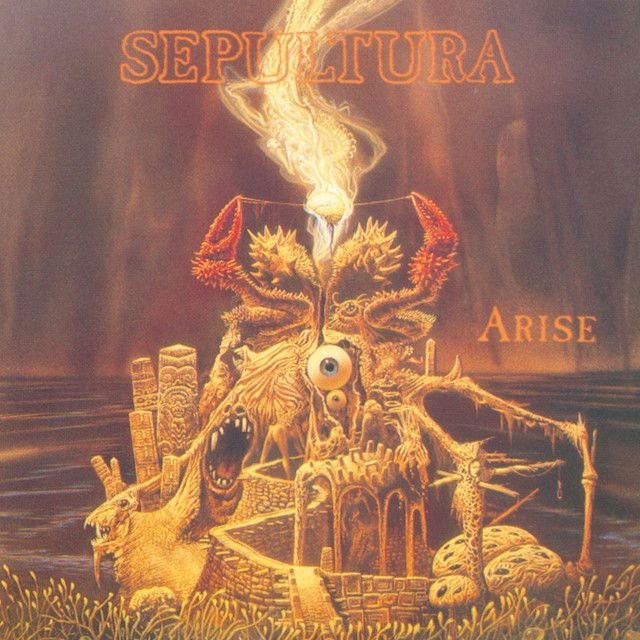
Why "Arise" by Sepultura Still Hits Hard
The meaning of Arise Sepultura starts with destruction, but it does not end there. The song throws listeners into a world of war, fear, and spiritual collapse, then answers that nightmare with a single idea: people can still rise through the wreckage.
"Arise" - Sepultura
Apocalyptic clash
Cities fall in ruin
Loading lyrics...
Unable to load lyrics
We're unable to display the lyrics at this time. Please try again later.
Released in 1991 as the title track from Sepultura's fourth album, "Arise" became one of the band's defining songs. It also helped push the Brazilian group further into global metal culture during a breakthrough era for the band.
The Core Message Behind the Chaos
At its heart, "Arise" is about humanity tearing itself apart. The lyrics move through ruined cities, mass death, and panic, but the song is not just horror for horror's sake. It points to causes: war, ideology, and the habit of turning difference into violence.
That reading is supported by Max Cavalera's own comments. He said the track was about people being willing to kill others because they believe in a different God, making religion-fueled conflict central to the song's message. In simple terms, Sepultura uses extreme imagery to describe an all-too-real human pattern.
One short line captures the scale of the disaster: cities fall in ruin
. Another asks Why must we die?
, which turns the song from description into accusation. They are not admiring apocalypse. They are challenging the systems and beliefs that make it happen.
Watch the official Arise
music video
A Chorus That Refuses to Stay Buried
The most important turn comes in the chorus. After images of total collapse, the song lands on We shall arise
. That phrase is brief, but it changes everything.
Interpretation: this is less a literal resurrection than a statement of refusal. The world may be shattered, but the human will is not fully erased. In a thrash/death metal song, that kind of hook matters because it gives purpose to the violence around it.
The best-known lyric passage shows this shift clearly:
Obliteration of mankind
Under a pale gray sky
We shall arise
Even here, the wording balances despair and defiance. First comes extinction, then a bleak sky, then the vow to rise. The song's emotional power comes from that sequence.
War, Fanaticism, and Moral Numbness
The verses widen the target. "Arise" is not only about battlefield violence. It is also about the way people become numb inside violent systems.
When the speaker says I did nothing, saw nothing
, the line suggests denial as much as innocence. Interpretation: Sepultura may be attacking bystanders, governments, or societies that pretend not to notice suffering until it is too late.
Later, phrases like terrorist confrontation
and wartime conspiracy
frame the disaster as political and organized, not random. The song also includes the stark line I've no land, I'm from nowhere
, which points to displacement and identity loss. In that moment, the apocalypse becomes personal. It is no longer just about nations collapsing; it is about people being stripped of home, belonging, and voice.
How Sepultura's Context Sharpens the Meaning
Context matters here. "Arise" was the title track of Sepultura's 1991 album Arise, recorded at Morrisound in Tampa, Florida, with Scott Burns and released by Roadrunner. The album marked a major step in the band's rise, later becoming their first to enter the Billboard 200 and a landmark in extreme metal.
That wider setting helps explain the song's force. Sepultura were refining the death-thrash attack of Beneath the Remains while making the sound tighter and even more direct. Reports from the era also note that the album expanded their reach internationally, with strong chart showings in Europe and long touring cycles.
Max Cavalera also said the song was influenced in part by Metallica's "Blackened," though Sepultura made the result thrashier and more energetic. He further explained that the line about a pale gray sky
was inspired by U2's imagery, showing how even a brutal metal anthem can carry echoes from outside its genre.
Why the Music Feels Like a Warning Siren
The lyrics would not hit as hard without the music. "Arise" moves fast, but it is not shapeless speed. The riffs are clipped and urgent, the drumming is relentless, and the vocal delivery sounds like a public alarm.
Interpretation: the arrangement mirrors a world in collapse. The guitars feel like machinery grinding forward, while Igor Cavalera's drumming pushes the song like a military charge that has gone out of control. Scott Burns' production gives the track enough clarity that every sharp turn lands, which is important because chaos in the lyric is matched by precision in the performance.
That balance is a big reason the song lasts. It feels violent, but it is built with control. The result is catharsis rather than noise.
The Video and the Song's Lasting Impact
The song's meaning was reinforced by its controversial music video, filmed in Death Valley with apocalyptic and religious imagery. MTV in America reportedly banned it because of those images, which fits the song's confrontational spirit.
That visual side mattered because "Arise" was never subtle. Sepultura wanted listeners to feel pressure, fear, and outrage. They turned those emotions into one of their best-known songs and, for many fans, one of the purest statements of their early sound.
What "Arise" Ultimately Says
So, what is the meaning of Arise Sepultura? It is a warning about war, fanaticism, and the ease with which civilization can collapse into cruelty. But it is also a statement of endurance.
Interpretation: Sepultura suggest that even under a deadened sky, resistance is still possible. The song stares straight at annihilation and answers it with motion, volume, and will.
That is why "Arise" still feels urgent. It is not just about the end. It is about what people do when the end seems close.
Disclaimer: This interpretation combines documented artist comments with critical reading of the lyrics and music. As with most songs, listeners may hear different meanings in the same lines.








