Why 'Homeward Bound' Still Feels So Lonely
The meaning of Homeward Bound Simon & Garfunkel comes down to a simple but powerful feeling: being far from home can make success feel empty. What sounds at first like a travel song is really about loneliness, routine, and the deep need to return to a place where love and identity still feel secure.
"Homeward Bound" - Simon & Garfunkel
Got a ticket for my destination
On a tour of one-night stands
Loading lyrics...
Unable to load lyrics
We're unable to display the lyrics at this time. Please try again later.
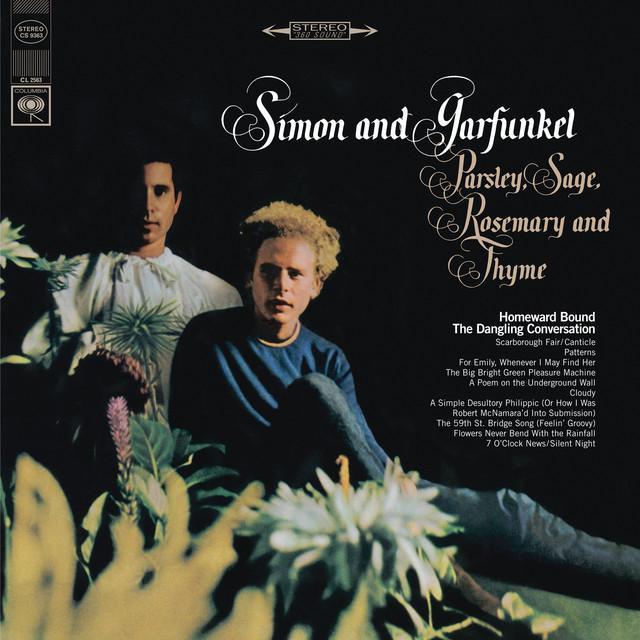
Paul Simon wrote the song, and Simon & Garfunkel released it in 1966 during the early rise of their folk-pop sound. According to standard discographies and band histories, the track followed the success of The Sound of Silence and appeared on Parsley, Sage, Rosemary and Thyme in the U.S. later that year. Those facts help frame the song: this was a moment when the duo were becoming famous, yet the narrator feels worn down rather than triumphant.
A Travel Song That Is Really About Emptiness
On the surface, the story is direct. The narrator sits in a station, ticket in hand, heading to another performance. They are a working musician, carrying a guitar and moving through a chain of short stops and anonymous nights.
But the song quickly turns inward. The road is not romantic here. Instead, the details of travel suggest monotony. The days blur into an endless cycle of waiting, smoking, reading, and staring at places that all feel alike. When the lyric mentions one-night stands
, it does not sound glamorous. It sounds exhausting.
Interpretation: The song argues that motion is not the same as progress. They are always going somewhere, but emotionally they are stuck.

Watch the official Homeward Bound
music video
The Chorus Turns Home Into More Than a Place
The chorus is what gives the song its emotional weight. The repeated phrase Homeward bound
sounds like a travel update, but it really works as a wish. They are not home yet. They are dreaming of it.
What matters most is how home gets defined. It is not described through furniture, streets, or family history. Instead, home is where the mind can settle, where art feels natural, and where love is waiting. In short phrases like my music's playin'
and my love lies waitin'
, the song links home with creativity and emotional peace.
That makes the chorus larger than homesickness. Home becomes the place where the narrator can become fully themselves again.
Small Details Build a Bigger Feeling
One reason the song hits so hard is its ordinary imagery. There is nothing dramatic in the verses. The narrator notices stations, magazines, factories, movies, and strangers. These are common sights, which makes the loneliness feel believable.
The line about each town looking the same is especially important. It suggests that travel has stopped bringing discovery. New places no longer feel new. Even faces in the crowd only remind the narrator of absence.
A brief multi-line passage captures that emotional center:
And each town looks the same to me
The movies and the factories
And every stranger's face I see
These lines show how the outer world has flattened. Everything becomes a mirror for longing. Instead of connecting the traveler to the world, the road only sharpens their sense of being cut off from home.
Performance as a Kind of Mask
The final verse deepens the song by showing that the problem is not only distance. It is also burnout. The narrator says they will sing again, but the act feels forced, almost like going through the motions.
That is where phrases such as play the game
and shades of mediocrity
matter. They suggest a performer who no longer trusts their own art in the moment. Music, which should be meaningful, starts to feel mechanical.
Interpretation: This can be heard as a song about creative alienation as much as homesickness. The narrator is not just away from a loved one. They are also away from the version of themselves that once felt inspired.
Why the Sound Matters So Much
Simon & Garfunkel's arrangement helps sell that feeling. The performance is restrained, led by acoustic textures and a clear melodic line rather than heavy drama. That simplicity matters because it keeps the focus on the private ache inside the lyrics.
Their vocal style also adds meaning. Even when only one voice carries most of the verse, the Simon & Garfunkel sound is built on closeness and blend. That warm, human quality makes the distance in the lyric feel even sadder: the song sounds intimate while describing isolation.
The track's gentle motion also mirrors travel itself. It moves steadily forward without sounding excited. That balance gives the song the feeling of a train ride where the body keeps moving but the heart is somewhere else.
Artist Context Sharpens the Song's Meaning
The song is often linked to Paul Simon's experiences as a touring young songwriter in England before the duo's breakthrough fully took hold. Whether listeners hear it as literal autobiography or not, that background fits the lyric's lived-in detail.
It also matches a larger theme in Simon's writing: ordinary settings often open into questions of identity, connection, and emotional survival. In that sense, "Homeward Bound" is not just about missing home after work. It is about what happens when public life pulls someone away from inner stability.
So What Is the Song Really Saying?
The meaning of Homeward Bound Simon & Garfunkel is that home is the place where loneliness loosens its grip. The narrator does not simply want a bed or a familiar room. They want relief from sameness, comfort from another person, and a return to honest feeling.
That is why the song still connects with listeners. Almost everyone knows the feeling of functioning in public while privately wanting to be somewhere safer and more real.
Disclaimer: This interpretation is based on the song's lyrics, recording context, and commonly reported background, but song meaning can remain personal and open to different readings.







