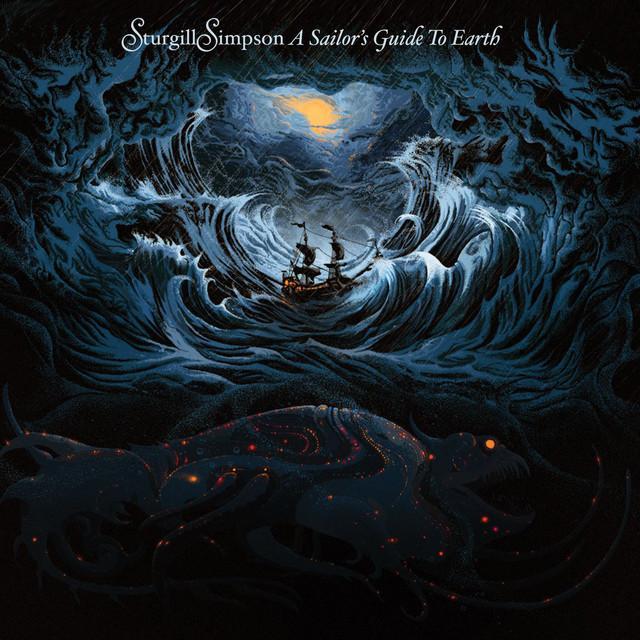
Sea Stories by Sturgill Simpson
A sailor’s brag that hides a bruise
The meaning of Sea Stories Sturgill Simpson starts with a voice that sounds funny, sharp, and half-defensive. On the surface, the song is a rowdy set of Navy memories: boot camp pressure, wild port calls, bars across Asia, drugs, and the strange pride of survival. Under that surface, it is also about what those experiences leave behind.
"Sea Stories" - Sturgill Simpson
Keep your mouth shut and you'll be fine
Just another enlisted egg
Loading lyrics...
Unable to load lyrics
We're unable to display the lyrics at this time. Please try again later.
Sturgill Simpson wrote the song from material close to his own life. He served in the Navy in the late 1990s, and he later said that much of A Sailor’s Guide to Earth grew from those years. That context matters because the song does not sound like a made-up movie scene. It sounds like someone trying to laugh while telling the truth.

Watch the official Sea Stories
music video
The first verse turns enlistment into loss
The opening lines move fast from family advice to military machinery. The song begins with a plain lesson about keeping quiet, then shifts into the image of becoming just another recruit. When the singer says life is no longer mine
, the key theme appears: service is not only duty, but surrender.
That does not mean the song mocks everyone in uniform. Instead, it shows how a young person can be swallowed by a system before fully understanding it. The humor in the verse makes that loss easier to say out loud, but it does not erase it.
A coming-of-age story with teeth
The song’s narrator is young, restless, and quickly thrown into a world bigger than home. That is why the sea can feel thrilling at first. Sailing out feels like rebirth, and the first overseas stops look like freedom.
Sailing out on them high seas
Feels just like being born
This is the article’s clearest emotional pivot. The sea promises reinvention, but the verses soon show that new life can become disorientation.
Travel, bars, and the blur of escape
Much of the song is built like a travel log. Tokyo, Yokohama, Pattaya, Phuket, Singapore, and Kuala Lumpur flash by in a rush. But the point is not geography alone. The point is that all this movement happens, as the lyric puts it, from the inside of a bar
.
That phrase shrinks the whole world. The sailor sees many places, but often through intoxication, loneliness, and temporary highs. Interpretation: the song suggests that adventure without grounding becomes another kind of trap.
Simpson described the track as a country song that sounds like Cheap Trick, according to American Songwriter. That description fits. The song has punch, swagger, and a loud-band momentum that makes these memories feel exciting. Yet that same energy also carries a manic edge, like someone talking too fast because slowing down would hurt.
Why the chorus sounds proud and wounded
The chorus is the heart of the song. When the singer insists, They’re all true
, it sounds like a boast. It is also a defense against disbelief. Sea stories are supposed to sound exaggerated, so the narrator answers that doubt before anyone else can.
Then the chorus deepens. Forever stains
and salt running through my veins
frame memory as something physical. The past is not stored neatly in the mind. It lives in the body.
This is where the meaning of Sea Stories Sturgill Simpson becomes clearer: they are not just funny military tales. They are scars retold as jokes, proof that the speaker survived and proof that survival came at a price.
The darkest turn comes after the party
Late in the song, the mood shifts from wild recollection to consequences. Drugs are mentioned less like rebellion and more like coping. Getting kicked out of the Navy leads not to freedom but drift, guilt, and years of confusion.
That long aftermath is one of the song’s most important ideas. The real story is not only what happened at sea. It is what happened after. Simpson spoke elsewhere about struggling with guilt and transition after service, and that gives these lines extra weight. Interpretation: the song argues that military experience can keep shaping a life long after the uniform is gone.
Sound, performance, and why the song hits hard
The recording style matters. Simpson self-produced the album with engineer David Ferguson rather than working again with Dave Cobb, and much of the album was recorded live in a very fast burst. Ferguson said the vocals were live, which helps explain why the track feels immediate and unpolished in the best way.
That looseness fits the song’s message. A cleaner, calmer performance might have turned the track into nostalgia. Instead, the band gives it bar-band force, making each memory feel half-celebration and half-warning.
The final line changes everything
The closing thought is the bluntest in the song: dying for lies
. After all the jokes, ports, and chaos, the singer lands on mistrust of political war-making. It is not a broad theory lesson. It is personal disgust.
That ending reframes the whole track. The song is not simply “remember when.” It is a veteran’s story about how institutions use young people, how freedom and damage can arrive together, and how truth often comes wrapped in exaggeration, laughter, and noise.
What listeners can take from it
In the end, the meaning of Sea Stories Sturgill Simpson lies in its double voice. It is a great yarn and a confession at once. They tell sea stories because the tales are entertaining, but also because storytelling is one way to live with what happened.
That is an interpretation, not a confirmed single meaning. Like many strong songs, it leaves room for listeners to hear either a survivor’s grin, a warning, or both.








