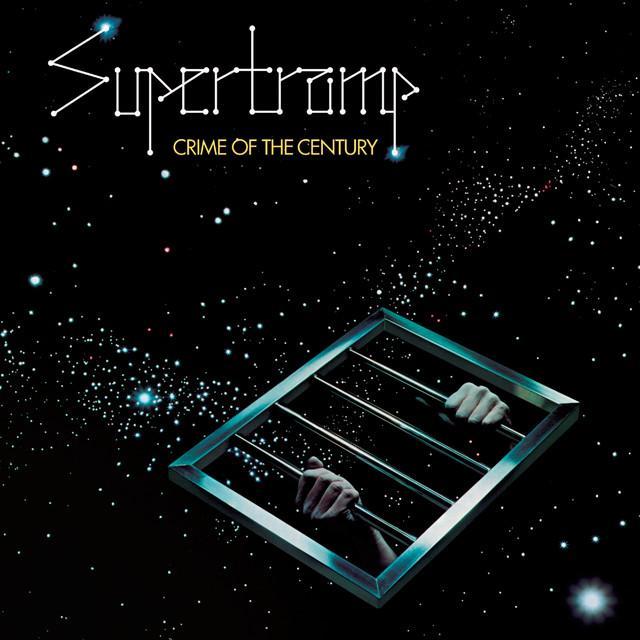
Why Supertramp’s Darkest Finale Still Hits
For anyone searching for the meaning of Crime Of The Century Supertramp, the clearest starting point is this: the song sounds like an attack on corruption dressed up as spectacle. It sees power, greed, and public manipulation not as hidden sins, but as something society almost markets like a show.
"Crime Of The Century" - Supertramp
Well what will it be?
Read all about their schemes and adventuring
Loading lyrics...
Unable to load lyrics
We're unable to display the lyrics at this time. Please try again later.
As the closing track and title source for Supertramp’s 1974 breakthrough album, it carries extra weight. According to the album’s documented history, Crime of the Century was released on October 25, 1974, produced by Ken Scott and the band, and became their commercial breakthrough in the UK, Canada, and the US (Wikipedia). That success matters because the song itself feels like a grand curtain call: dramatic, suspicious, and emotionally bruised.
A title that sounds bigger than one crime
The phrase itself is a familiar tabloid slogan, and the song uses that tone on purpose. From the start, the narrator points to people who are planning the crime of the century
. That wording sounds less like a detective story and more like a warning about elite behavior.
The next lines sharpen the satire. The song suggests that wrongdoing has become public theater, something audiences are invited to roll up and see
. In other words, scandal is not only committed; it is packaged, sold, and consumed.
Interpretation: the “crime” is likely not one event. It is a system of greed and spectacle, where harmful people keep operating in plain sight.

Watch the official Crime Of The Century
music video
The villains wear costumes, not uniforms
One of the song’s strongest ideas is that dangerous people hide behind image and status. The lyrics describe lust, greed, and glory
, tying appetite, ambition, and ego into one ugly bundle.
Then comes the demand to rip off the masks
. That image matters because masks suggest performance. These are not cartoon villains; they are respectable figures, protected by appearance, power, and public myth.
This fits the broader mood of the album. Research on the record often links it to loneliness, alienation, and mental instability, but it also shows how social systems shape those feelings (Wikipedia). The title track pushes that concern outward. Instead of focusing only on private pain, it asks who benefits from the disorder.
The key emotional twist: ordinary people are trapped in it
The song is not just angry. It is also confused and wounded. After naming these destructive forces, the lyric turns toward a simple contrast: there’s you and there’s me
. That small phrase changes the scale.
Now the issue is no longer abstract corruption. It becomes personal. Regular people are left trying to make sense of a world that feels rigged, vulgar, and false.
And they rape the universe
How they've gone from bad to worse
Those lines are cosmic in scale, but the feeling underneath is familiar: the sense that people in power can damage everything around them and still avoid real accountability.
Interpretation: the song’s real sting may come from helplessness. It does not only accuse “them”; it shows how “you and me” live under the consequences.
How the music turns protest into drama
Supertramp were never a blunt, garage-rock protest band. Their strength was tension between elegance and unease. On this album, the lineup of Rick Davies, Roger Hodgson, John Helliwell, Dougie Thomson, and Bob Siebenberg built a polished but emotionally loaded sound, with saxophone, layered keyboards, and arranged textures shaped with producer Ken Scott (Wikipedia).
That matters for the meaning of “Crime of the Century.” The song does not charge forward like a simple rant. It unfolds with a theatrical, progressive-rock sense of scale. Piano and ensemble dynamics give it gravity, while the arrangement makes the accusation feel larger than one narrator’s complaint.
Ken Scott once said Davies and Hodgson were very, very different personalities
, and that difference shaped the music (Wikipedia). That creative tension helps explain why the song feels both personal and public, bitter and grand.
Why this song feels like the album’s final verdict
The album as a whole became a landmark, later praised by outlets such as Rolling Stone, which included it among the 50 greatest prog-rock albums (Wikipedia). But the title track stands out because it gathers several of the album’s ideas into one final statement:
- society rewards false faces
- greed becomes normalized
- ordinary people feel small inside big systems
- moral damage spreads beyond its original target
Roger Hodgson later said the title song deeply affected listeners and that it took shape over weeks while the band lived and worked together at Southcombe Farm (Wikipedia). Even if the exact lyrical meaning remains open, that comment helps explain the song’s intensity. It was built as a centerpiece, not a throwaway finale.
The simplest reading still works best
So, what is the meaning of Crime Of The Century Supertramp? At its core, the song presents corruption as both performance and catastrophe. It mocks the way greed can become entertainment, then mourns the damage that follows.
Its genius is that it stays broad. Listeners can hear politics, media criticism, class anger, or a general attack on human selfishness. All of those readings fit because the song is less interested in naming one villain than exposing a whole pattern of moral failure.
In that way, “Crime of the Century” still feels current. It understands that the biggest crimes are often committed in the open, by people who know how to keep the crowd watching.
Interpretation disclaimer: Song meaning is never completely fixed. This reading is based on the lyrics provided, documented album context, and historically reported comments, but listeners may reasonably hear different shades of meaning in the song.







