Why 'Swordfish' Turns Belief Into a Joke
The meaning of Swordfish The Dead Milkmen starts with a trick: the song sounds like a declaration of faith, but almost everything in it is unstable, silly, or disposable. That is why it lands. Instead of building toward a noble idea, they keep circling back to I believe in swordfish
, a line that feels both committed and completely absurd.
"Swordfish" - The Dead Milkmen
Others believe in technology
Some people believe in all those "ologies"
Loading lyrics...
Unable to load lyrics
We're unable to display the lyrics at this time. Please try again later.
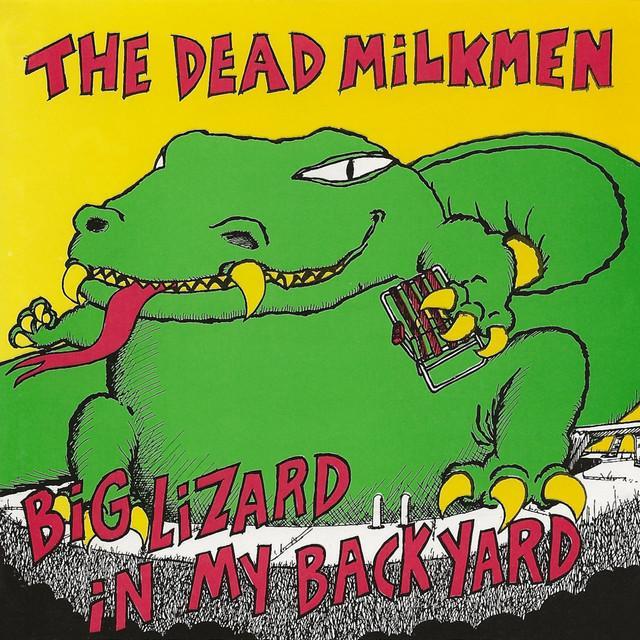
The Dead Milkmen were a satirical punk band from Philadelphia, formed in 1983, and they became known for mocking culture, politics, and even punk itself. Their reputation for parody and dark humor is well documented in overviews of the band and their catalog. “Swordfish” is commonly listed as a track from Big Lizard in My Backyard, one of their early releases. In that context, the song reads less like a sincere statement and more like a fast, funny attack on empty belief and pop-culture clutter.
A Fake Creed With a Real Target
At the center of the song is a speaker who lists things people believe in, from systems of thought to gadgets to entertainment. Then they reduce all of that to one ridiculous article of faith: swordfish
. The joke is not really about the fish. It is about how belief can become random, performative, or inherited.
Interpretation: the song suggests that many public beliefs are not much deeper than slogans. By putting astrology, technology, and television references in the same basket, the lyrics flatten serious and unserious commitments into one noisy mess.
That is why the refrain matters. It sounds confident, but the confidence is hollow on purpose. The singer is not guiding listeners toward truth. They are parodying the act of claiming certainty.

Watch the official Swordfish
music video
How the Verses Build the Satire
The opening verse sets the frame by naming different kinds of belief. One line points to astrology
, another to technology
. Those words carry very different meanings in real life, but here they are tossed together almost carelessly.
That carelessness is the point. The singer acts as if all belief systems are interchangeable, then crowns the most random one of all. The song turns conviction into a consumer choice.
The next verse gets even sharper by moving into television. When the speaker says they believe in all that TV crap
, the song links faith with junk entertainment. Instead of worshipping ideals, this narrator worships media leftovers.
Interpretation: this is where the meaning of Swordfish The Dead Milkmen becomes clearest. The song mocks a culture that treats pop references, habits, and trends as if they carry real moral weight.
The Weird Middle Is the Message
Then the lyrics suddenly lurch into a rough, comic street-punk image about rising up with a weapon and hearing people complain. After that, they ask why anyone should buy postage stamps when we can make our own
. That jump is part of the design.
The song refuses logic because logic would make the speaker too trustworthy. Every new idea undercuts the one before it. Rebellion appears, but it is goofy. Self-reliance appears, but it is impractical. Even resistance gets turned into nonsense.
This is a classic Dead Milkmen move. Their songs often use character voices, cheap cultural references, and absurd escalation to expose how foolish people can sound when they are too sure of themselves. According to summaries of the band’s style, satire and parody were core tools throughout their work.
Why the Ending Matters So Much
Near the end, the song becomes strangely self-aware. The singer admits things may be off and that the band may be running long. Then they decide they had better stop.
We may be doing something wrong
We could be running a little too long
This tiny moment is important because it breaks the illusion. The song is not only laughing at fake belief; it is also laughing at itself as a song. That gives it a loose, tossed-off charm, but it also reinforces the theme: even the performance of having a message can be fake.
By ending with the same absurd declaration, the track closes the circle. Nothing has been learned, nothing has been resolved, and that unresolved feeling is the joke.
How the Sound Helps Sell the Joke
Musically, “Swordfish” works because it does not overcomplicate the bit. The Dead Milkmen came out of punk, and their best satire often depends on speed, simplicity, and a deadpan or half-sneering vocal tone. A straightforward rock setup makes the nonsense feel more convincing, not less.
The likely effect is intentional: the band gives a ridiculous statement the shape of a real anthem. The drums and guitars push the song forward as if they are backing something meaningful, which makes the empty center funnier. Production-wise, this kind of lean, unpolished punk sound supports the sarcasm. It feels casual, almost throwaway, which matches lyrics that refuse to become profound.
Two Strong Ways to Read It
There are at least two useful readings:
- Cultural satire: the song mocks shallow belief in trends, media, and labels.
- Self-parody: it also pokes fun at punk scenes and underground posturing, where random symbols can become badges of identity.
Both fit the band’s larger body of work. They often attacked mainstream culture, but they were just as willing to ridicule their own side.
The Bottom Line on "Swordfish"
The meaning of Swordfish The Dead Milkmen is not hidden in a deep symbol. Its power comes from how stupidly direct it is. By treating swordfish
like a sacred truth, they expose how easily belief, entertainment, and identity can blur together.
That makes the song small, funny, and sharper than it first appears. It is less about fish than about the human urge to sound certain, even when certainty is nonsense.
Disclaimer: This article offers interpretation based on the lyrics, the band’s known satirical style, and general music context. As with most satire, listeners may reasonably hear the song in different ways.








