Why 'The Wrong Year' Feels So Unsettling
The meaning of The Wrong Year The Decemberists comes down to a very human feeling: being out of sync with love, time, and even their own body. The song sounds brisk and catchy, but its words keep circling frustration. Someone wants connection, someone else cannot answer it, and the season itself seems wrong.
"The Wrong Year" - The Decemberists
Born down by the river wild
Said, hey, what I wanna be
Loading lyrics...
Unable to load lyrics
We're unable to display the lyrics at this time. Please try again later.
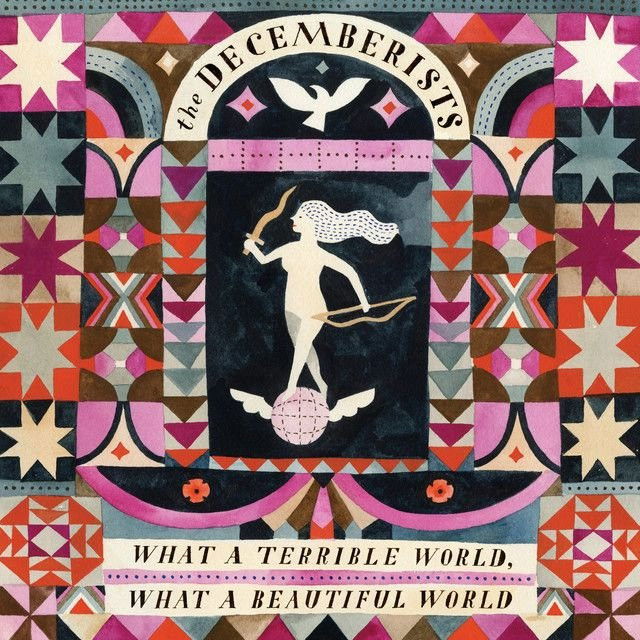
Released during the rollout for What a Terrible World, What a Beautiful World, the track was presented as a folky rocker and helped preview the band’s seventh studio album, which arrived on January 20, 2015. That album was produced by Tucker Martine and The Decemberists, and it marked a more inward-looking period for Colin Meloy, who told Rolling Stone that age, family, and career had made him “look more inward” (Rolling Stone; Wikipedia; American Songwriter). That context matters because this song feels less like a story ballad and more like a portrait of private emotional confusion.
The Core Idea Hiding Inside the Hook
At the center of the song is a mismatch. The chorus says the rain falls on the wrong year
, which turns bad timing into the song’s main symbol. Rain usually suggests sadness, renewal, or a heavy mood. Here, it arrives in the wrong place in time, as if life’s natural cycles have been knocked off course.
That image connects to the repeated line it won't leave you alone
. The feeling in the song is not one sharp heartbreak. It is a lingering disturbance. Desire, doubt, and regret keep returning, almost like weather that refuses to pass.
Interpretation: The song is likely about emotional misalignment more than one literal event. They present love as something that should fit but does not. People want each other unevenly, act too late, or find themselves in the wrong season of life.

Watch the official The Wrong Year
music video
Who the Song Seems to Follow
The verses introduce shifting figures, including Gray Jane
and a male counterpart. Rather than building a detailed plot, the song sketches mirrored situations. One person wants freedom and says nobody will interfere. Another may or may not return affection. Both scenes suggest uncertainty.
This is why the song feels dreamlike. The characters are less important than the pattern around them: wanting, missing, waiting, and not being met. When the lyric says you won't do
, it sounds blunt, but the phrase is actually slippery. It could mean “you are not enough,” “you will not respond,” or “you cannot play the role I need.”
A Brief Narrative Map
They seem to move through three emotional beats:
- A self-defining figure tries to claim independence.
- Desire appears, but it is not returned in a clean way.
- The refrain turns that failed connection into a larger sense of cosmic bad timing.
That structure helps explain why the song feels both personal and oddly mythic.
Strange Phrases, Clear Themes
The lyric language is full of half-familiar terms: riverchild, summerchild, eidolon. These words are poetic, but they serve a simple purpose. They make the people in the song feel fragile and symbolic, as if they belong to seasons, dreams, or old stories rather than normal daily life.
One of the sharpest moments comes in the bridge:
The spirit's willin'
Flesh is getting bored
Speakers blaring out some long forgotten chord
This is the song’s clearest statement of inner conflict. The mind or soul still wants meaning, but the body has gone numb. Even music, often a source of release in Decemberists songs, becomes a faded echo of something once powerful.
Interpretation: That bridge may point to burnout, aging, or romantic fatigue. The person is not empty, exactly. They are stuck between appetite and exhaustion.
How the Sound Carries the Meaning
Part of the meaning of The Wrong Year The Decemberists comes from its arrangement. Reviews and band coverage framed it as a folky rocker, and that label fits. The groove moves with purpose, but there is tension in the melody and vocal phrasing (American Songwriter).
The Decemberists had already started streamlining their sound by this era. The New York Times, as quoted on the album’s reception page, noted a stronger pop concision and less of the old band’s ornate excess (Wikipedia). In this song, that matters. The band does not bury the idea under a long narrative. Instead, they let repetition do the emotional work.
The production by Tucker Martine and the band supports that approach. The rhythm section keeps things pushing forward while the guitars and keyboards add color without turning the track into a swirl. That steady movement makes the lyric’s trapped feeling stand out. The music keeps going; the people inside it stay emotionally stuck.
Two Strong Ways to Read It
There are at least two convincing readings of the song.
Reading One: A Relationship Out of Season
In the most direct reading, the song is about two people whose feelings do not line up. One person reaches out, the other cannot answer, and the resulting ache hangs around. The weather image makes bad timing feel cruel and unavoidable.
Reading Two: A Wider Midlife Dislocation
Because this album came from a more inward phase for Meloy, the song can also be heard as broader existential unease. The references to boredom, sleep, and forgotten sounds suggest more than romance. They hint at someone realizing that desire alone cannot fix a life that feels slightly off-axis.
Both readings can be true at once. That layered quality is one reason the track lasts.
Why the Song Still Connects
The song never fully explains itself, but that is part of its appeal. It captures the feeling of being emotionally early, late, or misplaced. They turn a private disappointment into a weather system.
For listeners, that is the real power of the song: it gives shape to the days when nothing is dramatically broken, yet everything feels slightly wrong.
Disclaimer: This interpretation is based on the released lyrics, the song’s musical presentation, and public artist context. Like many Decemberists songs, it remains open to more than one reasonable reading.








