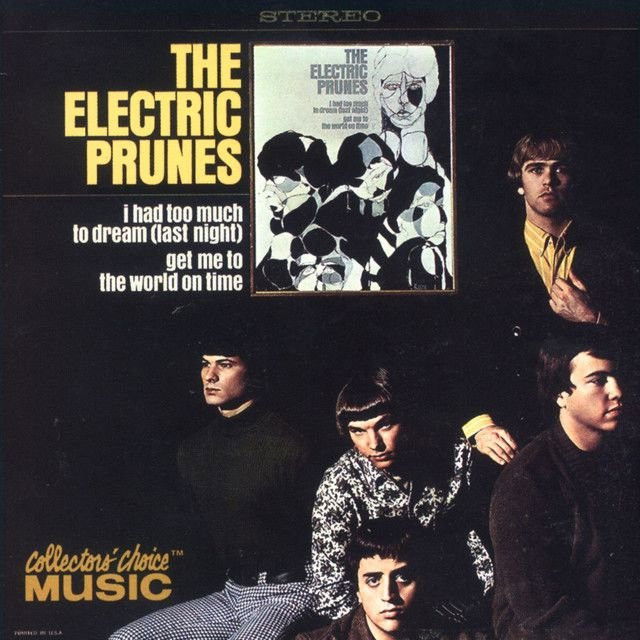
Why This Dream Still Feels So Real
The meaning of I Had Too Much to Dream (Last Night) The Electric Prunes starts with a simple heartbreak idea: someone dreams that a lost lover has come back, then wakes up and has to lose them all over again. What makes the song last is how its sound turns that ordinary pain into something eerie, unstable, and unforgettable.
"I Had Too Much to Dream (Last Night)" - The Electric Prunes
I touched your golden hair and tasted your perfume
Your eyes were filled with love the way they used to be
Loading lyrics...
Unable to load lyrics
We're unable to display the lyrics at this time. Please try again later.
Released in November 1966 as the Electric Prunes' second single, the track became their breakthrough, reaching No. 11 on the Billboard Hot 100 and later appearing on their debut album, The Electric Prunes. It is now widely treated as a landmark of psychedelic and garage rock.Songfacts Wikipedia
A breakup song wearing psychedelic clothes
On the page, the lyrics are direct. The singer dreams that an ex is physically present again. They feel her touch, smell her perfume, and believe for a moment that the relationship has been restored. Then morning arrives, and the illusion collapses.
That is why the refrain hits so hard. When they sing too much to dream
, they do not mean a dream was pleasant. They mean it was emotionally excessive. The mind gave them more hope than real life could support.
This is the key to the song's sadness. The dream is not escape; it is a trap. It lets them relive intimacy just long enough to deepen the loss.
Watch the official I Had Too Much to Dream (Last Night)
music video
How the verses build the emotional crash
The opening image places the singer in a solitary space, where a familiar presence seems to return. Short details like lonely room
and golden hair
make the dream feel tactile and specific rather than vague.
That matters because the song depends on realism before it turns into shock. The ex is not presented as a ghostly blur. She feels close enough to touch, which makes the awakening crueler.
The turn comes with came the dawn
. Dawn is not hopeful here. It is the moment truth breaks in. Daylight means reality, and reality means absence.
Then came the dawn
And you were gone
Those lines are simple, but they carry the whole song. Night creates possibility; morning destroys it. In just a few words, the song turns waking up into a second heartbreak.
The chorus is about emotional overload
The title phrase is clever because it twists a familiar expression. As Wikipedia notes, it plays on the idea of having "too much to drink." But here the excess is not alcohol. It is memory, longing, and fantasy.
Interpretation: the chorus suggests that desire itself can become dangerous. Wanting someone back so badly means even sleep is no longer restful. The mind keeps producing scenes the waking self cannot survive.
That is why the line about not being ready for daylight matters. The singer does not want truth yet. Reality is emotionally harsher than the dream, even if the dream is false.
Why the production makes the meaning stronger
A big reason the song still feels strange is its famous backward guitar intro. According to Songfacts, the sound came from a reversed recording of guitarist Ken Williams using fuzz, tremolo, and a Bigsby vibrato, a discovery the band and producer Dave Hassinger built into the final track.
That opening does more than sound cool. It prepares the listener for a world where normal rules are off. The guitar seems to suck the song backward into itself, like consciousness slipping into sleep.
James Lowe later said the band was chasing electronic sounds
and that the track was assembled in pieces.Songfacts That fragmented method fits the theme. Dreams do not unfold in neat logic. They arrive in flashes, sensations, and sudden cuts.
Songwriting context matters too
The song was written by Annette Tucker and Nancie Mantz, not by the band. Tucker said they wrote it quickly and heard it as a rock song from the start, influenced in part by the Rolling Stones.Songfacts That is important because the final recording balances strong pop structure with psychedelic textures.
So even though the song sounds wild, its emotional message stays clear. The writers gave it a sharp heartbreak premise, and the Electric Prunes gave that premise a damaged, hallucinatory surface.
Two strong ways to read it
Reading one: a literal dream of an ex
This is the most grounded reading, and the lyrics support it best. The singer falls asleep, dreams of reunion, wakes up alone, and cannot shake the experience. Phrases like empty
and racing through my head
show the aftershock.
Reading two: a psychedelic portrait of obsession
Interpretation: because the music is so disorienting, some listeners hear the song as more than a breakup ballad. It can also sound like a person overwhelmed by desire, memory, and altered perception. Even if the story is literal, the arrangement makes their inner state feel chemically intense.
Why it still connects now
Many 1960s psychedelic songs aim for cosmic mystery. This one stays human. Its real subject is familiar: they miss someone, their mind gives them false comfort, and morning feels brutal.
That is why the meaning of I Had Too Much to Dream (Last Night) The Electric Prunes remains easy to feel. Under the fuzz and backward guitar is a universal moment: waking up from happiness and realizing it was never there.
Final takeaway
The song endures because it joins two kinds of disorientation at once: romantic grief and psychedelic sound. One comes from the lyrics, the other from the recording.
Together, they make a breakup song that feels bigger than heartbreak. It feels like reality itself has slipped for a minute, then snapped back.
Disclaimer: This interpretation separates documented facts from informed reading. Like most songs, its meaning can shift from listener to listener.








