Why 'Henrietta' Feels So Wild and Playful
The meaning of Henrietta The Fratellis starts with attitude. This is not a tender love song. It is a loud, cheeky, fast-moving portrait of three young men acting bigger, cooler, and more dangerous than they probably are.
"Henrietta" - The Fratellis
Just these three miserable cunts
Sittin' on the back seat, tappin' on the off beat
Loading lyrics...
Unable to load lyrics
We're unable to display the lyrics at this time. Please try again later.
Released as an early single from The Fratellis' debut era, “Henrietta” helped introduce the Scottish band’s garage-rock style and bar-band swagger. The song was written by John Lawler, and it fits the group’s breakout sound from Costello Music—sharp riffs, gang vocals, and a comic sense of bravado. Those facts are widely reflected in standard discographies and band references such as AllMusic and Discogs.
A Flirtation Built on Chaos
At the center of the song, the speakers are trying to win over Henrietta, but they do it with jokes, demands, and absurd promises. They admit they have no flowers for you
, which immediately undercuts any idea of polished romance. Instead of showing class, they show nerve.
That is the key to the song. They do not sound truly powerful. They sound like they are performing power. The appeal comes from the gap between what they claim to be and what they clearly are: broke, restless, and full of bluster.
Interpretation: Henrietta may be less a real woman than a fantasy figure onto whom they project desire, status, and excitement. She becomes the audience for their act.

Watch the official Henrietta
music video
Who Is Speaking in “Henrietta”?
The lyrics use a group voice, which matters. This is a collective performance by three lonely boys
, not one private confession. Because they speak as a trio, the song feels like a gang chant, almost like friends daring each other to flirt harder and talk bigger.
That plural voice gives the song its comic edge. Even when they sound needy, they hide it behind jokes. When they say it is hard to miss you
, the line flips normal romance into something pushy and theatrical. They are not calmly admiring Henrietta; they are caught in a noisy chase.
The Push and Pull of Desire
One reason the song remains memorable is the way it mixes attraction with irritation. They want Henrietta, but they also seem overwhelmed by her attention and by their own obsession. That contradiction keeps the lyrics lively.
They ask for affection, favors, and adventure in the same breath. They want kisses, shoes, drinks, and escape. None of this sounds stable or realistic. It sounds like fantasy spoken at high speed.
A short map of the song’s storyline
- They introduce themselves as unimpressive but eager.
- They pitch Henrietta on going out with them.
- Their requests get more absurd and reckless.
- They invite her into their messy world.
- The chant-like ending turns the flirtation into pure momentum.
That structure makes the song feel like a dare that keeps escalating.
What the Wildest Lines Really Do
The song includes extreme lines about money, family, and escape. In plain terms, these are best understood as over-the-top fantasy, not literal plotting. The speakers are trying to sound dangerous and irresistible at once.
When they sing about clean out the bank
, the point is not realism. It is cartoon rebellion. The same goes for their invitation to live among the has-beens and the addicts
. They describe a chaotic outsider world that sounds grubby, damaged, and somehow glamorous to them.
Interpretation: This can be heard as satire of rock-star mythology. They are mocking the idea that self-destruction and delinquency make people more exciting. At the same time, they are clearly enjoying that image.
Why “Costello Music” Matters
The phrase down at Costello music
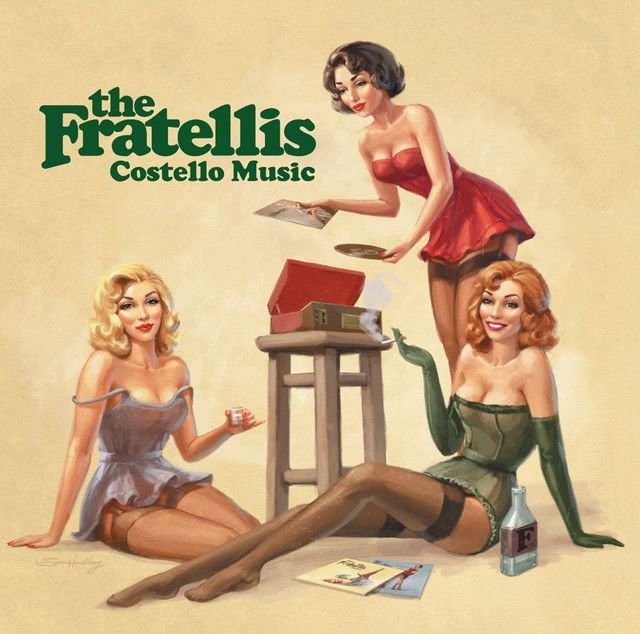
is one of the song’s most important clues. It links the track to the wider world of the band’s debut album, Costello Music, released in 2006 and produced by Tony Hoffer, whose credits are documented in album databases including Discogs.
Inside the song, that phrase suggests a scene rather than a place. It points to nightlife, cheap thrills, band-life chaos, and a social circle full of strivers and wrecks. Henrietta is being asked to join that world, messy as it is.
How the Sound Sells the Story
Musically, “Henrietta” is crucial to understanding the meaning of Henrietta The Fratellis. The guitars are clipped and punchy. The beat moves with a stomping, pub-ready urgency. The vocals sound half-sung, half-shouted, which makes every line feel like it is being tossed across a crowded room.
That production style turns the lyrics into character work. If the words were sung softly, they might sound mean or desperate. Sung this way, they feel playful, reckless, and knowingly exaggerated.
The repeated cries and nonsense syllables matter too. They strip away narrative and leave only energy. By the end, what remains is not a careful message but a mood: attraction as noise, confidence as performance, and youth as a brief riot.
A Bigger Reading of the Song
On one level, “Henrietta” is simply a garage-rock banger about trying to impress a girl. On another, it is about class, image, and self-invention. These narrators have little to offer in a traditional romantic sense, so they sell personality, chaos, and nerve instead.
That is why the song still lands. It captures the moment when people turn insecurity into theater. They are broke, unpolished, and probably unserious, yet they act like the night belongs to them.
Final Take on the Song’s Meaning
The meaning of Henrietta The Fratellis lies in that mix of lust, humor, and bluff. The song is not asking listeners to believe every word. It asks them to enjoy the performance of wanting—loudly, foolishly, and with style.
That is also why Henrietta remains compelling. She is not just a love interest. She is the spark that lets the band dramatize their whole world.
Disclaimer: This interpretation is based on the lyrics, recording style, and public release context. As with many songs, different listeners may hear different meanings.








