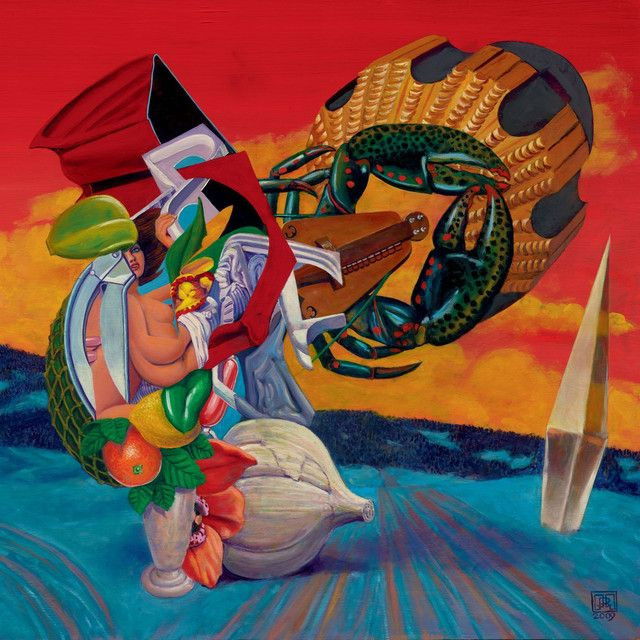
The Meaning Behind 'Teflon' by The Mars Volta
They come to “Teflon” looking for the meaning of Teflon The Mars Volta, and find a tense portrait of numbness, power, and accountability that won’t stick. On Octahedron (2009), the band turned toward a leaner, more melodic sound while keeping their bite. This track uses cold political imagery and personal doubt to ask how people become immune—to pain, to blame, to consequence.
"Teflon" - The Mars Volta
To call the mess you breed
Crawls beneath this surface
Loading lyrics...
Unable to load lyrics
We're unable to display the lyrics at this time. Please try again later.
Panic Under Glass: The Song’s Central Charge
“Teflon” draws a line between public violence and private desensitization. The title hints at a surface nothing clings to—an image often used for politicians who avoid scandal. On the album level, Octahedron deals with disappearances and dread, and this song zooms in on that dread as policy and spectacle.
Cedric Bixler-Zavala has said the lyric imagines what he could get away with saying if the 2008 U.S. election had gone the other way, describing its stance as a “slacker” but still caring posture. Fact: Octahedron was released in 2009 and produced by Omar Rodríguez-López; the band framed it as their version of a pop-leaning, restrained record.

Watch the official Teflon
music video
Who’s Talking Through the Noise?
The narrator speaks in first person, asking, What am I without the bruises?
That question suggests a person who defines themselves through trauma or pressure. When they add, These switches won't come on
, it feels like empathy has shut off.
Interpretation: They could be a bystander, a complicit insider, or a citizen numbed by endless crises. Either way, they’ve learned to feel less. The phrase Beneath this distress call
hints that an alarm keeps sounding in the background, but no one truly responds.
From Flicker to Fire: A Loose Timeline
- Surveillance images slide by:
Frames of infrared
. Interpretation: society watches, measures, and scrolls past suffering. - The hook erupts with riot imagery—
Let the wheels burn
—as if unrest is both catharsis and content. - The bridge turns explicitly political and theatrical:
Take in all the hostages Into the Oval Office Draw the curtains, part their hair And pull the trigger softly
Interpretation: Power stages cruelty off-camera, framed like a ritual. The softness makes it scarier, as if violence has been standardized.
Why the Refrain Stings
The chorus repeats like a news chyron. Interpretation: The call to Let the wheels burn
reads as a symbol for burning motorcades or tires in protest, but also for feeding the media machine. It’s shocking on purpose, mirroring the way extreme images are used to provoke, sell, and desensitize.
Symbols That Refuse to Stick
- Teflon: In common speech, it means nothing sticks—no guilt, no grime. Interpretation: “Teflon veins” implies immunity built into the body politic.
- Oval Office and motorcade: Icons of U.S. power. The line
One driver in your motorcade
suggests how fragile that power can be. - Bugs and scans: Scarabs and infrared scenes evoke surveillance and ancient omens, mixing modern tech with timeless dread.
- Commerce of death:
Selling graves in Teflon veins
links profit to unaccountable systems. Interpretation: industries and institutions that benefit from crisis while avoiding consequence.
Production Choices That Sharpen the Threat
Octahedron scales back the band’s usual chaos, but “Teflon” keeps a coiled energy. Thomas Pridgen’s drums feel like sirens in motion, with snare accents that ratchet tension. Guitars jab in clipped figures rather than sprawling solos, leaving space for synth haze and a tight bass pulse.
Rodríguez-López’s production emphasizes contrast—dry, close-up vocals against a glassy backdrop. That clarity makes lines like These switches won't come on
land like a diagnostic readout. The arrangement swells, then drops back, mirroring flickers of outrage that never fully ignite.
Fact: The album was produced by Omar Rodríguez-López and mixed by Rich Costey, with the band describing it as a more “acoustic” or pop-leaning turn compared to earlier releases. Within that frame, “Teflon” becomes the cold open of a thriller—less explosion, more dread.
Alternate Readings Worth Considering
- Interpretation—Political immunity: The title points to leaders and systems where nothing sticks. The staged violence, motorcade image, and sterile surveillance support this.
- Interpretation—Personal trauma loop: The narrator’s self-definition through harm—
What am I without the bruises?
—suggests someone who only feels alive in crisis. The chorus becomes a metaphor for self-sabotage. - Interpretation—Media ecology: The song catalogs shocking pictures, then numbs the listener through repetition. It’s about how outrage becomes content.
Takeaway: A Protest Against Numbness
“Teflon” is The Mars Volta at their most pointed, using sharp, cinematic language to show how blame slides off power and how empathy shuts down under constant alarm. That’s the enduring meaning of Teflon The Mars Volta: a warning about what sticks—and what dangerously doesn’t.
Disclaimer: Song interpretations are subjective. This reading blends lyrics, documented band comments, and musical analysis to offer one well-supported perspective.