Why ‘The What’ Hits So Hard
The meaning of The What Method Man, The Notorious B.I.G. starts with force. This is not a reflective ballad or a neat story song. It is a competitive rap performance built on pressure, swagger, and survival. Released on Ready to Die in 1994 and featuring Method Man, the track pairs two giant personalities at a moment when both artists were defining East Coast rap’s sound and attitude.
"The What" - Method Man, The Notorious B.I.G.
Now I throw shields on the dick, to stop me from that HIV shit
And niggas know they soft like a Twinkie fillin'
Loading lyrics...
Unable to load lyrics
We're unable to display the lyrics at this time. Please try again later.
Factually, the song appears on Biggie’s debut album Ready to Die and features Method Man, with writing credited to Osten Harvey, Clifford Smith, and Christopher Wallace. It also uses a sample from Leroy Hutson’s “Can’t Say Enough About Mom”, a detail widely noted in song references and discographies.
More Than Bragging, Less Than a Confession
On the surface, “The What” sounds like pure battle rap. Both rappers boast, threaten rivals, and show off wit. Biggie opens in attack mode, mocking weaker MCs and presenting himself as too sharp, too hard, and too dangerous to challenge. Method Man enters with the same energy, turning the song into a two-man showcase of presence and control.
But the track is not only about dominance. Under the insults and threats, it also expresses a worldview: nobody gives them anything, the world is hostile, and respect must be taken. That idea is clearest in the hook’s blunt message about earning everything the hard way. The song treats rap not as a hobby but as combat and labor.
Interpretation: the record frames toughness as both image and defense. They are not just performing aggression for style; they are presenting it as a survival skill.
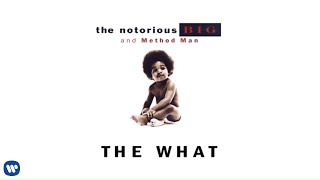
Watch the official The What
music video
The Hook Turns Anger Into Philosophy
The chorus is the song’s center. Its message can be paraphrased simply: do not expect charity, and do not ask for sympathy. The repeated line “don’t ask me for shit”
sounds rude on purpose. It turns frustration into a life rule.
“Everything you get”
“you gotta work hard for it”
That short refrain matters because it grounds all the wild talk around it. The verses may exaggerate violence, sex, and power, but the hook offers the song’s clearest belief: success comes through struggle. In that way, “The What” fits Ready to Die, an album often driven by scarcity, ambition, and emotional hardness.
Biggie’s Verse: Persona as Armor
Biggie’s first verse mixes humor, menace, and shock. He moves quickly from sexual talk to disease anxiety, from punchlines to gun talk. That jumpy style mirrors a mind that treats vulnerability as something to bury under jokes and threats.
A phrase like “your style is played out”
shows how much of his attack is artistic, not just physical. He is killing rivals on the mic first. Even when the language gets extreme, the real contest is lyrical status.
His later verse adds a more revealing line of thought. He briefly points to family damage and links it to criminal behavior and emotional detachment. That does not excuse the cruelty in the lyrics, but it gives context. On Ready to Die, Biggie often presents trauma and bravado side by side, as if the second grew out of the first.
Interpretation: Biggie’s character here is part supervillain, part wounded survivor. The point is not honesty in a diary sense. It is emotional truth delivered through a larger-than-life mask.
Method Man’s Role: Chaos, Style, and Momentum
Method Man does not calm the record down. He makes it stranger and more electric. His verse is full of cartoon violence, odd metaphors, and elastic rhythm. When he says “here I am”
, it lands like an entrance in a ring or on a stage.
His style matters to the song’s meaning because he turns aggression into performance art. Biggie often sounds heavy and grounded; Method sounds slippery and explosive. Together, they create a world where rap skill itself feels like a weapon.
The references to “Shaolin” connect Method Man to the Wu-Tang mythology of martial arts discipline and street grit. That gives his threats a theatrical edge. He is not just angry; he is entering as a character with his own code and aura.
Sound and Production: Why the Beat Feels So Tense
The production helps explain why the song feels both loose and dangerous. The sample source, Leroy Hutson’s 1973 recording, gives the beat a soulful backbone, but the drums and low-end make it feel hard and stripped down. That contrast is important: warmth in the sample, coldness in the delivery.
Instead of crowding the track, the instrumental leaves room for the voices. Biggie’s deep, steady flow and Method Man’s wiry cadence stand out clearly. The beat does not distract from the performance; it frames it like a dark stage.
This is one reason the song lasts. The production captures a key 1994 East Coast quality: raw, sample-based, and spacious enough for personalities to collide.
A Snapshot of 1994 Rap Power
Context matters for the meaning of The What Method Man, The Notorious B.I.G. In 1994, Biggie was emerging as Bad Boy’s defining lyricist, while Method Man had already become one of Wu-Tang Clan’s breakout stars. Their link-up was a major East Coast moment, joining Brooklyn polish and Staten Island grime.
Reception over time has treated the song as a standout collaboration because neither rapper disappears into the other’s style. They sharpen each other. Biggie sounds more ruthless next to Method’s wild energy, and Method sounds even more unpredictable next to Biggie’s control.
What the Song Finally Means
At its core, “The What” is about power under pressure. It turns insecurity, hunger, and neighborhood hardness into a public display of mastery. The violence and vulgarity are part of that performance, but the deeper point is the refusal to look weak.
For many listeners, the song endures because it captures two artists using technique, voice, and attitude to make struggle sound untouchable.
Disclaimer: This interpretation is based on the lyrics, artist context, and the song’s production. Meanings can vary from listener to listener.







