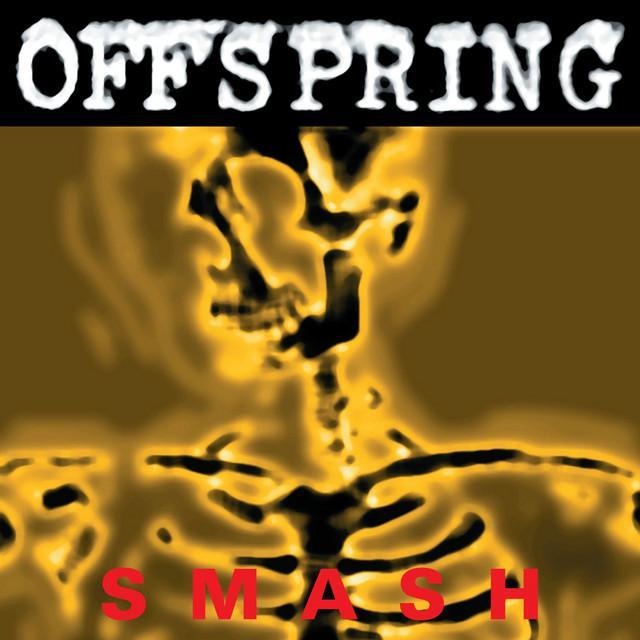
Bad Habit by The Offspring
The meaning of Bad Habit The Offspring comes down to a dark joke with sharp teeth: it turns common road rage into a wild, ugly portrait of anger that feels both funny and dangerous.
"Bad Habit" - The Offspring
Provided by LyricFindHey man you know I'm really okay
The gun in my hand will tell you the same
But when I'm in my carLoading...Loading lyrics...
Unable to load lyrics
We're unable to display the lyrics at this time. Please try again later.
Why This Song Still Hits Like a Horn Blast
The meaning of Bad Habit The Offspring starts with a simple setup: a driver gets irritated, then imagines taking that irritation to a terrifying extreme. On the surface, the song is about traffic, tailgating, and being cut off. Underneath, it is really about how fast wounded pride can become violent fantasy.
The song appeared on Smash, The Offspring's third album, released April 8, 1994, on Epitaph Records and produced by Thom Wilson. That album became a huge breakthrough, peaking at No. 4 on the Billboard 200 and selling more than 11 million copies worldwide, while often being described as the best-selling independently released album in history (Wikipedia, Songfacts).
That context matters. Smash helped bring punk into the American mainstream, and "Bad Habit" felt like one of its most chaotic pressure valves.
Watch the official Bad Habit
music video
The Core Story: Road Rage as a Mask for Something Worse
The narrator insists they are fine, but the song quickly proves the opposite. The opening idea is pure denial, and the line really okay
works almost like a warning sign. They claim calm while describing someone on the edge.
From there, the song builds a short, ugly narrative:
- They present themselves as stable.
- Another driver disrespects them.
- Their anger becomes fantasy about retaliation.
- That rage turns into a feeling of power.
So what is the song “about”? Factually, it is about road rage. Interpretation: it is also about fragile ego. A small insult on the road feels huge because the narrator cannot handle being challenged. Traffic becomes a stage where humiliation and control collide.
How the Chorus Turns Anger Into Identity
The chorus is the key to the song's meaning. When the singer says bad habit
, they make violence sound casual, almost routine. That phrasing is disturbing because a “habit” is usually something annoying or hard to quit, not something deadly.
That mismatch creates much of the song's bite. Instead of saying, “I lost control once,” the chorus suggests this reaction is now part of who they are. The repeated claim that it ain't goin' away
makes the anger feel permanent.
Interpretation: the chorus is less a confession than a self-indictment. The singer sounds proud, trapped, and ridiculous all at once.
A Punk Satire, Not a Driving Lesson
"Bad Habit" caused controversy because some listeners focused on the threats and profanity. But comments from guitarist Noodles, preserved by Songfacts, argue that the song was meant as sarcasm and that some parents took it too literally (Songfacts).
That claim fits the writing. The narrator is so over-the-top that they sound like a caricature of macho rage. Lines about the glove box and revenge are not subtle realism; they push the character into absurdity. Even the boastful moment feel like I'm God
is so inflated that it reads less as cool dominance and more as the mind of someone shrinking into madness.
This does not make the song harmless. Its power comes from how close satire sits to real anger. Most people know the small, hot burst of being cut off in traffic. The song takes that common feeling and shows the monstrous version hiding inside it.
What the Sound Adds to the Meaning
The production helps sell the panic. Smash was recorded quickly in early 1994 on a relatively small budget, and that lean sound works in the song's favor (Wikipedia). The guitars are fast and rough, the drums keep a hard forward shove, and Dexter Holland's vocal delivery sounds like someone clenching their jaw between jokes and explosions.
There is very little softness in the arrangement. The track lunges forward like a car accelerating after an insult. That makes the listener feel the emotional logic before they fully process the words.
The famous breakdown matters
Near the end, the song drops into a spoken or half-spat rant before bursting again. That moment feels less like storytelling and more like a full psychological crack. The profanity is not there for decoration. It shows language itself breaking down under pressure.
Interpretation: the breakdown is the point where irritation becomes dehumanization. Once the other driver is no longer a person, violence becomes easier to imagine.
Why "Bad Habit" Stood Out on Smash
Although "Bad Habit" was expected to be a single and got strong local radio support, it was never given a normal single rollout or standard video push, in part because of its explicit content (Wikipedia). Even so, it became one of the songs fans most strongly associated with the album.
That makes sense. Many tracks on Smash deal with social breakdown, self-destruction, and bad choices. "Bad Habit" fits that world perfectly, but it does so with a tighter, more cinematic scenario. It is not abstract angst. It is a scene everyone can picture.
Final Take: What the Song Really Means
The meaning of Bad Habit The Offspring is not that violence is thrilling or justified. It is that rage can become automatic, comic, and horrifying at the same time. The song turns a petty traffic slight into a portrait of toxic pride and collapsing self-control.
Its lasting power comes from that uneasy mix. It is catchy, funny in a bleak way, and genuinely uncomfortable. They made a punk song about road rage, but what they captured was something wider: the scary speed at which everyday annoyance can turn into identity.
Disclaimer: This interpretation separates documented facts from critical reading. As with most songs, meaning can vary by listener, and some elements remain open to interpretation.








