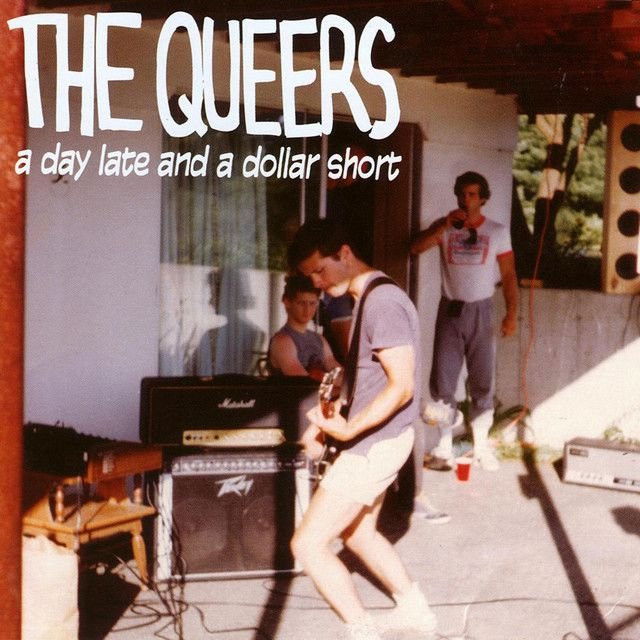
Why This Queers Song Is So Blunt
The meaning of We'd Have a Riot Doing Heroin The Queers is less complicated than its title makes it seem, but that does not mean it is simple. This is an early punk song built on speed, shock, and bad-taste humor. It throws out one ugly image, repeats it, and dares the listener to react.
"We'd Have a Riot Doing Heroin" - The Queers
1-2-3-4
We'd have a riot doing heroin.
Loading lyrics...
Unable to load lyrics
We're unable to display the lyrics at this time. Please try again later.
For many listeners, the key is not whether the song gives a deep story. It mostly does not. The key is why The Queers chose to be this crude and this direct in the first place.
A Tiny Song With a Loud Point
Factually, The Queers formed in Portsmouth, New Hampshire in 1981, and early member Tulu is said to have written this song very quickly during the band’s first burst of original material, according to the band history summarized on Wikipedia. That origin matters because the track feels exactly like something born in two minutes: impulsive, funny to its writers, and designed to hit hard before anyone can overthink it.
The lyric idea is almost entirely contained in the title and hook, We'd have a riot
. The song pairs excitement with self-destruction, turning a dangerous act into a fake party slogan. That clash is the whole point. It sounds cheerful, but the image underneath is bleak.
Interpretation: rather than praising heroin use, the song likely uses exaggeration to mock reckless thrill-seeking. In punk, saying the worst possible thing can be a way to reject polite language and middle-class respectability.
Watch the official We'd Have a Riot Doing Heroin
music video
How the Lines Build the Theme
There are only a few lines, but they all push the same image. The phrase doing heroin
is not surrounded by reflection, regret, or explanation. Then the song gets even more physical with stick it in
and into our skin
. That blunt wording removes romance.
Instead of poetic mystery, the listener gets ugly mechanics. A needle is just a needle. Skin is just skin. The song strips drug use down to an act of self-harm and then wraps it in a chant that sounds almost festive.
Take a needle
stick it in
That tiny couplet captures the trick of the song. The delivery is casual, but the image is harsh. The contrast creates the discomfort.
The Voice: Group Identity Gone Rotten
The repeated word we'd
matters more than it may first appear. This is not framed as one troubled person alone. It is a group voice, a little gang fantasy. That communal tone fits punk’s love of scenes, crews, and outsider belonging.
Interpretation: the song may be satirizing the way young subcultures can turn dangerous behavior into bonding. Saying “we” makes the act sound social, even celebratory. That is exactly what makes it disturbing.
There is also no character development, no backstory, and no lesson. That absence keeps the track from becoming a confessional ballad. It works more like a taunt hurled at the listener.
Why the Sound Matters So Much
The Queers are widely described as a Ramones-derived punk rock and pop-punk band, with simple drive, melody, and irreverent topics, as noted by AllMusic. That style is essential to understanding this track.
The count-in, 1-2-3-4
, tells the listener what kind of world this is: no buildup, no subtle entrance, just instant motion. The music’s likely purpose is to make the lyric hit like a dumb joke shouted from a basement rehearsal room.
Fast punk often compresses meaning. Instead of explaining a feeling, it performs one. Here, the performance is reckless energy. The speed and simplicity can make the subject sound absurd, which supports the reading that the band is using provocation more than testimony.
Artist Context Changes the Reading
The Queers came from an early-1980s American punk culture shaped by Ramones-style melody and by more abrasive, provocative bands. Their catalog often mixes fun, gross-out humor, and outsider attitude. In that setting, taboo subjects were often used to get laughs, offend authority, or prove that the band did not care about polite approval.
That context does not make the subject harmless. It does, however, explain why the song is so cartoonishly blunt. It belongs to a punk tradition where bad taste itself becomes a statement.
There is also an uncomfortable layer in hindsight. Later accounts of the band’s history note real struggles around drugs in parts of The Queers’ orbit. That does not prove this early song is autobiographical. But it can make modern listeners hear it less as abstract shock and more as an example of punk flirting with danger before the consequences fully register.
Two Plausible Readings
Reading One: Pure Punk Provocation
This is the strongest reading. The song is a dare, a joke, and a crude attempt to be offensive. Its repetition and lack of detail suggest a slogan more than a diary entry.
Reading Two: A Portrait of Numb Youth Culture
A second reading is darker. The song may show how boredom and group identity can make self-destructive behavior sound exciting. Calling it a riot
turns damage into entertainment.
Both readings can be true at once. Punk songs often flatten serious subjects into jokes, but those jokes still reveal real social attitudes.
Final Take on the Song’s Meaning
The meaning of We'd Have a Riot Doing Heroin The Queers lies in its collision of fun and harm. The song takes a horrifying act and packages it as a gang chant, exposing how easily rebellion can slide into emptiness, stupidity, or self-destruction.
It is not deep in a literary sense. But it is revealing in a punk sense. Its speed, repetition, and bad-taste humor show a band using provocation as both entertainment and identity.
Disclaimer: This interpretation is based on the lyrics, known band context, and punk history. As with many short punk songs, meaning can remain partly subjective.








