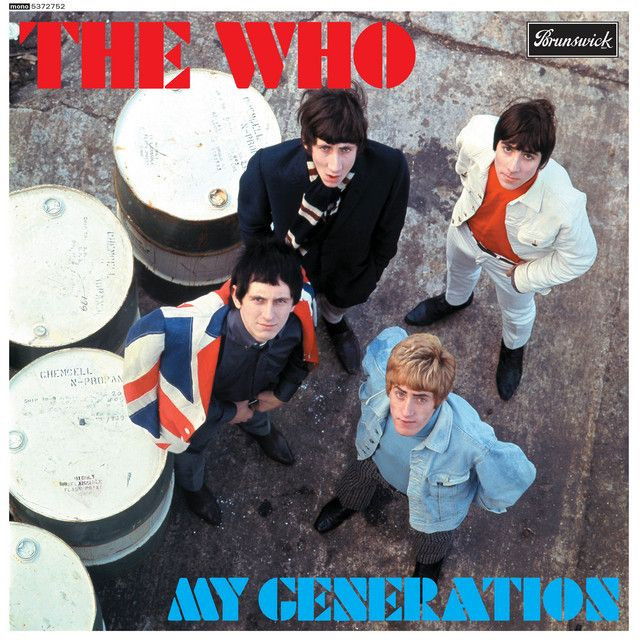
Why 'My Generation' Still Sounds Defiant
The meaning of My Generation The Who begins with a simple conflict: young people feel judged, and they answer back. Released in 1965, the song became one of The Who’s signature statements and one of rock’s clearest portraits of youth anger and pride. Pete Townshend wrote it, and the band cut it during their early rise in Britain, when mods, pop culture, and class tension were all shaping how young listeners saw themselves.
"My Generation" - The Who
Just because we get around (talkin' 'bout my generation)
Things they do look awful c-c-cold (talkin' 'bout my generation)
Loading lyrics...
Unable to load lyrics
We're unable to display the lyrics at this time. Please try again later.
Rather than telling a detailed story, the song delivers a stance. It says that older people try to dismiss the young, and the young are tired of being explained away. That is why the hook feels so direct. It is less a conversation than a declaration.
A Youth Anthem Built on Pushback
At its core, the song is about being talked down to. The opening complaint, summed up in put us down
, frames the whole track. The speaker feels judged not because of any one crime, but because of how their generation looks, moves, and speaks.
That complaint quickly becomes collective. The repeated use of my generation
turns a personal irritation into a group identity. The song is not only saying “they do not understand me.” It is saying “they do not understand us.” That shift is what gives it anthem status.
Interpretation: The song’s power comes from how it turns defensiveness into pride. Instead of apologizing for youthful behavior, it claims it openly.
Watch the official My Generation
music video
The Famous Line That Shocked Listeners
No line from the song is more famous than hope I die before I get old
. In plain language, it expresses a young person’s horror at becoming stale, controlled, or emotionally numb. It is meant to shock, and it still does.
Factually, Townshend later suggested the line captured exaggerated youth feeling rather than a literal wish. In that sense, it works like a dare: better intensity now than dullness later. It fits a moment when British youth culture was defining itself against older rules and manners.
Interpretation: The line is less about death than about authenticity. The real fear is not aging itself. The real fear is losing the fire that makes youth feel alive.
Why the Stutter Matters So Much
One of the song’s most memorable features is the vocal stutter on words like talkin' 'bout my generation
. It makes the song sound nervous, confrontational, and impossible to smooth out.
Listeners have long debated what the stutter means. Some hear it as a jab at the polished manners of older society. Others hear it as a portrait of insecurity under pressure. Both readings make sense because the performance captures two feelings at once: swagger and strain.
That dual effect matters. Youth rebellion is often presented as pure confidence, but this song suggests something more human. The speaker is angry, yes, but also cornered.
How the Sound Carries the Message
The music does a huge amount of the storytelling. The beat hits hard, the guitars slash rather than shimmer, and John Entwistle’s bass is especially aggressive. The band sounds like they are pushing against the edges of the recording.
That rough force mirrors the lyric’s refusal to behave politely. When the singer says older people should fade away
, the band makes the idea feel physical. The track does not ask for room; it takes room.
There is also a deliberate sense of disorder. The performance is tight, but it feels close to falling apart, especially in its energy and attack. That tension gives the song its staying power. It sounds like a generation trying to speak before someone cuts them off.
The bass break and group identity
One reason the record still feels modern is its rhythm section. The bass does not sit quietly underneath the song; it argues with it. That choice supports the theme of rebellion, because even the arrangement refuses to stay in a safe place.
The chorus also works almost like a chant. Repeating the title again and again makes identity itself the point. The band is not offering a policy or solution. They are drawing a line.
Context: The Who, Mods, and 1965 Britain
The Who emerged from London’s mod scene, a youth culture tied to sharp style, restless energy, and a strong sense of difference. In that setting, “My Generation” was not just a hit single. It was a cultural signal.
Its release in 1965 placed it right in the middle of a changing pop world. Rock music was becoming a place where young people could hear their own frustration reflected back at them. The song’s blunt language and abrasive sound helped separate The Who from cleaner, more polite pop acts of the same era.
More Than Rebellion: A Song About Being Misread
The meaning of My Generation The Who is often reduced to simple rebellion, but the lyrics suggest something more specific: the pain of being misread. The speaker says they are not trying to create a huge scene. They are just trying to speak for their age group.
That detail matters. The song is not only aggressive; it is defensive. Under the bravado is a complaint that older society hears youth culture as noise before it even listens.
Interpretation: This is why the song has lasted. Every new generation finds its own version of that frustration.
Why It Still Connects Today
Even decades later, the song remains easy to understand. Young people still feel stereotyped as reckless, shallow, or impossible to understand. Older people still sometimes dismiss what they do not recognize.
“My Generation” survives because it catches that clash in its most basic form. It is loud, impatient, and a little messy, which is exactly why it feels true. It does not polish youth into something respectable.
In the end, the song is about claiming space before anyone grants permission. That is what made it explosive in 1965, and that is why it still sounds alive now.
Disclaimer: This interpretation mixes documented context with informed critical reading. Like many classic songs, “My Generation” can support more than one meaning.








