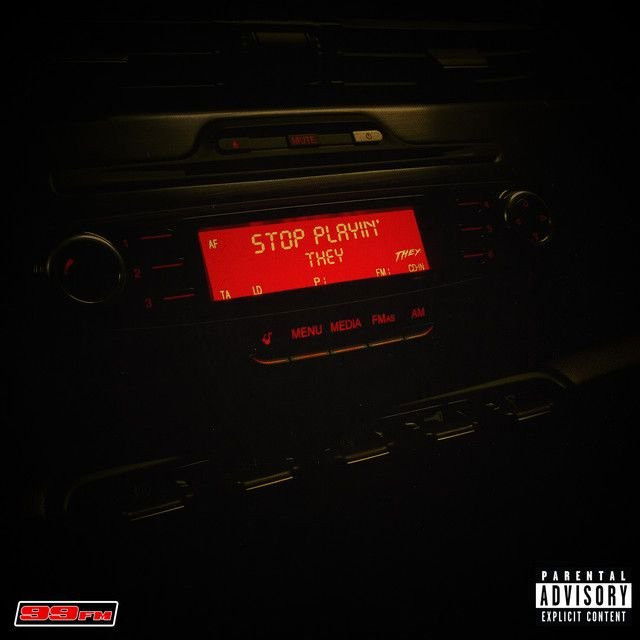
Why 'Stop Playin'' by THEY. Is So Blunt
The meaning of Stop Playin' THEY. centers on impatience, lust, and the push-pull of sexual tension. This is not a mystery song dressed up as poetry. Instead, THEY. use a plainspoken, late-night style to show two people circling each other until one side finally demands action.
"Stop Playin'" - THEY.
Ooh, to knock up on your door like
You've been patiently waiting
Loading lyrics...
Unable to load lyrics
We're unable to display the lyrics at this time. Please try again later.
The duo, made up of Drew Love and Dante Jones, are known for mixing alt-R&B with rock, hip-hop, and dark pop textures. According to the group profiles and release information from Def Jam and Genius, THEY. often build songs around messy desire and modern relationships. “Stop Playin’” fits that lane exactly: it is aggressive, seductive, and intentionally repetitive.
The Core Message Hiding in Plain Sight
At its heart, the song is about someone who feels teased and wants the flirting to end. The speaker believes the attraction is mutual, but they are tired of delay. That is why the hook keeps returning to stop playing
. Before and after that phrase, the lyrics make the same point in different ways: waiting has become frustration, and desire has turned into a demand.
This creates the song’s main emotional engine. It is not heartbreak. It is not romance in a soft or dreamy sense either. It is urgency. The repeated references to being patiently waiting
suggest that even patience has a limit.

Watch the official Stop Playin'
music video
Who Is Speaking, and What Do They Want?
The narrator speaks in a direct, confrontational voice. They are not confessing private feelings so much as making a late-night proposition. The song frames the other person as interested but hesitant, which is why the speaker complains about being teased.
That matters for the meaning of Stop Playin' THEY. because the tension is built on mixed signals. One person thinks this is a game; the other thinks the outcome is already obvious. When the lyric says you keep teasing
, it turns desire into a contest of control.
Interpretation: The song can be heard as a performance of confidence. The speaker sounds sure of themself, but that swagger may also hide insecurity. Their bluntness suggests they want certainty as much as sex.
How the Verses Build the Song's Tension
The verses move in a simple pattern:
- The speaker says they have been waiting.
- They accuse the other person of dragging things out.
- They turn the moment physical and specific.
- They repeat the demand for action.
That structure gives the song a circular feel, like a thought loop after a long night out. Even the detail about having been drinking adds to that mood. It makes the record feel impulsive, heated, and a little reckless.
I've been patiently waiting
for me to knock up on your door
Those lines set up the whole scenario: distance, anticipation, and a visit that feels overdue. After that, the writing becomes more explicit, but the theme stays the same. This is a song about trying to turn chemistry into action before the moment passes.
The Chorus Turns Flirting Into a Demand
The hook is what makes the song memorable. Instead of describing a deep relationship, it reduces everything to a phrase that sounds half playful and half annoyed. Baby, better stop playing
works because it carries two meanings at once.
On one level, it is a sexual invitation. On another, it is a complaint about emotional delay. The chorus blurs those two things together. In this song, wanting someone physically and wanting them to be honest feel like the same impulse.
That is why the repetition matters. Each return to the hook makes the speaker sound less patient and more consumed by the moment.
Sound, Production, and Mood
Musically, “Stop Playin’” supports its message with a dark, stripped-down R&B feel. THEY. are known for hazy production and intimate vocals, and this song uses that style well. The beat leaves room for the vocal to sound close and conversational, which makes the lyrics hit harder.
There is also a club-after-midnight quality to the production. The rhythm feels slow but heavy, like it is built for head nods rather than big movement. That choice matches the lyrics: the song is not about grand love; it is about heat, proximity, and pressure.
The credited writers are Christopher Ahn, Dante Jones, Drew Love, and Paris Strother, as provided in the song credits shared in the prompt. Paris Strother’s writing background in sleek, modern R&B helps explain why the track sounds polished while still feeling raw in tone.
Artist Context Matters Here
THEY. built much of their reputation on songs that mix vulnerability with cool detachment. That larger context shapes how listeners hear “Stop Playin’.” It does not sound like a novelty track built only for shock. It sounds like part of the duo’s larger interest in desire that is messy, immediate, and hard to separate from ego.
Interpretation: In that context, the song is not only about sex. It is also about control. The speaker wants the other person to stop delaying, but they also want to be the one who defines the pace once things begin.
A Useful Way to Read the Song
For most listeners, the best reading is the simplest one: “Stop Playin’” is about sexual frustration framed as confidence. Its lyrics are explicit, but its real subject is anticipation. The song lives in the space between invitation and action.
That is the real meaning of Stop Playin' THEY. It captures the moment when chemistry stops feeling playful and starts feeling urgent. THEY. lean into that shift with blunt writing, a moody beat, and a hook built to sound like a command.
Final Take on the Track
“Stop Playin’” works because it does not pretend to be more delicate than it is. The song is direct about lust, but it also shows how desire can become irritation when two people are out of sync.
That mix of swagger, impatience, and late-night atmosphere is what gives the track its identity. Interpretation disclaimer: This article offers a good-faith reading of the song based on its lyrics, credits, and THEY.’s broader style; meaning can vary from listener to listener.








