
Why 'Headstrong' by Trapt Still Hits Hard
Few early-2000s rock singles sound as instantly confrontational as "Headstrong." Its staying power comes from a simple idea: once trust is broken, the only move left is resistance.
"Headstrong" - Trapt
Provided by LyricFindCircling, you're circling, you're circling your head
Contemplating everything you ever said
Now I see the truth, I got a doubtLoading...Loading lyrics...
Unable to load lyrics
We're unable to display the lyrics at this time. Please try again later.
The Core Meaning Behind the Fight
The meaning of Headstrong Trapt is mostly about recognizing manipulation and refusing to submit. The song's speaker starts in a place of suspicion, then moves toward total certainty. They believe the other person has hidden intentions, and that belief powers the whole track.
Early lines describe someone mentally spinning, second-guessing past words, and exposing a false front. When the speaker points to your motives inside
, they are not just calling out dishonesty. They are saying they can now see what was once hidden.
Interpretation: This can be heard as the end of a toxic relationship. But it also works as a larger anthem against anyone who lies, controls, or tries to intimidate others.
Watch the official Headstrong
music video
A Voice That Stops Negotiating
What makes the song memorable is its tone of finality. This is not a plea for understanding. It is a verbal line in the sand.
The repeated challenge Back off, I'll take you on
changes the song from observation into action. Before that moment, the speaker is analyzing the other person. After it, they are done debating.
That shift matters because it gives the song its emotional arc:
- They notice something is wrong.
- They identify deception.
- They reject the other person's place in their life.
- They answer pressure with defiance.
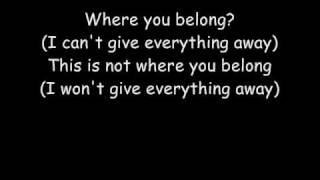
The refrain this is not where you belong
is especially harsh. It suggests not just disagreement, but removal. The speaker is reclaiming space, emotionally and maybe physically too.
The Chorus Turns Anger Into Identity
The hook is huge because it does more than repeat a title. It defines a mindset. In common use, "headstrong" can mean stubborn. Here, that stubbornness becomes strength.
When the song declares Headstrong to take on anyone
, it frames defiance as survival. The speaker may be angry, but they are also newly clear. They know the other person is wrong, and they refuse to keep explaining themselves.
Interpretation: Some listeners hear the chorus as immature macho posturing. Others hear it as the exact feeling of finally standing up after being pushed too far. The lyrics support both readings, which is part of why the song lasted.
Hidden Motives, Gold Dreams, and Refusal
The verses sketch a person driven by self-interest. The image of fantasy becoming reality paved in gold
points to greed, ambition, or a polished lie. It suggests someone who wants power, status, or control more than truth.
Another key line is the repeated refusal to reveal everything. The phrase I won't give everything away
sounds defensive, but it is also strategic. The speaker does not want to be fully exposed to someone they no longer trust.
That makes the song's conflict feel two-sided:
- One person hides motives.
- The other person withholds vulnerability.
So the track is not just about anger. It is about boundaries.
How the Sound Carries the Meaning
"Headstrong" was Trapt's first single from their self-titled album, and it became their breakout hit, reaching No. 1 on both US Mainstream Rock and Modern Rock/Alternative Airplay, according to Wikipedia and Songfacts. It was released on September 23, 2002, and later crossed into the Billboard Hot 100, peaking at No. 16, a sign of how strongly it reached beyond hard-rock audiences (Wikipedia).
That crossover makes sense when they hear the production. The song blends radio-ready structure with a thick, aggressive guitar attack. Its style is commonly tagged as nu metal, alternative rock, and pop metal (Wikipedia).
Producer GGGarth worked with Trapt on the recording, and the mix emphasizes punch over subtlety: tight riffs, a steady stomp in the rhythm section, and vocals that move from controlled accusation to open challenge (Wikipedia). The music does not just support the lyric. It acts it out.
Why It Connected in the 2000s
The song landed in a moment when mainstream rock loved themes of pressure, identity, and backlash. Its music video, directed by Brian Scott Weber, showed scenes of rebellion and confrontation, matching the song's anti-control energy (Wikipedia).
Songfacts summarizes one long-running interpretation: a man trapped in a relationship he wants to leave, dealing with someone too stubborn to let go (Songfacts). That reading fits the lyrics well, even if the song stays broad enough to apply to bosses, rivals, or fake friends too.
This flexibility helped make "Headstrong" more than a single. It became a mood: angry, clear-eyed, and ready to push back.
Final Take on the Meaning
The meaning of Headstrong Trapt is best understood as a song about seeing through deception and choosing confrontation over compromise. Its lyrics are blunt, but the emotional logic is clear: once the speaker loses trust, they stop negotiating.
That is why the song still works. It captures the moment when doubt hardens into certainty and certainty becomes defiance.
Disclaimer: This interpretation is based on the lyrics, widely reported song history, and common listener readings. As with most songs, meaning can vary from person to person.