Why 'O PANA!' by $uicideboy$ Feels So Hollow
The meaning of O PANA! $uicideboy$ comes from a tension the duo often uses well: loud, reckless energy hiding deep despair. On first listen, the track can sound like pure shock value. But a closer look shows something darker. Beneath the drug references and threats, they sketch a world of numbness, illness, and a mind stuck in repeat.
"O PANA!" - $uicideboy$
Crush it up
Hit the blunt, hit the blunt
Loading lyrics...
Unable to load lyrics
We're unable to display the lyrics at this time. Please try again later.
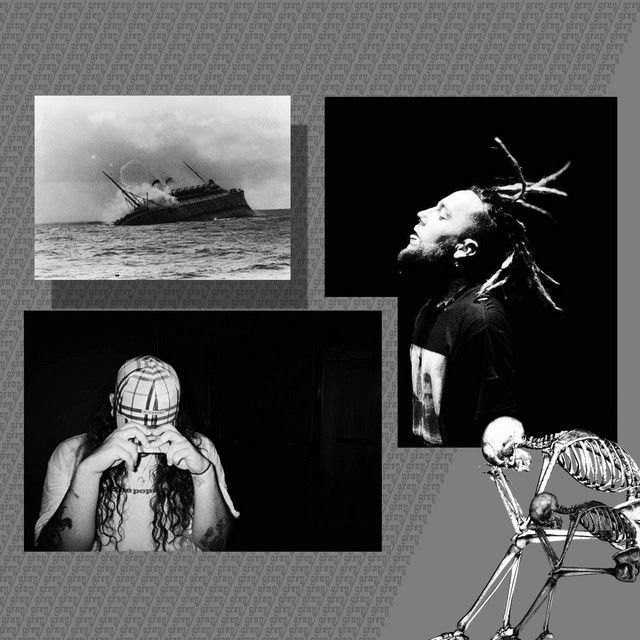
$uicideboy$—the New Orleans duo of Ruby da Cherry and $crim—built their following on raw, DIY rap that mixes Southern hip-hop, horrorcore, and punk intensity. According to widely cited band information, the group is made up of cousins Aristos Petrou and Scott Arceneaux Jr. Their music often returns to addiction, depression, and death-focused imagery. That context matters here because this song fits those broader themes rather than standing apart from them.
A Hook That Sounds Like a Trap
The song’s central idea is clear in its repeated refrain. They keep circling the same actions, using phrases like crush it up
and hit the blunt
. Paraphrased, the chorus turns substance use into a ritual. It is not described as exciting growth or freedom. It feels mechanical, almost empty.
That repetition is important. Instead of moving the story forward, the hook traps the listener in a loop. Interpretation: this suggests compulsion more than pleasure. The act keeps happening because they do not know how to stop, not because it solves anything.
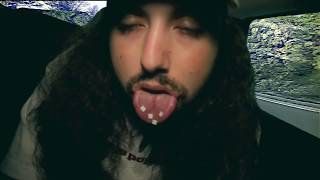
Watch the official O PANA!
music video
Behind the Flex Is a Body Breaking Down
In the verse, the imagery quickly shifts from swagger to damage. They wake up hurting, medicate immediately, and move through the day in a fog. Even the boastful details—jewelry, backstage access, women, neighborhood status—do not feel glamorous for long. Each moment of bravado is undercut by nausea, blackout, or dread.
A few short phrases show that pattern: wake up with an ache
, feeling sick
, and Ruby blacking out
. Paraphrased, the narrator is not in control. The body is failing, the mind is drifting, and the lifestyle has stopped feeling fun.
This is one reason the meaning of O PANA! $uicideboy$ is stronger than a simple “drug song” reading. The lyrics do mention substances constantly, but they also show consequences in real time. They do not present a high without a crash.
The Real Story Is Emotional Numbness
The track is full of motion, but emotionally it feels frozen. They meet people, travel through scenes, and speak with aggression, yet nothing creates connection. There is a telling moment when one voice asks someone backstage to explain life, then leaves anyway. That detail suggests curiosity, but also detachment. They reach toward meaning and then pull away from it.
Another line hints at public performance. They mention the crowd laughing and the curtain coming down, as if life has become a show they no longer believe in. Interpretation: this can be heard as burnout. They are playing roles—rapper, addict, antihero—while privately collapsing.
grass is always greener
when the grave is lacking crowds
This brief image is one of the song’s bleakest ideas. Paraphrased, death starts to look attractive because it seems quieter than life. That does not mean the song gives a clean confession. It means the writers use dark humor and violent imagery to show how hopeless their mental state feels.
Sound and Delivery Make the Meaning Hit Harder
The production matters as much as the words. Like much of early $uicideboy$ material, the beat leans on a stripped, ominous loop with heavy low end and a hypnotic structure. There is very little warmth in the sound. Instead, the instrumental feels cold and repetitive, which mirrors the cycle described in the hook.
Their vocal performances push that further. They rap with slurred menace, sudden bursts of force, and a half-dazed rhythm that suggests intoxication. The mix does not clean them up into polished stars. It leaves grit on the track. That roughness helps the listener feel the instability the lyrics describe.
Two Readings That Can Both Be True
A portrait of addiction
The most direct reading is that the song documents active addiction and the routines around it. Phrases such as pop two pills
and balance it out
suggest dependence, self-medication, and chasing relief that never lasts. Under this reading, the hook is a cycle and the verse is the toll that cycle takes.
A performance of self-destruction
A second reading is that they are exaggerating their own image on purpose. $uicideboy$ often blur confession and persona. Interpretation: the song may also be mocking the idea of the untouchable rap outlaw by making that figure look sick, alienated, and close to collapse.
Those readings do not cancel each other out. In fact, they strengthen one another. The song works because it sounds like both lived pain and a grotesque self-portrait.
Why the Song Still Connects
Part of the reason listeners return to this track is its honesty about emptiness. Even when the lyrics posture, they never sound comfortable. There is always a crack in the mask. For fans, that can feel more truthful than songs that treat excess as pure victory.
So, what is the final takeaway on the meaning of O PANA! $uicideboy$? It is a song about intoxication, but even more about what intoxication is trying to cover up: sorrow, alienation, and the fear that the cycle may not end.
That is an interpretation based on the lyrics, performance, and known themes in $uicideboy$' catalog. As with any song, listeners may hear it differently.








