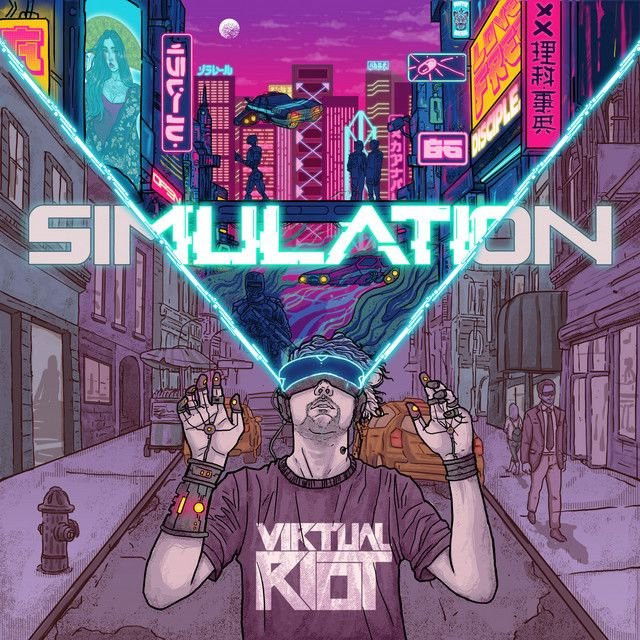
What 'Simulation' by Virtual Riot Really Means
Virtual Riot’s "Simulation" says a lot with almost no words. That is exactly why the track feels so sharp: it turns a simple concept into a full electronic world.
"Simulation" - Virtual Riot
Provided by LyricFindEnter the simulation
Here's what I really want
Welcome backLoading...Loading lyrics...
Unable to load lyrics
We're unable to display the lyrics at this time. Please try again later.
A Small Lyric, A Big Idea
The meaning of Simulation Virtual Riot starts with its title. A simulation is not reality itself. It is a model, copy, or controlled version of reality. That framing matters because the song’s few vocal lines sound less like a personal diary and more like system prompts.
The most important phrase is Enter the simulation
. In plain terms, the song seems to invite the listener into an artificial space. That can mean technology, gaming, online life, or even modern culture more broadly, where people often experience life through filters, feeds, and designed systems.
Interpretation: Because the lyric sheet is so sparse, the track works like a concept piece. Rather than telling a detailed story, it presents a doorway and lets the production fill in the emotions.
Watch the official Simulation
music video
Why the Short Phrases Matter So Much
The song includes only a handful of words, but each one points in a slightly different direction. Welcome back
sounds friendly at first. Yet in context, it can also feel unsettling, like a machine recognizing someone who has returned to a loop.
Then there is Here’s what I really want
. That line introduces desire into the song. It suggests that inside this digital or simulated space, wants can be shaped, fed, or exposed. The phrase is vague on purpose, which gives it power.
Interpretation: Put together, these lines create a cycle:
- The listener enters.
- The system greets them.
- Desire is activated.
That sequence makes the song feel like a commentary on immersion. Once someone steps inside, the environment already knows how to keep them there.
The Album Context Changes the Reading
Virtual Riot, born Christian Valentin Brunn, is a German DJ and producer known for dubstep and electronic music, with a career that stretches back to 2010 and a catalog that includes multiple EPs and studio albums (Wikipedia). His album Simulation was released on September 10, 2021, through Disciple Recordings (Wikipedia).
That context helps explain the song. On an album also called Simulation, this track can be heard as a mission statement. It does not just belong to the project; it helps define it.
Interpretation: The song likely acts as a thesis for the album’s larger mood: synthetic, hyper-detailed, and aware of how digital spaces can feel thrilling and unreal at the same time.
How the Sound Sells the Concept
Virtual Riot is known for highly technical production, especially in dubstep. Outlets like Your EDM have described his style as "non-traditional" and "edgy," a fair summary of how he builds tracks from sharp design, playful detail, and heavy impact (Wikipedia).
In "Simulation," that approach matters as much as the words. The production likely carries the narrative weight that lyrics usually would. In bass music, this often happens through:
- mechanical vocal chops
- sudden transitions
- aggressive drops
- synthetic textures that feel programmed
- repeating phrases that act like commands
Those choices support the title. Even without a long verse, the listener can feel like they are moving through a constructed environment. The sound design becomes the scenery.
A Song About Control, Desire, and Return
One of the strongest ideas in the track is control. Enter the simulation
is phrased like an instruction. Welcome back
implies prior participation. Together, they suggest that this is not a first encounter. It is a return.
That return is important because it makes the simulated world feel habit-forming. The song can be read as reflecting the way people revisit digital spaces every day, sometimes willingly, sometimes automatically.
The line Here’s what I really want
adds another layer. It may point to honest desire, but it can also hint that the simulation is built around desire itself. Digital platforms often promise exactly what users want, or what they think they want.
Interpretation: In that reading, the song is not only about virtual reality. It is about the way systems learn a person’s cravings and turn them into loops.
Another Possible Reading: Pure Hype and World-Building
There is also a simpler reading, and it should be stated clearly. "Simulation" may not be trying to criticize digital life at all. It may simply use futuristic language to create atmosphere, the way many EDM and dubstep tracks do.
Under that view, the phrases work like scene-setting in a live show. The goal is not a deep narrative but a strong mood: cinematic, high-tech, and intense. That fits Virtual Riot’s style well, especially as a producer whose audience often responds to energy, texture, and design as much as lyrical storytelling.
Both readings can be true at once. The track can be a functional banger and a clever concept piece.
Why the Song Sticks
The meaning of Simulation Virtual Riot lasts because the song leaves room for the listener. With just a few phrases, it opens a whole set of questions: Are they entering a game, a machine, a feed, or a mindset? Is the welcome comforting or creepy? Is desire being expressed freely, or being shaped from outside?
That ambiguity is a strength, not a weakness. In electronic music, especially instrumental-heavy bass music, meaning often comes from the collision between title, vocal snippet, and sound design. "Simulation" is a strong example of that method.
Final Thought
Virtual Riot turns minimal lyrics into a larger statement about immersion. Whether listeners hear the track as social commentary or sleek sci-fi world-building, it clearly creates the feeling of stepping into something manufactured and powerful.
Disclaimer: This interpretation is based on the song’s title, available lyric fragments, and artist context. As with most art, other listeners may reasonably hear it differently.








