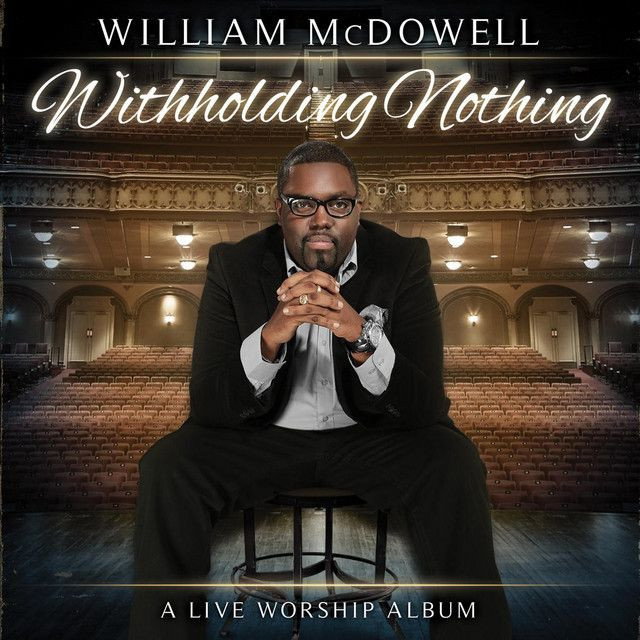
Withholding Nothing by William McDowell
The meaning of Withholding Nothing William McDowell centers on complete surrender. This is not a story song with changing scenes or detailed images. Instead, it is a worship declaration that returns to one main idea again and again: giving every part of oneself to God.
"Withholding Nothing" - William McDowell
Everything I give to you
Withholding nothing
Loading lyrics...
Unable to load lyrics
We're unable to display the lyrics at this time. Please try again later.
William McDowell is known for contemporary gospel and worship music, and this song fits that calling closely. Written by McDowell, it became widely known in church settings for its direct language and devotional focus. Even without complex poetry, the song carries weight because it treats surrender as both a personal prayer and a public confession.
A Worship Song About Total Surrender
At its core, the song says that faith should not be half-hearted. The repeated promise to God is simple: I surrender all
. That short phrase frames the entire message. The singer is not bargaining, asking for favors, or making excuses. They are offering everything.
Another key line, withholding nothing
, sharpens the meaning. The song is not just about giving something meaningful. It is about refusing to keep back the hidden parts of life—fear, pride, plans, pain, and control. Interpretation: this makes the song feel less like celebration alone and more like a moment of spiritual self-examination.
The wording is easy to understand, but the idea is demanding. Many worship songs speak of love or praise. This one goes further by asking what devotion costs.

Watch the official Withholding Nothing
music video
How the Lyrics Build One Big Idea
The song’s structure is almost entirely made from repeated declarations. That matters. Each return to everything I give to you
reinforces the central claim that real worship includes the whole self, not just emotion.
There is also a steady movement in the lyrics:
- First, the singer declares surrender.
- Next, they insist nothing is being held back.
- Then, the song deepens into identity:
I give you all of me
. - Finally, Jesus is named directly as
King Jesus
and Savior.
That progression gives the song a spiritual arc. It starts with an action—surrender—and ends with the reason for that action: the worthiness of the one receiving it.
King Jesus
My Savior
Forever
This brief section matters because it grounds the song in Christian worship language. The surrender is not abstract. It is directed toward Jesus as ruler, rescuer, and eternal Lord.
Personal Prayer, Shared by a Room
One of the strongest features of the song is its blend of private and corporate meaning. The words are in the first person, yet the performance style often feels communal. Phrases are echoed, answered, and repeated in a way that sounds like a congregation joining in.
That call-and-response approach is common in gospel and praise traditions. It turns a personal vow into a shared act of worship. Interpretation: this is why the song often feels powerful in church settings. People are not only hearing one singer’s commitment. They are being invited to make the same commitment themselves.
The line about all belonging to God pushes that idea further. It suggests that surrender is not losing identity, but returning what already belongs to God.
Why the Sound Matters So Much
The production and arrangement help explain why the song lands so deeply. McDowell’s worship style often relies on gradual build, layered vocals, and emotionally direct delivery. In songs like this, repetition is not filler; it is a musical tool that creates space for reflection and response.
Rather than chasing radio-style complexity, the arrangement supports the message through:
- repeated melodic lines
- steady harmonic movement
- rising vocal intensity
- congregational backing voices
The effect is cumulative. Each repetition makes the surrender feel more serious. By the time the song reaches its later sections, the listener has moved from hearing a statement to almost participating in it.
That is a big part of the meaning of Withholding Nothing William McDowell. The sound does not decorate the lyric; it enacts it.
Artist Context and Gospel Tradition
McDowell has built a reputation as a worship leader whose music aims for ministry as much as performance. That context matters here. This song is best understood within modern gospel worship, where simplicity, repetition, and direct address to God are often strengths rather than limitations.
In that tradition, a song can become a prayer, altar call, or communal response. “Withholding Nothing” works in all three ways. It is memorable enough for congregations, but emotionally open enough for personal devotion.
A Clear Meaning, With a Deeper Challenge
The song’s message is clear: surrender every part of life to God. But its lasting power comes from the question it leaves behind. If someone says they are withholding nothing, do they mean time, ambition, comfort, relationships, and control too?
That is where the song moves beyond a lyric and becomes a challenge. Interpretation: its emotional force comes from the gap between what is easy to sing and what is hard to live.
For many listeners, that is why the song still resonates. It does not offer a complicated theology lesson. It offers a direct spiritual test.
Final Take on the Song’s Message
Ultimately, “Withholding Nothing” is about full devotion to Jesus. Through simple lyrics, gospel repetition, and a worship-centered arrangement, the song turns surrender into both confession and invitation.
Readers looking for the meaning of Withholding Nothing William McDowell can hear it as a song about trust, obedience, and giving God complete access to one’s life. That interpretation is based on the lyrics and performance context, but meaning can also vary with each listener’s faith background and personal experience.
Disclaimer: This interpretation is an informed reading of the song’s lyrics, style, and worship context, not an official statement from the artist.








