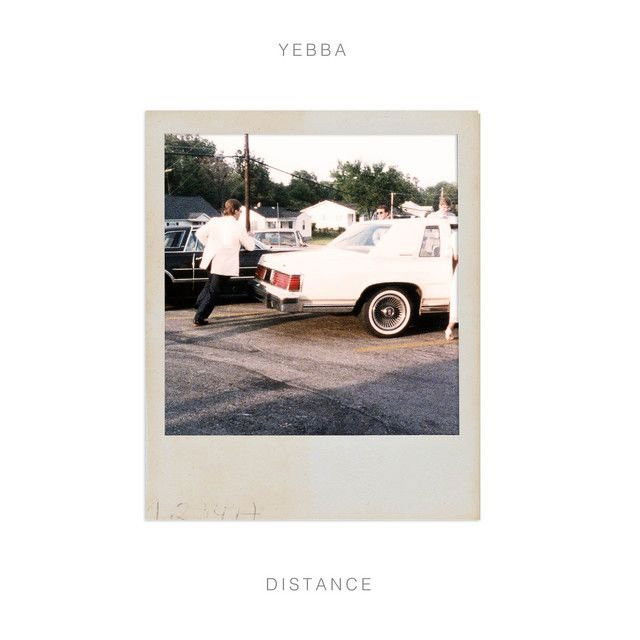
Distance by Yebba
The meaning of Distance Yebba centers on a painful kind of love: the kind that still feels alive even after closeness has started to fade. Rather than telling a dramatic story, the song stays with ordinary memories and repeats them until they feel sacred. That choice is what gives the track its emotional pull.
"Distance" - Yebba
Late night cookin' in the kitchen, yeah, yeah
Dirty dancin' in my room
Loading lyrics...
Unable to load lyrics
We're unable to display the lyrics at this time. Please try again later.
Yebba, born Abbey Smith, is widely known for blending soul, gospel, and pop with a very expressive vocal style, as seen in major profiles and credits around her career. The songwriting credits provided here list Abbey Smith, Alana Chenevert, Darius Scott, James Francies, and Peter Wilkins. Those names matter because the song feels carefully built around emotion, groove, and repetition instead of plot.
A Love Song About Absence, Not Closure
The clearest reading is that the narrator is trying to hold onto a connection that has already changed. The opening request, take me back
, frames the whole song as a wish to return to an earlier state of intimacy. They are not asking for something new. They are asking for the feeling they once had.
That is why the lyric details are so grounded. Memories like late night cookin'
and dirty dancin'
are not grand romantic symbols. They are everyday moments. In this song, those small acts become proof that the love was real.
Interpretation: The word “distance” seems to mean more than miles. It suggests emotional separation too—the gap between having someone in reach and no longer knowing if they are truly there.

Watch the official Distance
music video
Why the Memory Scenes Hit So Hard
One of the strongest things in the song is how domestic it feels. The kitchen and room are private spaces. They are places where people act naturally, without performance. By returning to those rooms in memory, the song says the relationship was built in real life, not fantasy.
That is also why the line about time we shared
carries so much weight. The song pairs shared time with lost time, making love feel double-edged. The same memories that comfort the narrator also wound them.
The cost of losing desire
When the lyric mentions paying the cost of losing the heart’s desire, it shifts the song from nostalgia into grief. Love here is not simply remembered; it has consequences. The narrator is living with what happens when desire remains strong but the relationship no longer gives it a clear home.
This is one reason the song feels so mature. It does not pretend that love disappears cleanly. It shows how affection can outlast certainty.
The Chorus Turns Longing Into Action
The repeated promise to keep sending my love
is the emotional engine of the track. On paper, that phrase sounds comforting. In context, it is more complicated. The narrator cannot fully restore the relationship, so they keep offering love anyway.
That makes the chorus feel active and helpless at the same time. They are doing something—sending love—but they may be doing it across a space that cannot answer back.
"I'm sending all my love
You're the only one that I'm dreaming of"
This brief moment sums up the song’s emotional logic. Even if the relationship is damaged, the inner life of the narrator is still organized around one person. Their love has not been withdrawn. It has simply lost a stable place to land.
A Question at the Center
Midway through, the song introduces doubt. The narrator imagines the other person finding “a new reason” or someone else to hold onto. That moment matters because it breaks the dreamy repetition with insecurity.
Interpretation: This is the song’s deepest fear—not just separation, but replacement. It is one thing to miss someone. It is another to imagine that they may move on while your own feelings stay fixed.
That fear gives the song tension. Without it, “Distance” would be pure nostalgia. With it, the track becomes a portrait of unequal emotional timing, where one person may still be inside the relationship long after the shared reality has shifted.
How the Sound Supports the Meaning
Even without leaning on lots of lyrical detail, the song’s structure suggests circular feeling. Repetition plays a major role. Phrases return again and again, echoing how memory works when someone is trying not to let go.
The arrangement also fits Yebba’s style: warm, soulful, intimate, and built to carry vocal nuance. Instead of rushing toward a dramatic ending, the song lingers. That lingering quality mirrors emotional suspension. The narrator is not moving forward quickly; they are staying inside the feeling.
Why repetition matters here
In weaker songs, repetition can feel empty. Here, it sounds obsessive in a believable way. When someone is heartsick, they often replay the same scenes, same touches, and same hopes. The repeated hook captures that mental loop.
The vocal delivery likely matters as much as the words. Yebba’s strength as a singer has often been her ability to make a line sound bruised and tender at once. That quality suits a song where devotion survives even after certainty is gone.
Final Take on the Meaning of Distance Yebba
The meaning of Distance Yebba is less about a breakup event than about the emotional space that opens after intimacy fades. The song remembers private joy, admits the pain of lost time, and keeps offering love despite uncertainty.
Its power comes from how simple it is. Instead of overexplaining, it trusts a few lived-in images and a repeated promise to do the work. The result is a song about longing, memory, and the stubborn refusal to stop loving just because love has become difficult.
Disclaimer: This interpretation is based on the lyrics provided and publicly known artist context. As with any song, listeners may hear meanings that differ from the ones discussed here.








