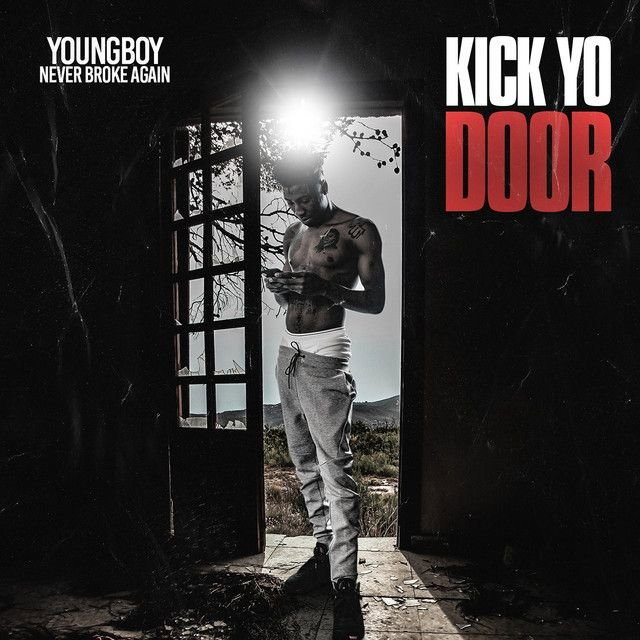
Why "Kick Yo Door" Hits Like a Threat
The meaning of Kick Yo Door YoungBoy Never Broke Again starts with pressure. This is not a reflective song or a moral speech. It is written as a tense, aggressive scene where power comes from fear, speed, and control.
"Kick Yo Door" - YoungBoy Never Broke Again
(Louie Bandz made another one) oh, come on
4KTrey (uh, ayo straight up)
Loading lyrics...
Unable to load lyrics
We're unable to display the lyrics at this time. Please try again later.
YoungBoy Never Broke Again, born Kentrell DeSean Gaulden, has built a career on turning survival instincts into rap songs. His catalog often moves between pain, loyalty, revenge, and street realism, a pattern noted in his broader career arc and biography on Wikipedia. In “Kick Yo Door,” that survival mode is pushed to its harshest edge.
The Core Idea Behind the Song
At its most direct level, the song describes a home invasion and robbery scenario. The repeated command structure makes that clear: a target is cornered, told to comply, and warned that any mistake could turn deadly. When the hook circles back to kick yo' door
and find the stash spot
, the song frames violence as a mission, not a random outburst.
Interpretation: beyond the literal crime scene, the track also works as a performance of total dominance. The narrator wants to sound unavoidable. They are not just taking money; they are taking control of another person’s space, body language, and fear.
That matters because YoungBoy’s music often lives in the line between autobiography, street theater, and emotional release. Here, the emphasis is not on backstory. It is on intimidation in the present tense.

Watch the official Kick Yo Door
music video
A Voice That Controls the Room
One reason the track feels so intense is its point of view. The lyrics use direct orders and threats, putting the listener inside the room with the aggressor. Phrases like hold yo' hands high
and make no sound
create a command-and-response structure, except only one side gets to speak.
This makes the song feel less like storytelling after the fact and more like a live scene unfolding second by second. The details are simple on purpose: get in, locate the money, force obedience, leave no doubt.
Why the Hook Matters So Much
The chorus is repetitive, but that repetition is the point. Each return to the central threat resets the tension. It tells the listener that the song’s world has one rule: compliance or chaos.
We came here for the pounds
Show me where the money
Those lines reduce the whole situation to motive and demand. There is no romance around it. The goal is cash, and the method is fear.
Street Identity, Not Just Shock Value
The song also reinforces a larger YoungBoy persona tied to neighborhood identity, danger, and retaliation. References to 4KT and “38” imagery fit themes that run through his music and public image. In profiles like The FADER interview, YoungBoy describes coming from a hard environment and learning to become someone people would not want to test.
That context does not excuse the violence in “Kick Yo Door,” but it helps explain why songs like this exist in his catalog. They present a worldview where vulnerability is risky and fear becomes a tool of survival.
Interpretation: the break-in can be heard as a symbol of forced power. Someone who grew up with instability may imagine control in its most extreme form: entering another person’s space and deciding what happens next.
This is also why the song feels colder than many other YoungBoy records. There is little sadness here, little melody-driven regret. The emotional center is dominance.
How the Production Carries the Meaning
The beat supports that message well. The production tag announces the track quickly, then the instrumental leaves enough space for YoungBoy’s voice to do the real work. Rather than a lush or emotional backdrop, the beat feels skeletal and hard.
That minimalism matters. It keeps the listener focused on threats, commands, and sudden bursts of ad-lib energy. The rhythm does not soften the lyrics. It locks them in.
YoungBoy is known for blending melody with raw rap delivery, but here he leans harder on clipped, forceful phrasing. The effect is almost tactical. Every bar sounds aimed at maintaining control of the scene.
Delivery as a Weapon
His voice shifts between barked lines and quick, slippery pockets. That gives the song momentum, but it also mirrors instability. The target in the song never gets a calm moment because the vocal performance never grants one.
When he repeats ain't nobody safe
, the phrase broadens the threat beyond one house. Suddenly the song is not only about one robbery. It becomes a worldview of paranoia, revenge, and constant danger.
Possible Meanings Beyond the Literal Plot
The literal reading is the strongest one, but there are two useful secondary readings.
- A reputation record. The song may function as a warning designed to build myth. In that reading, the details matter less than the image of someone willing to go further than others.
- A metaphor for forced entry into status. “Kick yo door” can also suggest breaking into spaces where respect is usually denied. In rap, that can mean taking recognition instead of waiting for approval.
Still, the text itself leans much more toward a street narrative than an industry metaphor. Any symbolic reading should stay secondary.
Why the Song Connects With Fans
Part of YoungBoy’s appeal is that he rarely sounds polished into safety. He sounds immediate. Even when listeners do not share the experiences in the song, they can feel the conviction.
He has become one of rap’s biggest stars, with massive U.S. sales and one of the strongest YouTube audiences in hip-hop, because that intensity feels real to fans. “Kick Yo Door” shows one extreme side of that appeal: not vulnerability, but menace.
Final Take on the Song's Meaning
So, what is the meaning of Kick Yo Door YoungBoy Never Broke Again? It is a song about violent control, survival-minded intimidation, and the performance of fear as power. It puts the listener inside a robbery narrative, then uses repetition and stark production to turn that scene into a larger statement about reputation and street authority.
Interpretation: the song is less interested in ethics than in atmosphere. It wants to sound like a person who has learned that the safest position is being the most feared one.
That is the clearest way to understand it.
Disclaimer: This interpretation is based on the lyrics, performance, and publicly available artist context. As with any song, some meanings remain open to listener interpretation.








