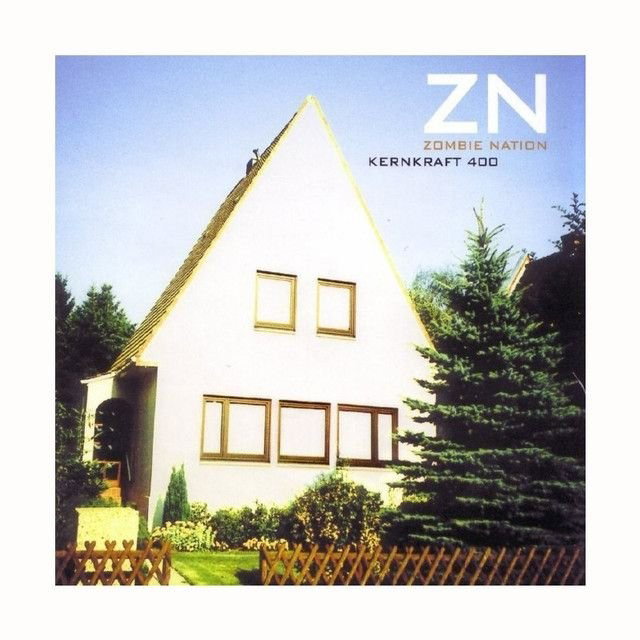
Why "Kernkraft 400" Became a Crowd Command
The meaning of Kernkraft 400 (DJ Gius remix) Zombie Nation is unusual because the track does not tell a story in the normal pop sense. It works more like a machine built for group emotion. With only a few repeated words and a huge electronic hook, the song turns language into pure energy.
"Kernkraft 400 (DJ Gius remix)" - Zombie Nation
Zombie, zombie, zombie, zombie nation(x4)
Ohhohhohhohh, oh, ohhohhohhohhohhohh, ohhoh, ohhoh(x10)
Loading lyrics...
Unable to load lyrics
We're unable to display the lyrics at this time. Please try again later.
Released in 1999 as Zombie Nation’s first single from Leichenschmaus, the famous DJ Gius remix became the version most listeners know. According to Wikipedia’s entry, the song was created by German artist Zombie Nation and the remix was done by Cristiano Giusberti, better known as DJ Gius. That version later became a global sports anthem.
A Song With Almost No Plot
On the page, the lyric content is tiny. The key phrase is zombie nation
, surrounded by chant-like vocal sounds. There are no verses, no character details, and no clear event.
That matters because the song’s meaning comes from repetition, not explanation. Instead of telling listeners what to feel, it gives them a simple phrase they can project onto any moment: celebration, menace, excitement, or shared release. Interpretation: the track is less about zombies literally and more about a mass of people moving as one body.

Watch the official Kernkraft 400 (DJ Gius remix)
music video
What the Hook Suggests
The repeated phrase zombie nation
can sound dark, funny, or triumphant depending on context. In a club, it feels robotic and hypnotic. In a stadium, it becomes a battle cry.
The word “nation” implies a crowd larger than one person. Paired with “zombie,” it creates an image of a collective force that cannot be ignored. Interpretation: the title suggests a huge, half-mechanical public mood, where identity melts into rhythm and the group takes over.
Why the Nonsense Vocals Matter
Much of the track is made of non-lexical chanting, the drawn-out ohhoh
sounds that people can shout even if they know nothing else about the song. That design is a big reason it traveled so well across countries and sports.
Because the sounds are simple, anyone can join in within seconds. The track does not need translation. It invites participation first and meaning second.
Zombie, zombie, zombie, zombie nationfollowed by open-vowel chants
That short pattern shows the song’s whole strategy: a compact phrase, then communal noise. It is music built for instant imitation.
Sound First, Meaning Second
The production explains the song as much as the lyric does. The DJ Gius remix runs on a pounding beat, a sharp synth lead, and a looped melodic figure that feels both playful and aggressive. It is catchy, but it also sounds slightly industrial, which fits the title’s cold, machine-like mood.
Factually, the melody traces back to David Whittaker’s 1984 Commodore 64 track “Star Dust” from the game Lazy Jones, a detail covered in the song history. That gaming origin helps explain the hook’s strange brightness. It feels digital by design.
Interpretation: this clash between hard dance drums and almost toy-like melody is the point. The song sounds like a crowd chant sent through a computer, which reinforces the idea of human emotion turned into a programmed ritual.
From Club Track to Stadium Ritual
“Kernkraft 400” was a hit on charts, peaking at No. 2 in the UK and reaching the U.S. Hot 100 at No. 99. But its deeper legacy is in sports, where fans turned it into a reusable public language.
In arenas and stadiums, the phrase zombie nation
often gets replaced or answered by team-specific chants. That flexibility is central to the song’s meaning in real life. It is not fixed. Crowds remake it.
This is why the record has lasted. A normal lyric-heavy song belongs mostly to the artist. This one partly belongs to the audience. When thousands of people yell over it, the track stops being just a recording and becomes a ritual of identity, pressure, and release.
Is It About Violence, Irony, or Pure Hype?
There are a few reasonable readings.
Reading One: Collective Power
The strongest reading is that the song captures the thrill of group movement. The repeated words and relentless beat make individual thought less important than shared momentum.
Reading Two: A Dark Joke
The title may also carry a wink. Calling a crowd a zombie nation
can suggest mindless obedience, as if modern mass culture turns people into synchronized bodies. The music sounds exciting, but the phrase itself has a creepy edge.
Reading Three: Meaning as Blank Space
A third reading is that the song is intentionally open. It gives just enough imagery to spark a mood, then lets context do the rest. In that sense, the “meaning” is completed by wherever it is played: club, sports arena, video game memory, or movie scene.
Why It Still Hits in the United States
For U.S. listeners, the song’s afterlife in football, basketball, baseball, and hockey is a big part of its power. Many people first know it not as a 1999 European dance record, but as the sound of a timeout, a rally, or a home-team surge.
That use changes the feeling of the track. What may have begun as techno-house spectacle becomes a social signal. When it starts, people expect something to happen. The song trains anticipation.
The Real Meaning in One Line
So, what is the meaning of Kernkraft 400 (DJ Gius remix) Zombie Nation? At its core, it is a song about collective energy more than literal words. Its tiny lyric, digital melody, and forceful beat create a feeling of unified motion.
That is why it survives. It is not memorable because it says a lot. It is memorable because it turns almost nothing into something huge.
Disclaimer: This interpretation separates documented facts from critical reading. Because the song uses minimal lyrics, some meaning is necessarily inferred from its sound, title, and cultural afterlife.








