
Why “We The People....” Hits So Hard
A protest song built for a tense moment
The meaning of We The People.... A Tribe Called Quest starts with resistance. Released in November 2016 as the lead single from the group’s final album We Got It from Here... Thank You 4 Your Service, the track arrived in a charged political moment and quickly felt bigger than a normal comeback single. According to widely cited reporting, it was produced by Q-Tip, co-produced by Blair Wells, and built around a Black Sabbath drum break, which helps explain its blunt, ominous force.
"We The People...." - A Tribe Called Quest
Are still here in the rear, ayo, we don't need you
You in the killing-off-good-young-nigga mood
Loading lyrics...
Unable to load lyrics
We're unable to display the lyrics at this time. Please try again later.
Factually, the song’s title echoes the opening words of the U.S. Constitution, while the hook turns that patriotic phrase inside out. Instead of unity, the chorus acts out exclusion and prejudice. That reversal is the song’s core idea: a nation that says “we” often decides who counts as part of that “we,” and who gets pushed out.
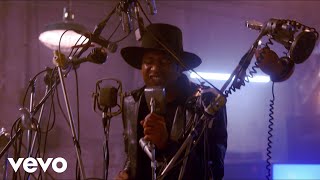
Watch the official We The People....
music video
The chorus turns hate into exposure
A Tribe Called Quest do something smart here. They do not gently describe bigotry; they stage it. The repeated commands aimed at Black people, Mexicans, poor people, Muslims, and gay people present prejudice in naked form. When the hook says you must go
, the group is not endorsing that view. They are exposing how cruel and absurd it sounds.
Interpretation: The chorus works like satire with the smile removed. It is less a joke than a mirror. By making the message so direct, the song forces listeners to hear the logic of exclusion without excuses.
That is why the line we the people
matters so much. In civic language, it should sound welcoming. Here, it becomes a battle over belonging.
The verses widen the picture
Everyday struggle meets political anger
The verses connect public hatred to ordinary life. When they mention ramen noodle
, they bring the song down from slogan level to survival level. Poverty is not an abstract issue in this song; it is dinner.
Elsewhere, the group points to systems that profit from inequality. They rap about the IRS, gentrification, charts, media framing, and entertainment that distracts people from reality. None of these references feels random. Together, they sketch a world where money, image, and power shape who gets seen, who gets blamed, and who gets displaced.
One of the sharpest moments is the line about neighborhoods becoming acceptable only after outsiders move in. The point is not subtle: communities are ignored, then exploited, then renamed as success stories.
Media and gatekeepers under pressure
The song also attacks who gets to define value. A Tribe Called Quest push back against media narratives and industry gatekeepers who reduce them to stereotypes. When they say they are not just rappers with bars, they are demanding a fuller reading of Black art and Black thought.
A brief lyric phrase like false narratives
captures that frustration. The complaint is about more than bad press. It is about a culture that often tells distorted stories about marginalized people, then treats those distortions as truth.
Why the sound feels so confrontational
The production is a huge part of the meaning. The Black Sabbath sample gives the beat a hard, stomping, almost claustrophobic feel. It does not glide the way many classic Tribe songs do. It lurches forward.
That choice matters. The track sounds like pressure. The drums hit with a march-like insistence, and the low-end feels thick and crowded. Q-Tip’s vocal tone is sharp and urgent, while Phife Dawg’s appearance adds weight because this was one of the first songs recorded for the reunion era before his death in 2016.
Interpretation: The rough, compressed energy mirrors the song’s theme of social squeeze. The music does not offer comfort because the message is not comfortable.
Artist context makes the message stronger
This was not just any release in the group’s catalog. It came from a reunited A Tribe Called Quest and introduced the album that would become their final statement. That alone gave the track emotional force. It also reminded listeners that a group once praised for jazzy cool and playful chemistry could still sound fierce, current, and politically locked in.
Critics heard that urgency right away. Pitchfork’s Jayson Greene called it a brief but powerful song about intolerance and fear, while Billboard said it became an anthem for anti-Trump listeners. Those reactions matter because they show how quickly the song moved from album rollout to cultural event.
The reception also fits the song’s design. It is short, direct, and easy to chant, which helped it travel beyond hip-hop spaces into protest culture and political conversation.
A key passage, and what it means
Before the chorus, the group frames persistence against exclusion. They insist they are still present, still speaking, and not waiting for approval.
We don't believe you
we the people
still here in the rear
Paraphrased, the message is simple: authority has lost credibility, and the people being ignored are still here. That idea drives the whole song. It is not only anger at oppression; it is refusal to disappear.
So what is the song really saying?
The meaning of We The People.... A Tribe Called Quest is that exclusion is baked into parts of American life, but so is resistance. The song names racism, xenophobia, class contempt, and media distortion without softening them. It also refuses silence.
Interpretation: There are two voices in the track. One is the ugly public voice of hate saying you must go
. The other is the group’s voice saying, in effect, we are still here, still watching, still creating. That tension gives the song its power.
In the end, “We The People....” is both diagnosis and defiance. It shows how democratic language can be twisted into a weapon, then steals that language back.
Disclaimer: This article offers a good-faith interpretation based on the song, its release context, and documented reception. As with any art, listeners may hear its meaning differently.









