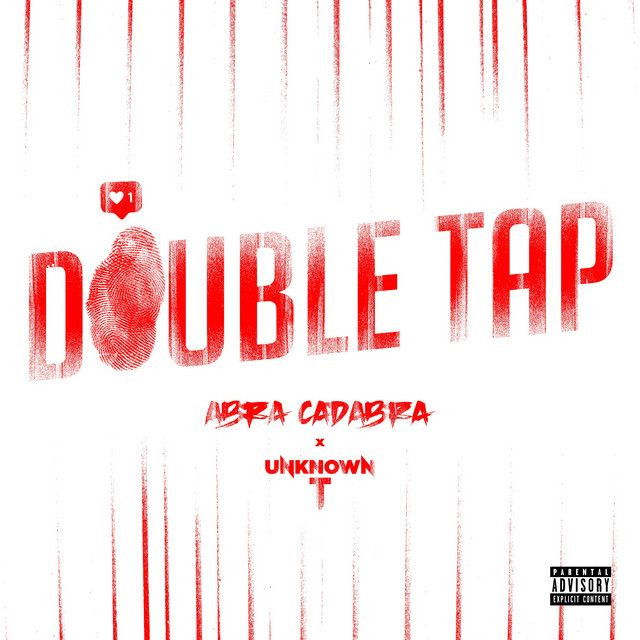
What "Double Tap" Really Means
The meaning of Double Tap Abra Cadabra, Unknown T starts with repetition. Nearly every section comes back to one idea: doing something twice, fast, and with force. In this song, that repeated action becomes a symbol for violence, pressure, sexual bravado, and status. Rather than tell a detailed story, the track stacks images and threats until the listener feels the cycle they are describing.
"Double Tap" - Abra Cadabra, Unknown T
Baow
You know, mhm
Loading lyrics...
Unable to load lyrics
We're unable to display the lyrics at this time. Please try again later.
Abra Cadabra and Unknown T are both major names in UK drill. Unknown T, born Daniel Lena, broke through with "Homerton B," and later scored charting projects like Rise Above Hate and Adolescence; "Double Tap" was listed as a non-album single and reached the UK Top 75, according to publicly available chart histories and biographical summaries in major reference sources. That context matters because both artists work in a style built on menace, coded slang, and hard-edged performance.
The Core Idea Hiding in Plain Sound
On the surface, the song is about dominance. The rappers present themselves as people who move first, hit hard, and never hesitate. The hook repeats double tap
so often that it stops feeling like one action and starts feeling like a worldview.
Interpretation: the phrase works in three ways at once:
- as violent imagery about striking again
- as sexual imagery tied to conquest
- as a broader image of excess and overkill
That overlap is what gives the song its intensity. Nothing in the track is small or moderate. Every boast is pushed further.

Watch the official Double Tap
music video
Where the Verses Point the Listener
The verses jump between street conflict, sexual talk, and flashy self-mythology. One line compares ammunition to sports imagery, another talks about old-school bike days and knives, and others pivot into women, ego, and reputation. Even when the details shift, the emotional message stays the same: they want to sound untouchable.
Short phrases like keep that on a d-low
and leave his life on zero
show that secrecy and destruction sit side by side. The song’s speaker wants control, but also wants credit for being feared.
That is common in drill. The genre often uses first-person or group-based boasting to project survival power in hostile spaces. Unknown T has spoken publicly about drill reflecting lived reality rather than simply causing harm, telling The Guardian in 2018 that critics "don't understand the reality." That does not make every lyric literal, but it helps explain why the tone is so severe.
The Hook Turns One Phrase Into a Trap
The chorus is simple, but that simplicity is the point. It keeps circling back to weapons, women, and the title phrase. By doing that, it blurs different kinds of conquest into one repeated motion.
Drilly with a Glock
wipe that, double tap
This is the song’s central trick. It takes a catchy refrain and fills it with ugly, aggressive meaning. The hook is memorable not because it is deep in a poetic sense, but because it is relentless.
Interpretation: the repetition suggests a mind stuck in escalation. If one action proves power, two actions prove it more. The song keeps asking the listener to accept intensity as identity.
Violence, Sex, and Status All Blur Together
One reason the track feels unsettling is how easily it moves from one kind of domination to another. In several lines, sexual boasting sits right next to threats. A phrase like bend her back
is immediately surrounded by drill imagery, so intimacy becomes another place to perform control.
That blending is not unusual in hard-edged rap, but here it is especially direct. Women are often treated as props in a contest between men, while enemies are reduced to targets. In both cases, the language strips people down to what they can do for the speaker’s image.
So the meaning of Double Tap Abra Cadabra, Unknown T is not just about violence alone. It is also about how drill performance can turn every interaction into proof of dominance.
Why the Sound Matters So Much
The production carries the meaning as much as the bars do. The beat is sparse, cold, and heavy, with sharp drum hits and lots of open space. That emptiness gives each ad-lib and each threat room to land harder.
Abra Cadabra’s delivery is forceful and blunt. Unknown T brings a more rhythmic, slippery cadence. Together, they create a push-pull effect: one sounds like impact, the other sounds like calculation. That contrast helps the song feel both chaotic and controlled.
In drill, production often acts like architecture. The bass creates weight, the hi-hats create motion, and the pauses create suspense. Here, those choices make the track feel like a sequence of sudden attacks rather than a flowing narrative.
Artist Context Changes the Reading
Unknown T is closely associated with UK drill and British hip hop, and his career rise from "Homerton B" into charting tapes and collaborations places him firmly inside the genre’s mainstream story. Abra Cadabra also built his name on dark, intimidating delivery. When they meet on "Double Tap," the audience already expects confrontation.
That matters because listeners are not hearing isolated lyrics. They are hearing two artists with established drill personas leaning into what they do best: intimidation, coded street language, and commanding presence.
Interpretation: for many listeners, the song works less as confession than as performance. It creates a character space where fearlessness is always being acted out, even when the imagery is extreme.
The Lasting Takeaway
The meaning of Double Tap Abra Cadabra, Unknown T lies in its title phrase. It is a symbol for repetition without restraint: hit again, boast again, prove power again. The song keeps folding violence, sex, and ego into that one motion.
That is why the track hits so hard. It does not ask for sympathy or nuance. It asks the listener to sit inside a world where reputation is everything and escalation feels natural.
Disclaimer: This interpretation discusses themes and artistic persona based on the song’s lyrics, sound, and public artist context. It is an interpretation, not a claim that every lyric describes verified real-life events.








