Walk This Way by Aerosmith
They press play and hear a snare crack, a slinky riff, and Steven Tyler firing off tongue-twisting lines. But the meaning of Walk This Way Aerosmith fans ask about is simpler than the speed of the delivery: it’s a funny, flirty coming‑of‑age tale where a teen is coached into swagger and sexuality, told with bluesy double entendres.
"Walk This Way" - Aerosmith
'Till I talked to my daddy he say
He said, "You ain't seen nothing
Loading lyrics...
Unable to load lyrics
We're unable to display the lyrics at this time. Please try again later.
Teen Tales and Double Meanings
At heart, the verses are a nostalgic montage of high school memories: locker rooms, dances, and the thrill of doing something a little risky. Phrases like backstroke lover
and a little kiss
hint at sexual discovery without spelling out the details. The innuendo is deliberate, letting the song live on radio while still winking at older listeners.

Watch the official Walk This Way
music video
Who’s Talking in This Hallway Drama?
The voice is first-person and wide‑eyed, a kid owning his awkwardness—he even calls himself a high school loser
. Across the verses, a more experienced partner basically demonstrates the moves, capped by the bossy, flirtatious command: walk this way
. It’s part guidance, part invitation, and part attitude tutorial.
Scene by Scene: The Locker Room to the Dance
- The song starts with curiosity and rumor—peers offering tips and bragging rights.
- A bold classmate signals interest, the setting shifts to a high school dance, and the narrator takes a chance.
- The lesson is hands‑on and confident; the chorus repeats the command as if training both body and bravado.
- By the end, the teen has learned swagger as much as sex; the command becomes his new stride.
Lines like ready to play
capture the charged, slightly goofy energy of teen flirting. Even the nursery‑rhyme echo of Hey diddle‑diddle
adds to the playground feel, mixing innocence with mischief.
Why the Hook Hits: Swagger as Instruction
Choruses usually summarize feelings. Here, the hook is an order: walk this way
. Interpretation: it’s instruction in technique and in confidence—a transformation from awkward to assured. The hook’s repetition turns advice into a mantra; by singing it, listeners try on the strut themselves.
Dirty Jokes, Clean Craft: Symbols You Might Miss
- Kisses and playground images soften explicit ideas, keeping tone playful.
- School settings (dances, lockers) frame sex education as peer‑to‑peer, not parental.
- The constant motion—swinging, flying feet, walking—mirrors the riff’s momentum.
Interpretation: the song celebrates consent cues and mutual fun; the assertive partner leads, the narrator follows, and both enjoy the game. The wordplay makes it racy yet radio‑safe.
Riff, Groove, and Flow: How the Band Sells the Story
Joey Kramer’s crisp drum intro sets a pocket that feels like a marching step—perfect for a song about how to move. Joe Perry’s main guitar riff, influenced by New Orleans funk, gives the track a rubbery, danceable bounce. Tom Hamilton’s bass locks with the hi‑hat, while Brad Whitford supports the riff with chunky rhythm chords.
Tyler’s rapid‑fire phrasing acts like percussion, packing internal rhymes and alliteration that mimic teen breathlessness. Perry’s talkbox textures in the chorus add a sly, “speaking guitar” effect that matches the song’s playful instruction vibe. Together, the arrangement turns teenage scenes into a tightly grooving short film.
Studio Serendipity and Title Origins
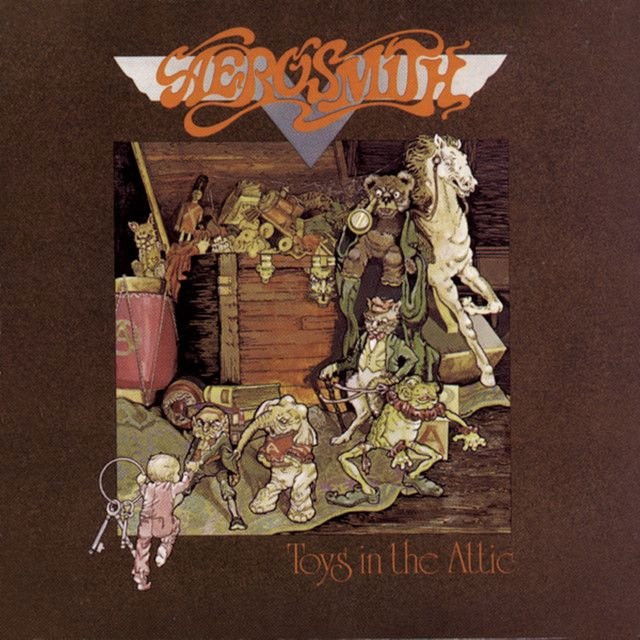
The track took shape during Toys in the Attic sessions (1975), produced by Jack Douglas. Perry built the riff first; Tyler fitted lyrics after scatting rhythms, then famously had to rewrite them in a Record Plant stairwell when his original notes went missing in a cab. As for the title, accounts credit a joke from Mel Brooks’s Young Frankenstein, where a character says “walk this way,” while Tyler has also mentioned The Three Stooges as an influence. Either way, the phrase was too perfect not to use.
From ’75 to ’86: The Cover That Broke Walls
Originally a Top 10 US hit, the song’s cultural blast radius expanded when Run‑D.M.C. covered it in 1986 with Tyler and Perry, reaching #4. That version helped reintroduce Aerosmith to a new generation and became a landmark in rap‑rock crossover. The video’s literal wall‑breaking between studios became a symbol of genres finding common ground.
Alternate Lenses Fans Use
- Interpretation: A victory lap for late bloomers. The narrator starts unsure and ends with a strut; the chorus is his new identity.
- Interpretation: A meta‑joke about rock itself. “Walking this way” doubles as learning how to play and perform—timing, groove, and showmanship.
Takeaway
The meaning of Walk This Way Aerosmith crafted isn’t just bawdy humor; it’s a fast, funky blueprint for confidence. The cheeky lines, the elastic groove, and that command turn teenage nerves into swagger you can dance to.
Disclaimer: Song meanings are interpretive. Details above blend documented context with critical inference.