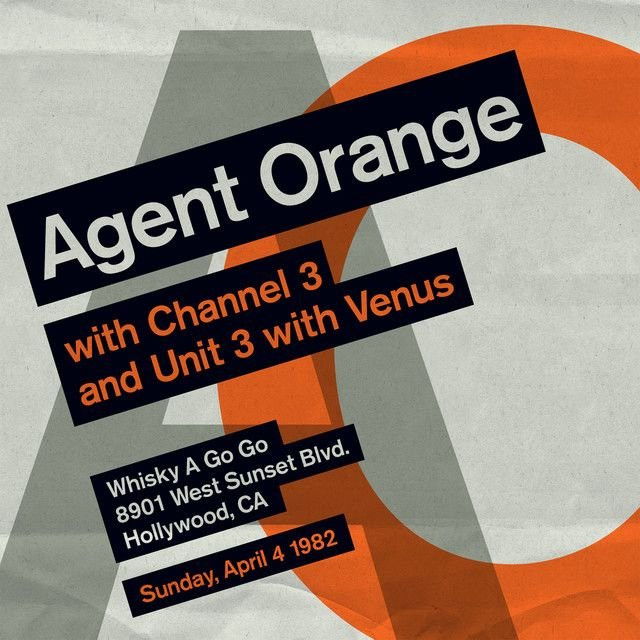
Why Agent Orange’s “Bored of You” Still Bites
The meaning of Bored of You Agent Orange comes down to one clear feeling: exhaustion with fake identity. The song does not sound heartbroken or confused. It sounds irritated, amused, and finally done.
"Bored of You" - Agent Orange
Don't care about what you wear
I hate the things I see
Loading lyrics...
Unable to load lyrics
We're unable to display the lyrics at this time. Please try again later.
Agent Orange came out of Southern California punk in 1979, with Mike Palm as the founding constant member. They became known for mixing punk with surf influence, a style that set them apart from more straightforward hardcore acts. That background matters here, because the song’s target is not only people, but scenes, uniforms, and trends that claim to be rebellious while looking strangely identical.
More Than an Insult, Less Than a Manifesto
On the surface, the song is simple. The speaker lists things they cannot stand: fashion choices, band culture, hard-drug burnout, empty romance, and the copycat look of punk subculture. Short phrases like colored hair
, pins and chains
, and leather jacket clones
are not used to praise individuality. They are used to show how rebellion can harden into costume.
That is the key to the song’s bite. It is not attacking self-expression in general. Interpretation: it is attacking self-expression that has become lazy, performative, and mass-produced.
The repeated hook, I’m so bored of you
, matters because it strips away ideology. The speaker is not trying to win a debate. They are too tired for that. Boredom becomes a harsher judgment than anger, because it suggests the target is no longer even worth fighting.

Watch the official Bored of You
music video
The Real Target: A Scene Eating Itself
One of the smartest things about the lyric is that it keeps widening its aim. It begins with visible markers and social habits, then moves toward a broader disgust with everyone involved. What starts as annoyance with trends becomes disgust with a whole environment.
I’m sick of all the punks
The poseurs and the punks
That brief moment is central to the song’s meaning. The speaker does not only hate outsiders or imitators. They are equally tired of the “real” participants. In other words, the line between authentic and fake has collapsed.
Interpretation: this suggests a scene so full of attitude and repetition that even its true believers have become part of the problem.
How the Verses Build That Frustration
The lyric works almost like a complaint list, but it is more organized than it first appears. It moves through three layers:
- Style markers — hair, clothes, accessories.
- Cultural habits — bands, fans, romance, drug use.
- Group identity — punks, poseurs, everyone.
That structure creates escalation. At first, the speaker sounds picky. By the end, they sound alienated from the entire social world around them.
A phrase like cheap romance
helps show that this is not only about music scenes. It is also about shallow connection. People are not just dressing the same; they are feeling the same tired feelings and repeating the same social routines.
Why Agent Orange Were Well Placed to Say It
Agent Orange were formed in Placentia, California, and are widely recognized as one of the first bands to fuse punk rock with surf music. Mike Palm has remained the group’s central figure, and the band’s early work helped define a different lane inside West Coast punk. Their 1981 debut Living in Darkness is often treated as a key release in that history, according to standard band histories and discographies.
That context gives the song extra force. A band with its own sound had more reason than most to resent imitation. Interpretation: when Agent Orange mock clones and fashionable rebellion, they may be defending originality inside a scene that often rewarded conformity disguised as revolt.
Sound First, Then Meaning
Even without a dense story, the production helps sell the message. Agent Orange’s music is built on speed, punch, and tight rhythm playing. Their surf-punk edge also brings a cool, cutting guitar feel that can make contempt sound stylish instead of heavy-handed.
That matters for “Bored of You.” A slower version might sound whiny. In a brisk punk setting, the same words feel like a sneer tossed over the shoulder. The track’s likely power-trio attack also fits the lyric’s bluntness: no extra ornament, no emotional overexplaining, just direct dismissal.
The vocal tone is important too. The song works best if the singer sounds detached enough to be credible. Too much rage would make the speaker seem trapped in the same drama they claim to reject. Boredom, delivered with edge, becomes the perfect weapon.
Two Strong Ways to Read the Song
A personal put-down
The most direct reading is that the song addresses a person who stands in for a whole type. The repeated “you” makes it feel intimate, almost like a breakup with a scene embodied in one face.
A scene critique from the inside
A deeper reading is that the song is punk criticizing punk. It notices how quickly anti-establishment culture can become just another rulebook. In that reading, the song is not conservative or anti-youth. It is anti-pretension.
Both readings can be true at once, and that double aim is part of why the song lasts.
Why the Song Still Connects
The meaning of Bored of You Agent Orange still feels current because every era creates its own version of stylish sameness. Today the uniforms may be different, but the cycle is familiar: trends become identities, identities become brands, and rebellion becomes marketing.
Agent Orange turn that cycle into a compact punk statement. They do it without preaching and without pretending they stand above everyone else. By the end, the speaker sounds almost trapped in the same culture they reject.
That is what gives the song its sting. It is not only saying, “They are fake.” It is saying a whole social world has become exhausting.
Disclaimer: This article offers informed interpretation based on the lyrics, the band’s history, and the song’s style. Song meanings can remain open, and listeners may hear something different.







