Why "Bidon" Turns Cool Into Self-Doubt
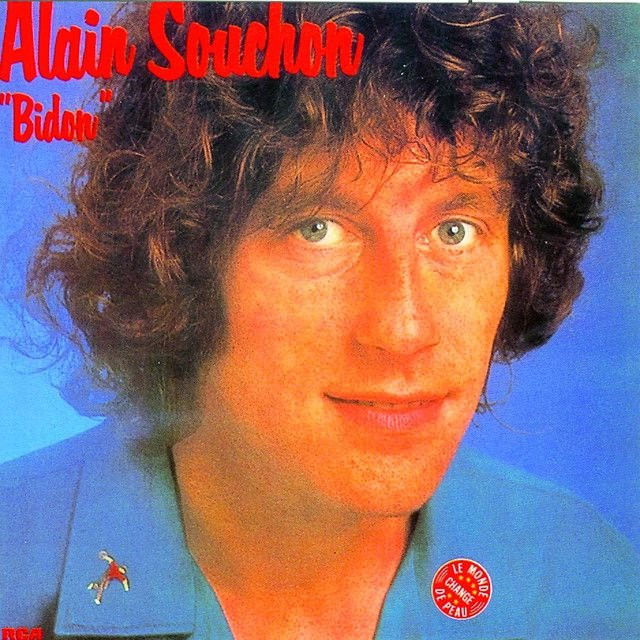
The meaning of Bidon Alain Souchon starts with a joke and ends with a confession. On the surface, the song is playful: a woman mistakes the narrator for a cowboy, a race-car driver, and then a glamorous singer. But each fantasy collapses almost immediately. What looked impressive from a distance turns out to be costume, bluff, and embarrassment.
"Bidon" - Alain Souchon
Le fils de Buffalo Bill, alors admiration
Faut dire que j'avais la chemise à carreaux
Loading lyrics...
Unable to load lyrics
We're unable to display the lyrics at this time. Please try again later.
That is what makes the song sharp. Alain Souchon, who began building his career in the 1970s and formed a lasting songwriting partnership with Laurent Voulzy, often mixed pop melody with irony and emotional honesty. Factually, they co-wrote the song, and it appeared on Souchon’s 1976 album Bidon, an early release between J'ai dix ans (1974) and Jamais content (1977). Those career details are widely documented in major reference sources such as Wikipedia’s artist overview.
A Comic Story With a Nervous Heart
At the center of the song is a man being misread. Other people see signs of coolness and build a whole identity around them. A plaid shirt and guitar suggest an outlaw hero. Racing talk suggests danger and speed. Stage clothes suggest stardom.
But the narrator never fully becomes any of those people. Instead, he admits he is j'suis bidon
—in other words, fake, flimsy, not the real thing. That refrain is the key to the whole song. It turns the verses from comedy sketches into a deeper portrait of insecurity.
Interpretation: the song is not only mocking posing. It is also showing how easy it is to get trapped inside someone else’s fantasy, especially when they admire the image more than the real person.
Watch the official Bidon
music video
Three Masks, One Problem
The song moves in three main episodes, and each one repeats the same emotional pattern:
- He is mistaken for a cowboy.
- He is mistaken for a race driver.
- He is mistaken for a singer.
In each case, style comes first and truth comes second. The woman sees a symbol and fills in the rest. The narrator goes along with it, answering with scraps of borrowed language and role-play.
One of the funniest details is his broken, half-performed cool. He tosses out phrases and attitudes that sound secondhand, as if he learned masculinity from pop culture instead of life. When he admits using deux-trois mots bidon
, the song shows how fake charm can be built from clichés.
That is why the comic scenes keep ending in consternation
. Every performance reaches a point where reality pushes through.
The Chorus Says More Than the Verses
The chorus is where the mask slips completely. He does not just say he is pretending. He says he feels wrong inside the role. The line mal dans ma peau
matters because it shifts the song from social satire to inner discomfort.
He is not only caught lying to someone else. He is also alienated from himself.
The repeated image of going along with his bike clip—pince à vélo
—is especially important. After all the glamorous projections, that small, plain object brings everything back to ordinary life. It is a perfect anti-fantasy symbol. Instead of a rebel, racer, or rock star, he is just a regular guy trying and failing to look larger than life.
J'habite chez ma grand-mère
derrière le garde-barrière
This brief confession crushes the last bit of glamour. He does not live a mythic life at all. He lives in a very specific, modest reality. The humor lands, but so does the sadness.
Pop Culture, Performance, and Fragile Masculinity
Part of the meaning of Bidon Alain Souchon is about masculine performance. The song presents a chain of familiar male archetypes: the American rebel, the racing champion, the seductive singer. These are not random. They are all public images built on speed, style, and admiration.
Souchon’s lyric turns those images inside out. Instead of mastery, they produce nerves. Instead of confidence, they produce aspirin, awkwardness, and failure. When the narrator calls himself un mec à frime
, he is basically accusing himself of being all show.
Interpretation: this can be heard as a critique of how men are taught to perform attractiveness. The song suggests that charm often starts as imitation, and that imitation can feel hollow very fast.
How the Sound Supports the Meaning
Even without reproducing the full arrangement, it is fair to say the song works through contrast. The writing is light on its feet, catchy, and rhythmically playful. That pop ease matters because it lets the embarrassment arrive without becoming heavy-handed.
Given Souchon’s broader style and his long collaboration with Laurent Voulzy, the song fits a French pop approach that blends melodic accessibility with subtle emotional complication. The tune carries bounce; the words carry collapse. That mismatch is the point.
The likely effect on listeners is simple: they laugh first, then recognize the deeper sting. Many great Souchon songs work like that.
Why the Song Still Feels Fresh
What keeps “Bidon” alive is how modern its anxiety feels. People still build identity from borrowed images. They still perform versions of themselves to be admired. They still fear being found out.
So the song is not just about one awkward man in one flirtation. It is about the gap between image and reality. That gap can be funny, but it can also hurt.
Final Take
The meaning of Bidon Alain Souchon is the meaning of false coolness: how easy it is to wear a role, and how hard it is to believe in it. Beneath its wit, the song is about self-consciousness, fragile ego, and the sadness of feeling ordinary in a world that rewards spectacle.
That reading is an interpretation, not a definitive statement from the artist. Like many strong pop songs, “Bidon” leaves room for listeners to hear both satire and sympathy at once.







