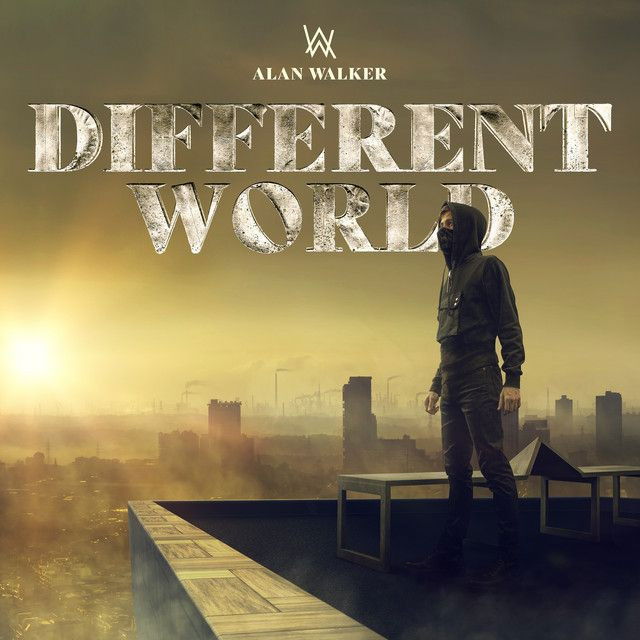
How 'Different World' Turns Fear Into Hope
The meaning of Different World Alan Walker, K-391, Sofia Carson, CORSAK starts with a simple tension: the song sees a damaged world clearly, but it refuses to give up on it. Released as a 2018 single and later included on Alan Walker's debut album Different World, the collaboration joined Walker, K-391, Sofia Carson, and CORSAK on a track tied to the #CreateADifferentWorld campaign and environmental awareness. Reports around the release also linked the song to climate change messaging and visuals of pollution, fires, and rising waters in its lyric video (Wikipedia; Billboard).
"Different World" - Alan Walker, K-391, Sofia Carson ft. CORSAK
Left untold
Beaten by a broken dream
Loading lyrics...
Unable to load lyrics
We're unable to display the lyrics at this time. Please try again later.
A Pop-EDM Warning With a Human Heart
At its core, the song is about disappointment. The speakers look at the present and realize it is not the future they imagined. When they sing about a broken dream
, they are not just talking about one failed romance or one bad night. They are describing a wider collapse of hope.
That is why the song feels larger than a personal confession. Alan Walker said the track was meant to raise awareness and remind listeners that there is still time
to create change, while also pointing to a planet being damaged faster than it can be repaired (Wikipedia; Billboard). The lyric writing turns that message into something emotional instead of preachy.
Watch the official Different World
music video
Why the "We" Matters So Much
One of the song's smartest choices is its point of view. The lyrics keep returning to a shared voice: people have been chasing our demons
and facing the results together. That makes the song feel collective. It is not blaming one person; it is naming a shared crisis.
Interpretation: This collective voice helps the track work on two levels at once:
- as a song about humanity failing the planet
- as a song about two people holding each other up
Those readings do not cancel each other out. Instead, they strengthen each other. A global problem becomes easier to feel when it sounds personal.
The Chorus: Grief, Then a Small Door of Hope
The emotional center of the song is the chorus line not the world we had in mind
. That phrase captures the whole idea in plain language. It sounds almost conversational, which makes it hit harder. There is no fancy metaphor hiding the truth.
But the chorus does not stay in despair. It answers that pain with but we got time
. That repeated line matters because it changes the song's purpose. Without it, the track would be only a lament. With it, the song becomes a plea for action and patience.
Take me back
Back to the mountainside
Under the Northern Lights
Chasing the stars
This brief passage adds a memory of beauty and innocence. It imagines a return to a place where life felt fuller and nature felt close. The idea is not really about going backward forever. It is about remembering what is worth saving.
Images of Dust, Skylines, and the Natural World
The verses are full of collapse imagery. A castle turns to dust, the road feels empty, and people keep running only to end up in the same place. These are strong symbols for progress that is not really progress.
The "castle" is especially effective. A castle suggests ambition, protection, and civilization. Watching it fall means watching something built with effort fail anyway. In a climate reading, it can suggest cities, systems, or modern life proving more fragile than expected.
Then the song shifts to the skyline, mountainside, and Northern Lights. Those images bring in distance and perspective. Cities represent the human world; mountains and stars suggest a world bigger than human control. The contrast quietly asks whether people have drifted too far from what matters.
How the Production Carries the Message
The production helps explain the song's meaning as much as the words do. Factually, the track was produced by Alan Walker, Big Fred, James Njie, K-391, and Mengzhou Hu, and it reworked an earlier K-391 idea called "Sevje" (Wikipedia; Billboard).
Musically, the song has the clean, cinematic EDM style associated with Walker: airy synths, a steady pulse, and a drop that feels uplifting instead of aggressive. Sofia Carson's vocal delivery is important here too. She sounds wounded, but controlled. That balance keeps the song from tipping into panic.
Interpretation: The production mirrors the message. The darker verse mood suggests damage and exhaustion, while the brighter lift in the chorus suggests possibility. It sounds like standing in ruins and still choosing to rebuild.
A Song With Activism in the Background
Context matters with this release. The lyric video reportedly showed trash-filled oceans, air pollution, wildfires, hurricanes, and then more hopeful natural scenes later on. Billboard also described the video as showing the sad state of the planet through hard-to-watch imagery (Wikipedia; Billboard).
That context makes the intended meaning unusually clear. This is not just a vague song about things feeling bad. It was presented as a song about environmental damage and the need to respond before it is too late.
The Lasting Meaning of "Different World"
So what is the meaning of Different World Alan Walker, K-391, Sofia Carson, CORSAK? It is a song about living in a wounded world, mourning what has been lost, and still refusing to believe the story is over. Its sadness gives the message weight, and its hope keeps the message useful.
For many listeners, that is why the song lasts. It does not deny fear, but it also does not glorify doom. It says people may be lost, tired, and late—but not finished.
Disclaimer: This interpretation is based on the song's lyrics, release context, and public comments from the artists. As with any song, listeners may hear personal meanings beyond the ones discussed here.








