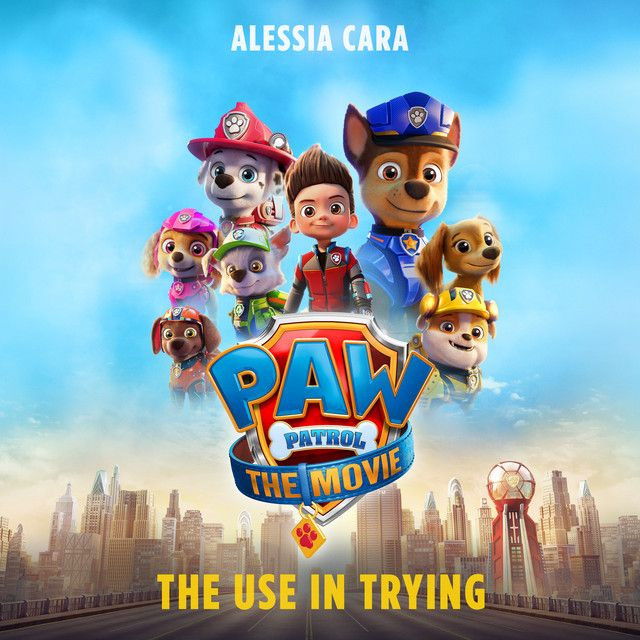
The Use In Trying by Alessia
Why This Song Hits So Gently
The meaning of The Use In Trying Alessia centers on courage, effort, and self-discovery. Rather than promising victory, the song says trying still matters even when the result is uncertain. That makes it feel more honest than a simple motivational anthem.
"The Use In Trying" - Alessia
Ooh-ooh, ooh, ooh, ooh
Just a jump away from where you wanna go
Loading lyrics...
Unable to load lyrics
We're unable to display the lyrics at this time. Please try again later.
Alessia Cara released the song in 2021 for Paw Patrol: The Movie, and according to Rolling Stone, she said it was written for a major turning point in the film and meant to stress “the importance of courage” while showing that there is value in trying even when people do not win every time (Rolling Stone, 2021). That context matters because it explains why the lyrics sound encouraging without becoming unrealistic.

Watch the official The Use In Trying
music video
A Song About Effort, Not Perfection
At its core, the track speaks to someone who is close to growth but afraid to take the final step alone. Early lines describe being near a goal yet held back by fear. When the song says too afraid
and later suggests they have only made it halfway before, it paints a picture of a person stuck between desire and doubt.
That is the emotional engine of the song. It is not about failure in a dramatic sense. It is about hesitation, the kind that keeps people circling the same problem for months or years.
Interpretation: The song argues that fear is not the opposite of courage. Fear is the condition that makes courage necessary. In other words, bravery is not confidence. It is action taken while still uncertain.
The Chorus Gives the Real Lesson
The chorus delivers the message in the clearest way. First, it offers comfort: Hold your head up
. Then it admits life is unfair with You won't get what you give
. That line is important because it rejects the easy idea that hard work always gets rewarded.
Instead, the chorus finds meaning somewhere else:
When the dust all settles
There's pieces of yourself
Maybe that's the use in trying
Paraphrased, the idea is that effort changes the person making it. Even if the outside result is messy, the inner result can still matter. They may discover resilience, patience, courage, or a clearer sense of who they are.
This is what gives the song its emotional weight. It treats trying as a process of becoming, not just a path to winning.
How the Verses Build That Idea
Nearness and distance at the same time
The verses use simple images to show how frustrating growth can feel. Someone is only a small step from where they want to be, yet the emotional distance feels huge. The gap is not physical; it is mental.
Later, the song shifts to searching and digging. It suggests that effort does not always lead to treasure. People can work hard and still come up empty. That is a mature idea in a song aimed at a broad audience, including kids.
Loops, dirt, dust, and smoke
The writing also uses circular and cloudy images. A life that feels like a game they cannot win or a path too tangled to navigate suggests confusion and repetition. Dust and smoke imply the aftermath of struggle, when vision is blurred.
But those images are not only negative. Once the air clears, the person sees something new in themselves. The obstacle becomes a mirror.
The Sound Supports the Message
Rolling Stone noted that the track opens with subtle piano, and that soft start fits the song’s theme well. Instead of sounding huge right away, the production eases in with patience. That matters because the song is trying to comfort, not push.
Jon Levine, who co-wrote the song with Alessia Cara and is credited by Rolling Stone as a co-writer and producer, helps shape a clean, supportive backdrop. The arrangement feels steady and open. That gives Cara’s voice room to carry the emotion.
Her performance is key to the meaning. She does not sing like someone giving a lecture. She sounds sympathetic, almost as if they have been through the same doubts themselves. That warm delivery makes lines about struggle feel personal instead of preachy.
Artist Context Makes the Theme Clearer
In Cara’s catalog, songs often balance vulnerability with resilience. Around the time of this release, Rolling Stone noted it followed the singles “Shapeshifter” and “Sweet Dream.” Even without forcing a direct storyline between those songs, The Use in Trying fits her broader habit of writing about inner conflict in a plainspoken way.
The movie connection is also useful. Since the song was written for a key scene in Paw Patrol: The Movie, its message had to work for children while still feeling true for adults. That helps explain why the language is simple but the emotional idea is not simplistic.
Two Strong Ways to Read It
Interpretation 1: A pep talk to someone else
The most direct reading is that the narrator is speaking to another person who feels stuck. The use of “you” keeps the focus on encouragement. They are telling someone not to measure life only by outcomes.
Interpretation 2: A pep talk to the self
There is also a second reading. Because the song says I've been down that road
, it can sound like self-coaching. The singer may be talking outward, but they are also reminding themselves of a lesson learned through experience.
That dual meaning makes the song easy to connect with. It works as advice from a friend and as a private reminder during hard moments.
Why the Song Resonates
The meaning of The Use In Trying Alessia lasts because it tells the truth people often need to hear: trying may not guarantee success, but it can still leave behind wisdom and strength. That message is useful in school, work, relationships, and creative life.
The song’s greatest strength is its refusal to fake certainty. It does not say everything will work out perfectly. It says effort still has value. For many listeners, that is the more comforting promise.
Disclaimer: This interpretation blends verified context about the song’s creation with informed analysis of the lyrics and sound. Meaning can vary from listener to listener.








