Why 'Pale Blue Dot' Turns Space Into a Warning
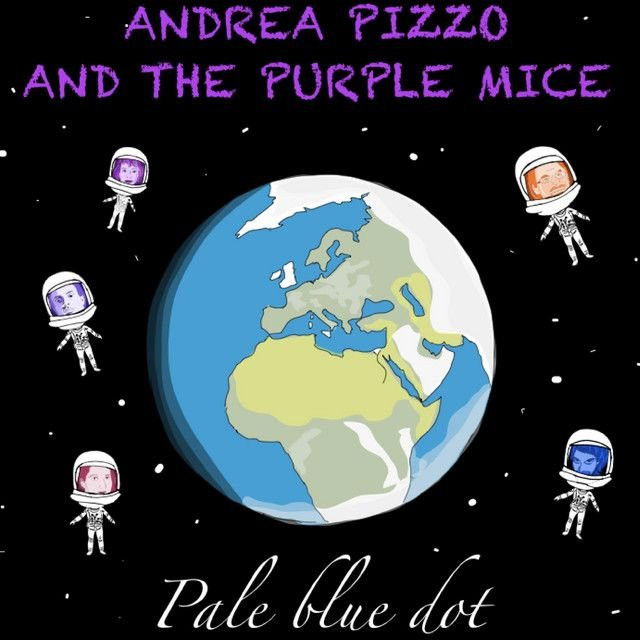
The meaning of Pale Blue Dot Andrea Pizzo comes into focus fast: this is a song about perspective. Instead of telling a private love story or a breakup, it zooms all the way out to Earth itself. From that distance, human pride, cruelty, and division start to look painfully small.
"Pale Blue Dot" - Andrea Pizzo
The set of all sensations, feelings and emotions
All our thoughts, eternal hopes
Loading lyrics...
Unable to load lyrics
We're unable to display the lyrics at this time. Please try again later.
Written by Raffaella Turbino, the song clearly draws on the famous “pale blue dot” image and idea popularized by astronomer Carl Sagan in his 1994 book Pale Blue Dot. Sagan described Earth as a tiny speck seen from space, a way of reminding people how fragile and shared human life really is. That background matters because the lyrics do not just borrow space imagery for beauty; they use it as an ethical lesson.
A Cosmic View With a Human Point
At its core, the song says that all human experience happens on one tiny world. Early lines gather nearly everyone into one frame: dreamers, rulers, parents, children, saints, and sinners. By stacking these identities together, the lyric makes one simple point: no one stands outside the human family.
That is why the phrase pale blue dot
matters so much. It is not only a picture of Earth. It is a symbol of shared limits. The song argues that every victory, every fear, and every memory happens on the same small planet.
Another key image, mote of dust
, makes that point sharper. The lyric shrinks human civilization to something almost invisible in the larger universe. In plain terms, the song says that people act as if their conflicts are huge, but from a cosmic angle they are tragically petty.
Watch the official Pale Blue Dot
music video
How the Verses Build the Message
The structure moves in three clear stages.
- It starts by gathering all kinds of people into one place.
- It then turns to violence, bloodshed, and the human hunger for power.
- Finally, it reaches a moral conclusion: people should act with more kindness and protect Earth.
That middle turn is the emotional center. After reminding listeners that everyone you know
lives on the same planet, the song asks them to think about war and cruelty. This contrast is the point. If all people share one tiny home, then destruction begins to look irrational.
Interpretation: the song is not claiming that suffering is unimportant. It suggests the opposite. Suffering matters so much because life is rare, finite, and happening in one fragile place.
The Chorus as a Moral Reset
Each return to the central image works like a reset button. When the lyric says everyone you love
, it brings the cosmic idea back down to daily life. Suddenly, the song is no longer about astronomy alone. It becomes personal.
That is what makes the refrain effective. It balances wonder with responsibility. The vast universe could make human life seem meaningless, but this song pushes toward the reverse conclusion: because Earth is small and there is nowhere else
, people should treat one another better.
To preserve and cherish our world
The only home we have ever known
Those lines condense the whole argument. The message is environmental, moral, and social at the same time.
Symbols That Carry the Song
Several motifs shape the meaning of Pale Blue Dot Andrea Pizzo:
- The tiny Earth: humility, fragility, shared existence
- Stars and sky: scale, mystery, perspective
- Blood and war: the cost of ego and division
- Home: responsibility, stewardship, belonging
The song’s strongest symbol is contrast. It places human ambition next to the size of the universe. Kings and slaves, heroes and cowards, all become equal under that view. This does not erase difference. Instead, it reframes it. The lyric suggests that status is temporary, but mutual dependence is real.
How the Sound Likely Supports the Theme
Even without full production credits here, the writing points toward a grand, cinematic arrangement. A song with this kind of space-facing theme often works best with sweeping keyboards, layered vocals, and slow-building dynamics. That style would fit Andrea Pizzo’s conceptual approach and help the music feel as large as the subject.
The words themselves invite that scale. Lists of people create a chant-like rhythm, while the repeated chorus sounds built for a broad, anthemic lift. If the arrangement expands during the refrain, that would reinforce the song’s central move: from individual life to planetary awareness.
Interpretation: the likely production goal is not intimacy but awe. The song wants listeners to feel small in a way that opens compassion, not despair.
Artist Context and the Song’s Deeper Aim
Andrea Pizzo’s name is often associated with idea-driven, science-leaning material, which makes this theme feel fitting rather than random. The lyric by Raffaella Turbino also explains the song’s directness. It is written less like a diary entry and more like a statement of values.
That direct tone may divide listeners. Some may hear it as inspirational and urgent. Others may find it more didactic than poetic. Both responses make sense. The song is clearly trying to persuade, not just describe.
Still, that is part of its strength. It takes a famous scientific image and turns it into a civic message: less arrogance, less violence, more care.
Why the Song Still Lands
What makes this song memorable is its refusal to separate the cosmic from the everyday. It looks at stars, then comes back to human behavior. It asks listeners to hold two truths at once: humanity is very small, and human choices still matter enormously.
That tension gives the song its emotional weight. The universe may be vast, but the world people share is limited, delicate, and worth protecting.
Disclaimer: This interpretation is based on the lyrics provided and publicly recognizable cultural context around the “pale blue dot” concept. As with any song, meaning can remain open to multiple listener readings.









