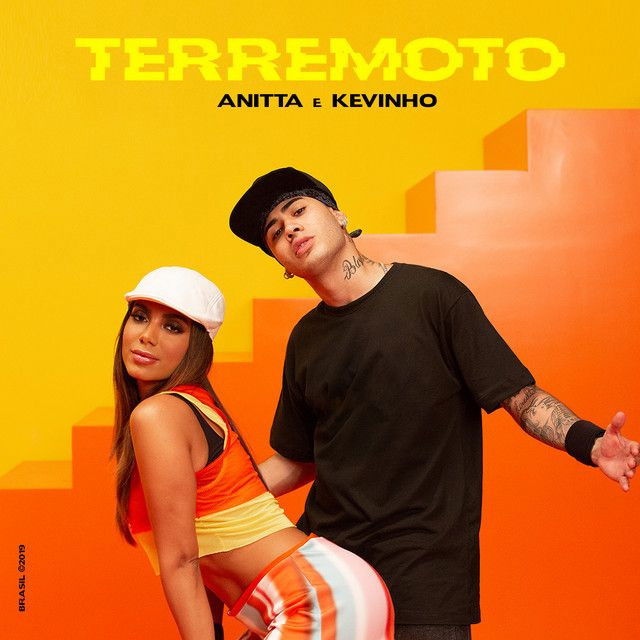
Why 'Terremoto' Hits Like a Dance Challenge
The meaning of Terremoto Anitta, MC Kevinho starts with a simple idea: some people do not just enter a room, they shake it. In this track, dance becomes a form of power, flirtation, and competition. The song is not subtle, and it is not trying to be. It turns movement into spectacle and attraction into a public event.
"Terremoto" - Anitta, MC Kevinho
Essa mina gosta de tocar o terror
'Cê acredita
Loading lyrics...
Unable to load lyrics
We're unable to display the lyrics at this time. Please try again later.
Released in 2019, “Terremoto” brought together Brazilian pop star Anitta and funk artist MC Kevinho, two performers known for high-energy hits and dance-centered visuals. The writing is credited to Larissa de Macedo Machado, Kevin Kawan de Azevedo, Umberto Tavares, and Jefferson Junior. Those facts shape how listeners hear the song: as a commercial crossover built to hit hard in clubs, playlists, and social media dance culture.
The Core Idea Behind the Chaos
At its center, the song is about a dancer whose presence feels impossible to ignore. The title word, meaning earthquake, is the key metaphor. When the chorus says igual terremoto
, it frames dancing as something physical enough to disturb the whole space.
That image matters because the song keeps linking motion to control. One person moves, and everyone else reacts. Sleep is lost, attention is hijacked, and rivals feel threatened. The lyrics describe this effect with phrases like tocar o terror
, which in context suggests causing a scene, stirring people up, or creating thrilling chaos.
Interpretation: Rather than describing love, the song describes impact. Attraction here is measured by how much someone can unsettle the room.

Watch the official Terremoto
music video
Two Voices, One Game of Power
One of the smartest parts of the song is its switch in perspective. Early on, the male voice talks about a woman who is bold, disruptive, and unforgettable. He sounds impressed, overwhelmed, and a little destabilized. That is where lines about insomnia and losing peace come in.
Then the female voice answers by claiming that role for herself. She presents herself as atrevida, poderosa
, which means daring and powerful. That shift changes the song from admiration to self-definition.
What that back-and-forth means
The duet structure makes “Terremoto” feel like flirtation and rivalry at the same time. He says she has entered his mind. She responds by making clear that this effect is intentional. The result is less a love story than a contest of charisma.
Interpretation: The song suggests that desire is not passive. Both performers treat attraction like a game of who can dominate the moment.
The Chorus Turns Dance Into a Superpower
The hook is repetitive on purpose. It keeps returning to movement: going low, not stopping, shaking, and causing disruption. A phrase like não para
matters because it gives the chorus its momentum. The body keeps moving, so the song keeps moving.
This repetition also mirrors dance music logic. In club songs, the hook is not just a message. It is an instruction and a mood. Here, the chorus tells listeners exactly what kind of energy to expect: relentless, flashy, and physical.
Quando eu desço, é igual terremoto
Rebolo, não paro, toco o terror
Even in this short section, the song’s priorities are clear. It celebrates motion, confidence, and public reaction. The dancer is not asking for approval. They already know they have the room.
Jealousy, Desire, and Social Theater
Another important layer in the meaning of Terremoto Anitta, MC Kevinho is its focus on audience. The lyrics are not private. They are full of watchers: jealous people, tempted onlookers, and a partner who cannot stop thinking about what they saw.
That matters because the song treats the dance floor like a stage. The woman is called the nightmare of the envious and the dream of those who have not had her. In other words, the performance creates status. Desire becomes social proof.
The male verse pushes this further by using game language. He talks about strategy, reversal, and trying to win. That sounds almost competitive, as if seduction is another arena where reputation matters.
Interpretation: The song is partly about how people perform confidence in public. Dancing is not only sensual here; it is also a way of controlling attention.
How the Sound Carries the Meaning
The production helps sell every part of that idea. “Terremoto” draws from Brazilian funk with a heavy rhythmic pulse, chant-like repetition, and a beat designed for body movement. The track does not need a complicated melody because the rhythm is the message.
Short vocal bursts and call-and-response sections support the song’s duel-like structure. Anitta sounds commanding and playful, while Kevinho brings hype-man energy and desire. Together, they make the track feel like a live exchange in a crowded club.
This is why the earthquake metaphor works so well. The beat itself feels percussive and jolting. Even when the lyrics are simple, the production creates the sense of force the title promises.
Why the Song Connected
Anitta has built much of her career on blending Brazilian genres with international pop strategy, while MC Kevinho became known for catchy funk hits and danceable hooks. “Terremoto” fits both brands perfectly: it is bold, easy to chant, and built for visual performance.
For U.S. listeners, some of the language may sound blunt or repetitive in translation. But that simplicity is part of the design. The song works less like a confessional and more like an event. It wants immediate reaction, not careful decoding.
The Last Shake
So, what is the meaning of Terremoto Anitta, MC Kevinho? It is a celebration of erotic confidence expressed through dance, rhythm, and spectacle. Its central claim is that movement can become a form of social power.
Interpretation: The song is not trying to reveal hidden emotional depth. Its meaning lives on the surface, in swagger, repetition, and the thrill of making everyone look. That surface, though, is the point.
Disclaimer: This interpretation is based on the lyrics, performance style, and cultural context, and other listeners may reasonably hear the song differently.








