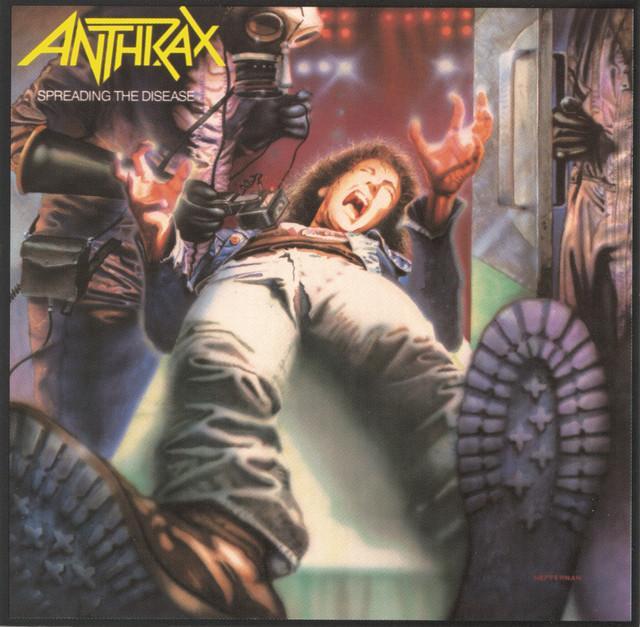
Lone Justice by Anthrax
The meaning of Lone Justice Anthrax comes down to a simple but uneasy idea: the song paints a lone gunslinger as both hero and danger. On the surface, he brings order. Underneath, he may be addicted to power, violence, and the thrill of deciding who deserves to live.
"Lone Justice" - Anthrax
The outlaws, and the lawmen that prevail
The bounty hunter's job is on the wrong side of the law
Loading lyrics...
Unable to load lyrics
We're unable to display the lyrics at this time. Please try again later.
Anthrax place that tension inside a fast, theatrical thrash song, and that matters. According to critical commentary on Spreading the Disease, "Lone Justice" is one of the album tracks that pays tribute to fictional characters, which suggests this is a narrative portrait rather than a diary entry. It appears on the band’s 1985 album Spreading the Disease, their second studio record and the first to feature Joey Belladonna and Frank Bello.[1]
A Western Myth With a Dark Edge
The lyrics open by dividing the world into two camps: outlaws and lawmen. That setup sounds clean and moral at first, but the song quickly complicates it. The central figure is a bounty hunter, someone close to the law but not fully inside it.
That is why the song feels more interesting than a standard good-versus-evil story. He rides in to clean up a town, yet he operates in a gray zone. When the lyric describes the job as being on the wrong side of the law, Anthrax hint that legal authority and moral authority are not always the same thing.
Interpretation: The song seems fascinated by the old Western fantasy of the lone savior, but it also questions that fantasy. A man can claim to protect order while still being ruled by ego and bloodlust.

Watch the official Lone Justice
music video
What the Narrator Shows About Power
The song is written in the third person, which gives it the feel of a legend being told. They are not inside the gunslinger’s head all the time. Instead, they watch him from the outside, building his image through action and reputation.
Short phrases like nameless one
, squint-eyed grin
, and rides through history
make him sound bigger than life. He is not just a man; he is a type. He feels like a movie outlaw-hunter shaped into a metal character.
At the same time, the lyrics do not make him purely noble. The line about the jury, in his mind
is crucial because it suggests he has replaced a real justice system with his own judgment. He decides guilt. He carries out punishment. No outside check seems to exist.
The Story Beat by Beat
The narrative is easy to follow, which helps the song hit hard:
- A divided world is introduced: lawmen versus outlaws.
- A bounty hunter enters town to hunt and punish.
- He succeeds quickly and efficiently.
- His role expands from hunter to private judge.
- The song ends by showing justice as a daily moral struggle.
That last point gives the song more weight. Near the end, the lyrics suggest his life is not simple victory but a moral fight
. That phrase keeps the character from becoming a cartoon. Even if he believes he balances right and wrong, the cost of that belief is constant violence.
Why the Chorus Matters
The hook centers on fear, payment, and punishment. The song says people will pay the highest price when this gunslinger comes for his due. In plain terms, the chorus frames justice as a transaction backed by death.
Justice, law and order
And you'll pay, the highest fee
Those lines sound official, but the song surrounding them is much less certain. The character uses the language of order, yet his actions feel personal and ruthless. That gap is the heart of the meaning of Lone Justice Anthrax.
Interpretation: The chorus may be showing how authority often hides inside noble words. "Justice" sounds pure, but in practice it can become fear enforced by whoever holds the gun.
Symbols Hidden in the Dust
Several repeating images deepen the song’s themes:
The nameless gunman
Being unnamed turns him into a myth. He could be any vigilante figure people admire because he acts when institutions fail.
Shadows and night
The image of a shadowy rider makes him seem ghostlike, almost supernatural. It also suggests secrecy and moral darkness.
Money and bounty
The lyrics stress that payment is part of the job. That matters because it weakens the idea that he is acting only out of principle. Justice and profit are mixed together.
Scales of right and wrong
The song uses the language of balance, but balance through killing remains unstable. The hunter may think he restores order, yet every act of punishment also adds more violence.
How the Music Strengthens the Meaning
The production and performance help sell the story. Spreading the Disease was produced by Carl Canedy with Anthrax and recorded at Pyramid Sound Studios in Ithaca, New York.[1] Reviewers have often praised the album’s leap in songwriting and its tight, energetic sound.[1]
That context matters here. Joey Belladonna’s voice gives the character a dramatic, almost theatrical shape, while the band’s thrash attack keeps the tension high. Scott Ian and Dan Spitz drive the song with clipped, aggressive riffing, and Spitz is specifically credited for the lead guitar on "Lone Justice."[1]
The result is a sonic version of a chase scene. Fast drums, hard stops, and cutting guitars make the bounty hunter feel relentless. The music does not just tell listeners that he is dangerous; it makes them feel his momentum.
The Bigger Anthrax Context
Released in October 1985, Spreading the Disease helped establish Anthrax as one of thrash metal’s major bands.[1] Critics have praised the album for sharper songwriting and for lyrics that often reached toward characters and stories instead of sticking to generic rebellion.[1]
That makes "Lone Justice" important. It shows Anthrax using metal not just for speed or attitude, but for world-building. They turn a pulp-Western figure into a study of violence, law, and self-appointed righteousness.
Final Take on the Meaning
The meaning of Lone Justice Anthrax is not simply that one brave man defeats evil. It is that justice becomes troubling when it depends on a single armed figure who answers only to himself. The song admires the myth of the gunslinger, but it also exposes the danger inside that myth.
That tension is what gives the track lasting interest. Interpretation: listeners can hear either a tribute to a classic antihero or a warning about vigilante power. Both readings fit the lyrics.
Disclaimer: This interpretation is based on the lyrics, known album context, and critical commentary. As with most songs, meaning can remain open to different readings.







