
How Jobim Turned One Note Into a Love Song
A Small Idea With Big Charm
The meaning of One Note Samba (Samba de Uma Nota So) Antônio Carlos Jobim starts with a smart joke: the song describes its own melody while it is happening. Written by Antônio Carlos Jobim with Portuguese lyrics by Newton Mendonça, the tune became one of bossa nova’s most famous standards. It was first recorded by João Gilberto in 1960, and later reached a wider international audience through many jazz and pop versions, including cuts tied to the Jazz Samba boom and Jobim’s own 1963 album.
"One Note Samba (Samba de Uma Nota So)" - Antônio Carlos Jobim
Other notes are sure to follow but the root is still that note
Now this new note is the consequence of the one we've just been through
Loading lyrics...
Unable to load lyrics
We're unable to display the lyrics at this time. Please try again later.
What makes the song special is not only its beauty, but its playful design. The singer begins by describing a melody built on just one pitch. In simple terms, the song says: this may sound limited at first, but real feeling can still bloom inside a narrow frame. That idea becomes both a musical trick and a statement about love.
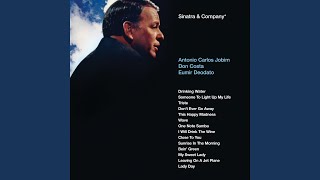
Watch the official One Note Samba (Samba de Uma Nota So)
music video
The Core Meaning Beneath the Wordplay
On the surface, the narrator explains a tune made from a repeated pitch, even calling it a single note
. But the lyric quickly turns that musical lesson into romance. The move from theory to emotion matters. The repeated note is not just a gimmick; it becomes a symbol of focus, loyalty, and return.
The singer says one note leads to another, then compares that chain of cause and effect to being drawn toward a loved one. In other words, love feels natural and unavoidable, almost like harmony following melody. When the lyric refers to an unavoidable consequence
, it links music and desire in one elegant step.
Interpretation: the song argues that depth does not depend on excess. A person does not need endless decoration, endless speech, or endless notes to say something real. A single clear feeling, handled well, can be enough.
How the Lines Build the Theme
The lyric’s structure is very tight, and each section adds a new layer to the same idea.
- First, it introduces a musical limit: one note repeated.
- Next, it explains movement and consequence: new notes come, but they grow from what came before.
- Then, it critiques empty talk. Some people
talk and talk
yet say very little. - Finally, it returns to the opening note and turns that return into a love declaration.
That middle turn is crucial. The song briefly claims to have reached nothing
, but that is not despair. It is irony. The singer has “used up” the scale, only to discover that technical range means less than emotional truth.
So I come back to my first note
as I must come back to you
This is the song’s emotional center. After all the wit, the message lands softly: simplicity becomes devotion. The return to the first note mirrors the return to the beloved.
Why Simplicity Wins
One of the song’s sharpest ideas is its warning against overdoing things. Late in the lyric, the singer suggests that anyone who wants the whole spectacle may end up with no real show at all. That thought can sound funny, but it also fits bossa nova’s larger style.
Bossa nova often favors restraint over grand drama. Instead of a huge belt or a crowded arrangement, it leans on subtle rhythm, close harmony, and intimate delivery. “One Note Samba” turns that aesthetic into a thesis. Better to play the note you understand than to throw out every possible sound.
Interpretation: this can also be read as an artistic manifesto. Jobim and Mendonça seem to be defending precision, taste, and elegance. The song quietly says that art is not about showing off everything a writer or musician can do. It is about choosing the right thing.
The Sound Carries the Joke and the Feeling
Musically, the song is famous for its central trick: an extended run on one pitch over changing chords. As the harmony shifts below that steady note, listeners feel motion even before the melody opens up. That tension between stillness and movement is the whole point.
According to widely cited song analysis and recording history, the tune’s opening holds one repeated pitch for several measures before expanding into a more conventional melodic line. That design makes the lyric self-explanatory: they hear the “one note,” then hear the release from it. The arrangement style heard in classic versions—light guitar pulse, soft percussion, jazz-inflected chords, and cool vocals—keeps the tone airy rather than academic.
This matters for meaning. If the performance were too stiff, the concept would feel like homework. Instead, the groove makes it flirtatious and relaxed. The listener hears intelligence, but also warmth.
Jobim, Mendonça, and the Bossa Nova Moment
Jobim was central to the rise of bossa nova, a Brazilian style that blended samba rhythm with jazz harmony and understated singing. Newton Mendonça, though less globally famous, was an important collaborator in shaping several key songs. In “One Note Samba,” their partnership shows a rare balance of craft and ease.
The song also traveled well. It moved from Brazilian recordings into the American jazz world, where musicians loved its harmonic play and clever structure. That crossover helped turn it into a standard, recorded by artists from Stan Getz to Ella Fitzgerald and Frank Sinatra with Jobim.
Its reception tells readers something important: the song is admired not only because it is catchy, but because it solves a hard problem in a graceful way. It is intellectual without losing charm.
Final Take on Its Meaning
The meaning of One Note Samba (Samba de Uma Nota So) Antônio Carlos Jobim is that simplicity can hold surprise, beauty, and love. Its lyric starts as a lesson in composition, then becomes a gentle statement about returning to what matters most.
At heart, the song says that limits do not kill expression; they can sharpen it. One note, one feeling, one person—if chosen well—can say more than a flood of extras ever could.
Disclaimer: This interpretation separates documented facts about the song’s writers, recordings, and structure from critical reading of its themes. As with many classics, listeners may hear slightly different shades of meaning.








