Why “Killer Joe” Feels So Cool and So Crooked
The meaning of Killer Joe Art Farmer, Benny Golson starts with a character sketch. Benny Golson’s song does not build a deep plot. Instead, it introduces a man everyone is meant to recognize right away: smooth, dressed up, lucky at the track, attractive to women, and proudly allergic to work.
"Killer Joe" - Art Farmer, Benny Golson
Loading lyrics...
Unable to load lyrics
We're unable to display the lyrics at this time. Please try again later.
That makes the song memorable. It is less about suspense than attitude. In both the spoken lyric version and the famous Jazztet recording, “Killer Joe” feels like a portrait of a hustler whose style is part of his power.
A Street-Corner Character, Drawn in Quick Lines
The lyric paints Joe through details of clothing, posture, and habit. They describe a man in a sharp suit, pointed shoes, a black shirt, and a dramatic hat. Before the audience learns anything moral about him, they see him.
That matters because appearance is the first theme. Joe is all presentation. Even the nickname “Killer Joe”
sounds like branding. It suggests danger, cool, and confidence, whether or not he has earned any of it.
The lyric also frames him as a neighborhood type. He stands on a corner like a local legend, someone half-admired and half-warned against. The song’s humor comes from that mix. It is not praising him as a hero. It is showing how charisma can make a questionable life look stylish.
Watch the official Killer Joe
music video
What the Lyrics Say About His Values
Once the song has dressed Joe, it starts exposing him. He carries money, but not the stable kind earned through discipline. The lyric says he has a pocket full of coins because “he likes to play the horses”
. That one detail turns him into a gambler living on chance.
The next idea is even sharper. Joe is called a ladies’ man, but the lyric undercuts that charm by saying he will gladly take women’s money for “any cause”
—especially his own. In plain terms, the song presents him as a user.
The final joke lands hardest. The lyric says the key fact about Joe is that he is “against manual labor”
. That line gives the whole portrait its punch. Joe is not a rebel with a cause. He is a stylish freeloader.
“Pocket full of loot”
“against manual labor”
Those brief phrases sum up the song’s irony: Joe wants the rewards of success without the labor behind them.
Interpretation: Admiration and Critique at the Same Time
Interpretation: The smartest part of “Killer Joe” is its double tone. They can hear the song as amused admiration, but also as social critique.
On one level, Joe is funny and cool. He dresses well, moves easily, and seems impossible to embarrass. Jazz has long loved figures with swagger, and Joe fits that tradition.
On another level, the song quietly mocks him. Every “good” quality has a shadow. His fashion suggests vanity. His money comes from gambling. His romance involves taking, not giving. His proud refusal to work makes him less glamorous than childish.
So the song is not just saying Joe is slick. It is asking why slickness impresses people in the first place.
Why the Instrumental Version Tells the Story So Well
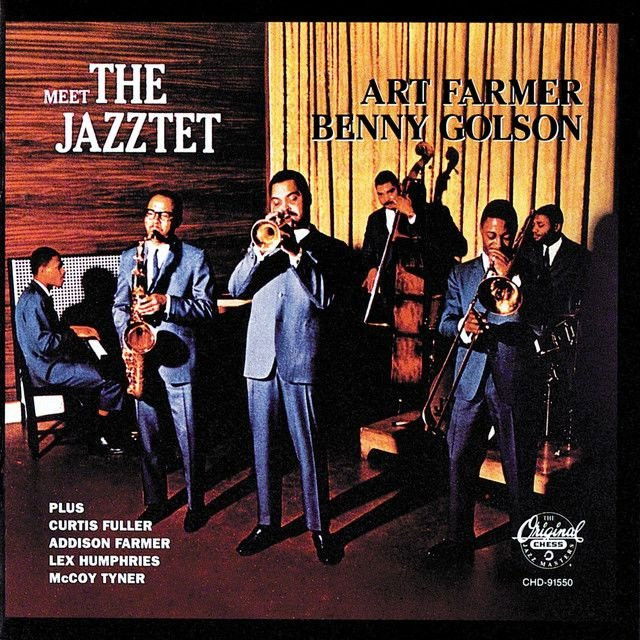
Even without full lyrics, the Art Farmer and Benny Golson recording sells the character. On Meet the Jazztet, recorded in 1960, the tune appears as the final track and became one of the group’s calling cards. Reports from the period said the single sold more than 40,000 copies, helping the Jazztet break through.
That success makes sense when they hear the arrangement. Contemporary notes describe it as “lean and mean”
, led by Farmer’s muted trumpet with softly blended horns over a suspended bridge. That sound is perfect for Joe. The mute gives the trumpet a private, sly, almost whispering quality, as if the band itself is in on the joke.
How the band paints Joe in sound
The instrumentation adds layers to the meaning:
- Muted trumpet: cool, controlled, and slightly teasing
- Soft horn blend: smooth surface, like Joe’s polished look
- Rhythmic ease: confidence without visible effort
- Suspended bridge: a floating moment that suggests slipperiness
Art Farmer’s trumpet does not attack the tune. It glides through it. Benny Golson’s writing leaves room for elegance, but not softness. Joe may be charming, yet the groove keeps him from becoming romantic.
The Jazztet Context Matters
“Killer Joe” came from a strong moment for the Jazztet, the co-led group featuring Farmer and Golson with Curtis Fuller, McCoy Tyner, Addison Farmer, and Lex Humphries. The album is often praised as a hard bop landmark; AllMusic critic Scott Yanow called it “a hard bop classic.”
That context shapes meaning too. Hard bop often blended sophistication with street feeling, polish with grit. “Killer Joe” fits that balance exactly. It is tidy and catchy, but it never sounds too clean. There is always a wink in it.
It also helps that the track stays under five minutes. According to album history, Argo wanted concise, commercially viable sides. That pushed Golson to make the portrait fast and efficient. Joe arrives fully formed.
Final Take on the Meaning of Killer Joe Art Farmer, Benny Golson
The meaning of Killer Joe Art Farmer, Benny Golson is not hidden. It is a sharp, funny portrait of a man who turns style into survival. He lives on image, luck, borrowed money, and charm.
Interpretation: What gives the song staying power is that it never fully condemns or celebrates him. They hear both the attraction and the warning. Joe is cool, but he is also hollow. The music makes that contradiction sound effortless.
That tension is why “Killer Joe” lasts. It captures a familiar American figure: the man who looks successful before anyone asks how he got there.
Disclaimer: This interpretation mixes documented context with critical reading. As with many jazz standards, listeners may hear different shades of meaning in the character and the performance.







