
What "Wir sind die Täter" by Asche, Kollegah Means
A Violent Hook With a Clear Purpose
The meaning of Wir sind die Täter Asche, Kollegah starts with its title: “we are the perpetrators.” That is a blunt line, and the song does not try to soften it. Instead, the track builds a dark rap fantasy built on crime, pursuit, power, and open defiance.
"Wir sind die Täter" - Asche, Kollegah
Wir sind nicht so Balenciaga, dafür Krav Maga
Steroidlager, bisschen schizo
Loading lyrics...
Unable to load lyrics
We're unable to display the lyrics at this time. Please try again later.
Factually, the song is a single from Natural Born Killas, the 2021 collaborative album by Asche and Kollegah. The album was released on January 22, 2021, and the song itself came out earlier as a single on November 20, 2020. Credits listed for the album name Asche as a producer throughout the project, with Johnny Illstrument as a co-producer on this track. During the video shoot in Frankfurt, police reportedly responded after bystanders believed a real robbery was happening, which fits the song’s crime-film aesthetic.
That context matters because the track is less a confession than a performance. It is built like a gangster movie scene. The rappers speak in exaggerated, dangerous images and use them to project control.
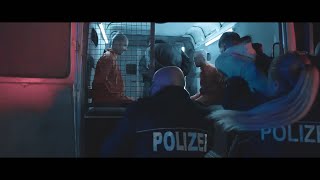
Watch the official Wir sind die Täter
music video
What the Song Is Really About
At its core, the song is about embracing the role of the outlaw instead of denying it. The repeated hook, Wir sind die Täter
, turns accusation into identity. Rather than argue with society’s judgment, they wear it like armor.
Interpretation: This is not best read as literal autobiography line by line. It works more like myth-making. Asche and Kollegah turn themselves into larger-than-life antiheroes who live outside normal rules, answer pressure with force, and treat fear as status.
That idea appears all over the verses. The opening mixes luxury references with combat language, then quickly drops into images of police raids, guns, prison time, and survival. The world they describe is unstable, but they present themselves as the people who can function inside it.
How the Verses Build That Persona
From Pressure to Aggression
The first verse creates a landscape of paranoia and threat. They mention being hunted, waking up to police, carrying weapons, and living in a place with no moral balance. One of the key lines is keine Dualität
, which suggests a world without simple good-versus-evil categories.
That is important to the song’s logic. If the world is already brutal, then brutality becomes their answer. The phrase Täterprognose
pushes this further. It implies that even institutions already see them as likely offenders, so the song flips that label into self-definition.
The Hook as a Mission Statement
The chorus is simple and repetitive on purpose. By repeating Wir sind die Täter
, the song removes ambiguity. The hook does not explain or justify. It declares.
Wir sind die Täter
Wir sind die Täter
Because the refrain is so direct, it changes how the verses land. Every detailed image of robbery, escape, or retaliation feeds back into that one statement. The chorus becomes less a plot point than a brand.
Crime-Movie Imagery, Not Realist Storytelling
One reason the track hits so hard is its visual writing. The lyrics move fast through masks, vans, jewelry stores, mug shots, handcuffs, and special police units. A line like Gott ist groß
sits beside criminal imagery, which creates a strange contrast between gratitude and menace.
Interpretation: The song often sounds like a montage rather than a diary. The details pile up to create a criminal underworld atmosphere. Even when the verses mention personal rise-from-the-bottom themes, the song keeps returning to theatrical danger.
That style fits both artists’ public rap personas. Kollegah is known for hyper-stylized battle rap and cinematic boss language, while Asche often leans into hard, physical, street-centered imagery. On this song, those modes meet in a shared fantasy of dominance.
How the Sound Carries the Meaning
The production helps explain the meaning of Wir sind die Täter Asche, Kollegah just as much as the lyrics do. The beat is cold, heavy, and stripped for impact. It leaves room for each rapper’s voice to sound sharp and forceful.
There is little softness in the arrangement. The drums hit with march-like certainty, and the dark melodic layer gives the song a hunted, nocturnal feel. That supports lines about moving at night and operating under pressure.
Asche’s role as producer across the album also matters. Since Natural Born Killas was largely shaped by his production style, the track feels designed to emphasize menace over reflection. The instrumental does not ask the listener to sympathize. It asks them to witness.
A Story About Power, Fear, and Reputation
Another theme running through the song is reputation. The rappers do not only want to seem dangerous; they want their names to travel ahead of them. The verses describe a world where enemies need mediators and law enforcement needs force to stop them.
A short phrase like Widerstand gegen die Staatsgewalt
shows how the song sets itself against authority at every level. Not just rivals, but systems. In that sense, the track is about refusing domestication. They would rather be feared than accepted.
At the same time, there is a rise narrative under the surface. They reference coming from the bottom and now having money, status, and notoriety. So the song is also about transformation, but in a dark key. Success has not cleaned them up; it has enlarged the legend.
Why the Song Landed the Way It Did
The song’s reception makes sense in that light. It was one of the notable advance singles from an album that later hit No. 1 in Germany, while the single itself charted in Germany as well. Critics were divided on the album, with some praising the energy and others criticizing the aggression and narrow worldview.
That split is built into the song. For fans, its appeal is precision, intensity, and swagger. For others, the exaggerated violence can feel repetitive or empty. Both reactions come from the same feature: the song is intentionally one-dimensional in mood so that its threat never breaks.
Final Take: Owning the Villain Role
The best way to understand the meaning of Wir sind die Täter Asche, Kollegah is to hear it as a deliberate embrace of the villain role. The song turns criminal accusation into identity, identity into spectacle, and spectacle into power.
Interpretation: It is less about truth in a factual sense than truth in persona. They are not asking whether the image is moral. They are showing how rap can turn danger, stigma, and confrontation into a form of authority.
That is why the hook sticks. It is not subtle, but it is effective.
Disclaimer: This interpretation is based on the lyrics, release context, and public credits. As with most rap songs, some lines may be theatrical, exaggerated, or character-driven rather than literal.







