
Soulless Creatures by Aurora
The meaning of Soulless Creatures Aurora centers on a person who feels broken, divided, and hungry for human connection. The song imagines love, memory, fear, and even hate as pieces that can live inside a body. That idea makes the track feel both mystical and painfully human.
"Soulless Creatures" - Aurora
Never knew what is love if kept inside
Nothing but an endless, empty heart
Loading lyrics...
Unable to load lyrics
We're unable to display the lyrics at this time. Please try again later.
Released on Aurora’s 2019 album A Different Kind of Human (Step 2), the song fits her larger interest in emotion, nature, and what it means to stay soft in a hard world. Factually, the song is credited to Aurora Aksnes, Roy Kerr, and Tim Bran. Interpretation: in this track, “soulless creatures” sounds less like monsters and more like wounded people trying to remember how to feel.
The Heart of the Song: A Soul Split in Pieces
At the start, the speaker seems cut off from their own emotions. They admit they never understood love when it stayed hidden, and they describe an inner emptiness. The image is not just sadness. It is more like potential buried underground, waiting for warmth.
That is why the request for connection matters so much. When they ask for a piece of your heart
, they are not asking for romance in a simple pop-song way. They seem to want proof that feeling can still be shared. The line about hands suggests movement too: healing may happen while people keep going, not while they stand still.
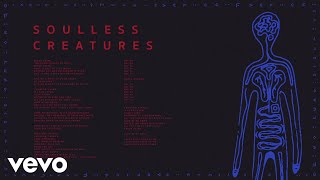
Watch the official Soulless Creatures
music video
A Chorus About Damage, Not Defeat
The chorus is where the song’s pain becomes clearest. The speaker says they may not find anything to save our kind
. That broadens the song from one person’s crisis to something collective. Aurora often writes as if private emotion reflects the state of humanity, and that idea appears here too.
Still, the song does not fully collapse into despair. The repeated image of losing bodily pieces is disturbing, but it leads to one of the track’s most important thoughts: what was lost was also loved. In other words, damage does not erase meaning. Even grief can honor what mattered.
Look at me now
I'm falling apart in daylight
All the pieces that I lost, I have loved
This is the song’s emotional core. Falling apart “in daylight” suggests exposure. Their pain is no longer hidden in the dark. But the final line turns loss into testimony. Interpretation: they are saying that every wound points back to attachment, memory, or care.
Why “Soulless Creatures” Sounds So Strange
Midway through the song, the language gets more dreamlike. Dawn, peace, magnetic sound, and hunting imagery create an eerie landscape. This can sound unsettling, especially when the title phrase soulless creatures
arrives.
There are at least two strong readings here:
- Interpretation: alienation. The “creatures” are people who have become numb, violent, or disconnected from empathy.
- Interpretation: survival mode. The “creatures” are wounded beings acting on instinct because they have not found peace.
The line about carrying pieces of your hate
deepens both readings. The speaker is not only shaped by love. They also absorb harm from others. That makes the song feel realistic beneath its fantasy language: people often carry both tenderness and injury from relationships.
The Narrator Gives “Both Sides”
Near the end, the song reaches a major confession: I gave both sides of me
. This suggests a divided self. One side may be gentle and hopeful; the other may be fearful, angry, or exhausted.
That split self is important to the meaning of Soulless Creatures Aurora. The speaker is not pretending to be pure. They are offering their whole being, including the damaged parts. In that sense, the song becomes about radical honesty. Healing begins when a person stops hiding their contradictions.
A Short Narrative Map
The song roughly moves like this:
- emotional numbness and buried love
- a plea for shared feeling
- fear that humanity cannot be saved
- recognition that loss and love are linked
- acceptance of a divided self
That arc gives the song shape. It begins in confusion and emptiness, then moves toward painful self-knowledge.
How the Production Carries the Meaning
Aurora’s music often mixes intimacy with something otherworldly, and this track is a strong example. According to the album’s credits, Roy Kerr and Tim Bran were involved in writing and production around this era, helping shape her blend of electronic texture and organic feeling.
In “Soulless Creatures,” the slow pacing and spacious arrangement make the song feel suspended, almost floating. The beat is subtle, so the voice and atmosphere do most of the emotional work. Layered vocals create the sense of a self speaking to itself, or of many inner voices rising at once.
The wordless vocal section matters too. It sounds ancient, childlike, and ghostly all at once. Rather than pushing the story forward, it opens emotional space. Interpretation: where ordinary language fails, the voice becomes pure feeling.
Artist Context Matters Here
Aurora’s work regularly treats human beings as both fragile and powerful. Across this album, she explores empathy, identity, and modern disconnection. “Soulless Creatures” fits that pattern by asking what remains when people are fractured by fear, memory, and loneliness.
This context helps explain why the song avoids a neat ending. It is less interested in solving pain than in naming it honestly. That honesty is what makes the track resonate with listeners who feel split between hope and despair.
Final Take: A Song About Loving Through Ruin
The simplest way to understand the meaning of Soulless Creatures Aurora is this: it is about a person coming to terms with being broken, while refusing to deny the love inside that brokenness. The song says that what falls apart still matters. Even lost pieces were once living parts of the self.
That is why the track feels haunting but not empty. It treats human fracture as tragic, but also as proof that they cared, remembered, and tried to connect.
Disclaimer: This interpretation is based on the lyrics, available credits, and Aurora’s broader artistic themes. As with any poetic song, listeners may hear different meanings.








