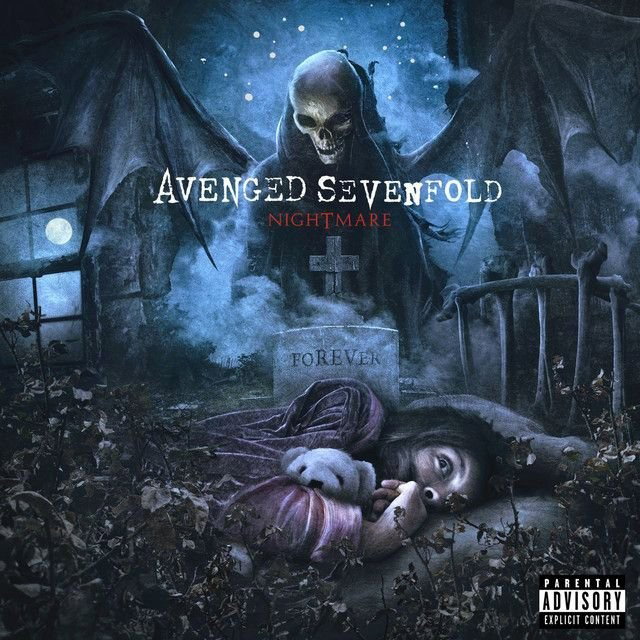
What “Nightmare” Really Means
The meaning of Nightmare Avenged Sevenfold starts with a simple but brutal idea: this song turns guilt into horror. It does not just describe a bad dream. It imagines a person being forced to face the moral cost of their own actions, with no escape and no comfort.
"Nightmare" - Avenged Sevenfold
Now your nightmare comes to life
Dragged you down below, down to the devil's show
Loading lyrics...
Unable to load lyrics
We're unable to display the lyrics at this time. Please try again later.
Released on May 18, 2010, as the lead single from Nightmare, the track arrived at a major turning point for the band. It was their first single after the death of drummer Jimmy “The Rev” Sullivan in 2009, and he still received a songwriting credit alongside M. Shadows. Factually, the song was produced by Mike Elizondo and became a major rock hit for the group, later earning multi-platinum certification in the U.S. Sources: Wikipedia.
A Hell Story With a Human Target
At the lyric level, the song presents a narrator who seems to already belong to a realm of punishment. They speak directly to someone who has fallen into it. The opening warning, your nightmare comes to life
, frames the whole song as consequences becoming real.
The verses build a world of torment, but the bigger point is moral. This victim is not treated as innocent. The song keeps implying they earned this fate through cruelty, selfishness, or corruption. In that sense, the nightmare is less random fear and more final judgment.
Interpretation: The song can be heard as a theatrical vision of hell, but also as a metaphor for what happens when destructive choices finally close in. Its “nightmare” may be death, guilt, addiction, paranoia, or all of them at once.
Watch the official Nightmare
music video
The Chorus Turns Fear Into Blame
The hook is memorable because it does two things at once. It sounds huge and catchy, but it also accuses. When the song says price of evil
, it shifts from horror-movie imagery to a moral reckoning.
That matters because the chorus is not mainly about monsters attacking from outside. It says the victim belongs in this suffering. The line you belong here
is what makes the song sting. Fear becomes blame.
This is why the chorus lands so hard with listeners. It gives them the rush of a metal anthem, but it also sharpens the song’s theme: people can build the very trap that destroys them.
Who’s Talking in “Nightmare”?
One of the most interesting parts of the song is its voice. The narrator sounds mocking, confident, and almost delighted by the victim’s collapse. That voice may be demonic, but it may also represent the victim’s own guilt talking back.
The lyric idea behind victim of your own creation
supports that second reading. The song repeatedly suggests this hell was made, at least in part, by the person now suffering inside it.
Interpretation: There are two strong ways to hear the speaker:
- a literal resident of hell, taunting the newly damned
- the inner voice of guilt, self-hatred, or mental breakdown
Both fit the lyrics, and the band’s dramatic style leaves room for both.
Images of Control, Fear, and Dehumanization
The song’s middle sections widen the theme beyond religion. It starts with damnation imagery, but then it moves into ideas of control, sedation, manipulation, and loss of identity. The victim is processed, numbered, and pushed along like they no longer fully belong to themselves.
That is where the song becomes more than a simple “evil gets punished” story. It also hints at systems that exploit weakness. The lyric phrase medicate your brain
points toward forced numbness and confusion. The result is a nightmare where truth, agency, and sanity all break down.
So the song works on two levels:
- as a punishment fantasy
- as a portrait of psychological collapse
That dual meaning helps explain its staying power. It is vivid enough to feel cinematic, but broad enough for listeners to map onto real fear.
Why the Music Feels So Violent
The production is a big part of the song’s meaning. “Nightmare” opens with a sinister piano figure before the guitars crash in. That contrast matters. The piano suggests dread creeping closer, while the riffs make the threat physical.
M. Shadows delivers the verses with bite and theatrical emphasis, then pushes the chorus into a larger, almost arena-sized shape. The band’s stop-start dynamics also mirror panic: tension rises, drops, and surges again. According to available credits, Mike Portnoy played drums on the album, while The Rev retained songwriting and drum arrangement influence on the song’s era. Source: Wikipedia.
Interpretation: The arrangement makes the listener feel trapped inside the punishment. Even the chant-like section built around fight, not to fail
sounds less like hope than desperation.
Context Makes the Song Hit Harder
“Nightmare” was not just another single. It introduced an album made in the shadow of loss, and that gave the track unusual emotional weight for fans. While the lyrics themselves tell a separate story, the real-life context around The Rev made many listeners hear extra grief, anger, and darkness in the performance.
The song also became one of Avenged Sevenfold’s biggest crossover rock singles, reaching high on U.S. rock charts and helping define the album’s public identity. Its popularity makes sense: it combines radio-ready hooks with extreme imagery and a clear emotional premise.
The Lasting Meaning of “Nightmare”
In the end, the meaning of Nightmare Avenged Sevenfold is about consequences that can no longer be avoided. The song imagines a person forced to face evil, fear, and self-made ruin all at once.
That is why it still connects. It offers horror as spectacle, but also as truth: sometimes the scariest thing is not an outside monster. It is the life a person builds and then cannot outrun.
Disclaimer: This interpretation separates established facts from informed analysis. As with most songs, listeners may find other meanings that fit their own experience.








