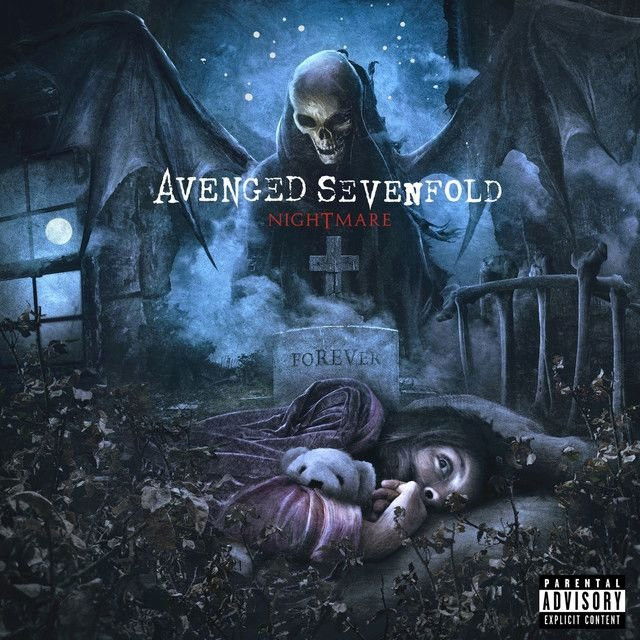
Welcome to the Family by Avenged Sevenfold
Why This Song Hits Like a Warning
The meaning of Welcome to the Family Avenged Sevenfold is less about comfort than initiation. The song sounds like someone being pulled into a harsh truth: life can become unstable, fear can replace certainty, and inner battles do not end with easy answers.
"Welcome to the Family" - Avenged Sevenfold
Do I have your attention?
I know the way you've been living
Loading lyrics...
Unable to load lyrics
We're unable to display the lyrics at this time. Please try again later.
Avenged Sevenfold released the track on Nightmare in 2010, and it became the album’s second single. It is widely documented as one of the songs shaped in the shadow of drummer Jimmy “The Rev” Sullivan’s death, with reports noting that The Rev wrote much of it and M. Shadows finished it during recording. It was released on October 19, 2010, and produced by Mike Elizondo, with Mike Portnoy playing drums on the studio version. Those facts are commonly cited by sources such as Wikipedia and the band’s studio-era coverage.

Watch the official Welcome to the Family
music video
The Core Meaning: Joining the Crowd of the Broken
On the surface, the song addresses a troubled person directly. It opens with Hey kid
, which immediately creates a confrontational, almost parental tone. But the point is not just to scold them. The speaker seems to recognize someone falling apart and says, in effect, that this pain is not unique.
That is why the title phrase Welcome to the family
feels bitter. Interpretation: the “family” is not a loving household. It is the club of people who have learned that emptiness, fear, and confusion are part of being human. In that sense, the song is about disillusionment. A listener moves from thinking life is simple to seeing that it can become chaotic fast.
A popular fan reading also hears addiction in the song, especially in references to reckless living, aggression, numb thoughts, and the idea that You can't win this fight
. That reading is plausible, but the lyrics are broad enough to include depression, grief, or a full mental-health breakdown too.
Who Is Speaking, and Who Are They Addressing?
The voice in the song sounds both personal and collective. At times it feels like one person talking to someone in crisis. At other times, it becomes a group voice, especially when it says that everyone has emptiness inside and answers to find.
That shift matters. The song does not present suffering as one person’s private flaw. Instead, it frames it as a shared condition. Even when the speaker sounds harsh, they are not fully outside the problem. They seem to know it from the inside.
A chorus that turns pain into a shared fate
The refrain keeps returning to the same grim lesson. The person in crisis wants control, logic, or escape, but the song insists there is no clean victory. The repeated warning is not just defeatist. Interpretation: it may be pushing against the fantasy that some struggles can be solved by force alone.
Deep inside where nothing's fine
I've lost my mind
Those lines are brief, but they make the inner condition plain: the problem is not external first. It starts in the mind.
How the Verses Build the Story
The first verse presents a reckless life and a damaged outlook. Then the song moves into a before-and-after contrast. It describes someone who once thought the world was clear, only to end up living in fear. That is one of the strongest clues that the song is about a collapse of certainty.
Later verses add sharper details: violence, loss, blurred memory, and missing people. These details suggest either the consequences of addiction or the emotional fallout of trauma. The phrase only time will alter your vision
points to experience changing how a person sees everything.
Then the song shifts again into images of dethronement and isolation. The person is no longer powerful or in control. They are cut loose in a world they no longer understand. That royal image makes the emotional fall feel even steeper.
The Sound: Heavy Music for a Fractured Mind
Musically, the track supports its meaning through force and tension. The guitars are tight and aggressive, the rhythm section pushes hard, and the vocals move between warning, frustration, and desperation. This is not background music for a subtle emotional drift. It sounds like a confrontation.
Producer Mike Elizondo helped shape Nightmare into a polished but heavy record, and the mix gives the song both punch and clarity. The performance by Mike Portnoy on drums adds precision and urgency. The result is a song that feels unstable without ever losing control, which matches lyrics about minds and lives slipping out of balance.
Context Matters: Nightmare and Loss
Any reading of this song should include the album around it. Nightmare was created during a period of grief after The Rev died in December 2009. Even if every line was not directly about that event, the album’s emotional climate matters.
That context deepens the song’s themes of collapse, fear, and trying to talk someone back from the edge. It also explains why listeners hear both anger and sorrow in it. The track is not only accusing someone of self-destruction. It also sounds like people watching helplessly as someone disappears into it.
Final Take on the Song's Meaning
The meaning of Welcome to the Family Avenged Sevenfold lies in its harsh welcome into disillusionment. It tells a person in crisis that pain, emptiness, and mental struggle are not rare exceptions. They are part of a dark shared reality.
Interpretation: whether listeners hear addiction, depression, grief, or a wider loss of innocence, the song works because it refuses easy comfort. It offers recognition instead of rescue.
Disclaimer: Song meaning is interpretive. This reading separates documented facts about the track from informed interpretation of its lyrics and themes.








