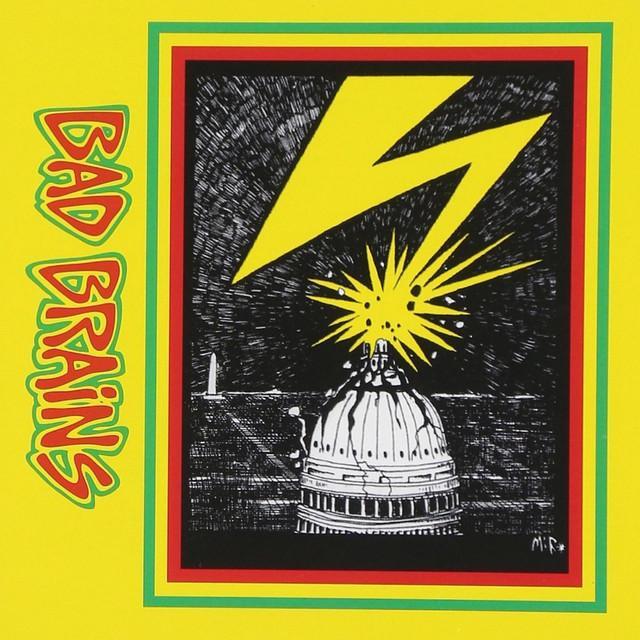
Why “Banned in D.C.” Still Hits Hard
The meaning of Banned in D.C. Bad Brains starts with a simple situation and turns it into a mission statement. On the surface, the song is about being shut out of clubs in Washington, D.C. But Bad Brains turn that rejection into a loud statement of survival, self-belief, and movement.
"Banned in D.C." - Bad Brains
Banned in D.C. with a thousand more places to go
Gonna swim across the Atlantic, 'cause that's the only place I can go
Loading lyrics...
Unable to load lyrics
We're unable to display the lyrics at this time. Please try again later.
They are not asking for approval. They are saying that exclusion will not stop them.
A Local Ban Becomes a Bigger Idea
Bad Brains came out of Washington’s punk scene, but they never fit neatly inside it. They were faster, tighter, and more musically elastic than many of their peers, moving between hardcore punk and reggae with unusual ease. In that setting, a song called Banned in D.C.
carries both a literal and symbolic force.
Factually, the band became closely associated with conflict around local venues and scene gatekeepers, and the song has long been read as a response to being frozen out of parts of their hometown circuit. Their importance to hardcore is widely recognized; even the later compilation Banned in D.C. framed the title as central to their legacy.
Interpretation: the ban matters in the song not just as an event, but as proof that institutions can reject a band without defining it. That is why the lyric does not sound wounded for long. It quickly becomes determined.
Watch the official Banned in D.C.
music video
The Hook Turns Rejection Into Armor
The central refrain is one of the song’s smartest moves. When they say you can’t hurt me
, they turn social exclusion into emotional protection. The idea is clear: once a door is already shut, the threat loses some of its power.
That is what makes the chorus feel so triumphant rather than defeated. Instead of begging to be let back in, the band treats the ban like a badge. The repeated mention of D.C. gives the song a real map and a real target, but the feeling reaches far beyond one city.
For listeners, this is why the track has lasted. Plenty of punk songs are angry. This one is also strategic. It shows how to take someone else’s punishment and strip it of its force.
Motion, Escape, and Refusal
One of the song’s most memorable ideas is the promise to swim across the Atlantic
. That image is obviously extreme, and that is the point. They are saying they will go anywhere if home refuses them.
This exaggeration adds humor, but it also reveals scale. The problem may begin in D.C., yet the response is global. If one scene shuts them out, they will find another.
And if you ban us from your clubsIt's the right time, the right mind
That brief moment sums up the song’s outlook. Even direct exclusion becomes fuel. The line about the “right mind” suggests that attitude matters as much as access. They can lose rooms and still keep purpose.
The “We” Matters as Much as the “I”
Another key to the meaning of Banned in D.C. Bad Brains is the shift from individual defiance to group identity. The lyric we got ourselves
is short, but it carries the heart of the song.
This is not only a singer talking back to enemies. It is a band, and by extension a community, declaring that mutual support can replace outside validation. They will sing, love, and work it out together. That broadens the song from a diss track into a survival ethic.
Interpretation: this is why the song feels uplifting despite its hostile setup. Its answer to rejection is not isolation. Its answer is solidarity.
Why the Sound Makes the Message Stronger
Bad Brains were never just important because of what they said. They mattered because of how they sounded saying it. Their playing on this track is lean, fast, and explosive. Drums push hard, guitar slices through the mix, and the rhythm section keeps everything on a tight rail even when the energy feels close to chaos.
That sound mirrors the song’s meaning. There is almost no room to sit with self-pity. The tempo forces momentum. H.R.’s vocal delivery sounds urgent and spring-loaded, as if every line is trying to break through a wall.
This matters in the history of hardcore. Critics and musicians have long pointed to Bad Brains as one of the genre’s most electrifying bands, with Pitchfork praising the intensity captured across their catalog. In “Banned in D.C.,” that intensity becomes part of the argument: speed itself sounds like refusal.
More Than a Scene Story
It is easy to hear this track as just a document of one conflict in one music scene. But that reading is too small. The song also speaks to anyone who has been told they do not belong, cannot enter, or should stay in their lane.
The later lines about people not being able to close your doors
forever push that idea further. The song suggests that gatekeepers may control access for a moment, but they cannot permanently control energy, talent, or forward movement.
That is one reason Bad Brains remain so influential. They did not merely complain about exclusion. They transformed it into style, velocity, and identity.
Final Take on Its Meaning
So what is the meaning of Banned in D.C. Bad Brains? At its core, it is a song about rejection that refuses to sound rejected. It turns a local slight into a broader statement of resilience, pride, and collective strength.
Bad Brains present banning not as the end of the road, but as proof that they are too powerful, too different, or too uncontrollable for small systems to contain. That is why the song still lands with such force.
Disclaimer: This interpretation combines lyrical reading, musical context, and documented band history. As with any song, listeners may hear different meanings in the same lines.








