Why 'Digital Boy' Still Feels So Modern
The meaning of 21st Century (Digital Boy) Bad Religion comes down to a sharp joke with a dark edge: modern life gives people endless products, signals, and distractions, but not much wisdom. Bad Religion turn that idea into a fast, catchy punk song that feels playful on the surface and uneasy underneath.
"21st Century (Digital Boy)" - Bad Religion
The way you look sometimes
Like a trampled flag on a city street
Loading lyrics...
Unable to load lyrics
We're unable to display the lyrics at this time. Please try again later.
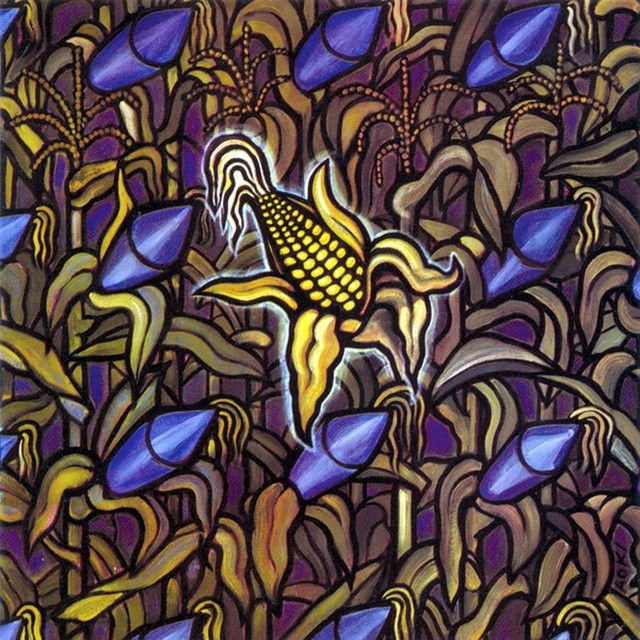
First recorded for Against the Grain in 1990 and then re-recorded for Stranger Than Fiction in 1994, the song became one of the band’s signature tracks and a 1995 single. According to available release history, the later version was produced by Andy Wallace and Bad Religion and reached No. 11 on Billboard’s Alternative Airplay chart. Those facts help explain why the song lasted: it carried a punk message in a form that felt built for wider audiences.
A Punk Anthem About Having Everything and Missing Something
At its core, the song paints a character who is surrounded by consumer comfort but still feels hollow. The famous hook centers on a person who has a lot of toys
but lacks a clear idea of how to live. That contrast is the song’s engine.
Interpretation: Bad Religion are not simply mocking one kid. They are sketching a whole culture. The “digital boy” is less a real individual than a symbol of a society trained to consume, identify, and react.
The early verses sharpen that idea through images of systems and labels. The mention of a barcode, quick I.D.
suggests a life reduced to numbers, products, and easy sorting. Instead of identity coming from values or thought, identity starts to look scanned and packaged.
Watch the official 21st Century (Digital Boy)
music video
The Voice of the Song Is Smart, Bitter, and Self-Aware
The song uses first-person lyrics, but the effect is bigger than one speaker. The repeated self-description, twenty-first century digital boy
, sounds like both confession and satire. It is as if the singer is playing a role to expose the emptiness inside it.
That is important to the meaning of 21st Century (Digital Boy) Bad Religion. The song is not a straightforward diary entry. It is closer to a social caricature told from the inside.
Greg Graffin later told Scientific American that the band was not anti-gadget and that irony drives much of their writing. That brief comment matters because it keeps the song from being flattened into a simple “technology is bad” message. Instead, the target is a culture that confuses stimulation with fulfillment.
Family, Class, and Learned Numbness
The song also points at middle-class life. The lines about a detached father and a medicated mother are not there just for shock. They suggest a home that has comfort but little guidance, plenty of education but not much emotional presence.
Interpretation: The parents in the song may represent a broader social failure. Adults pass down status, products, and passivity, then act surprised when the next generation feels lost.
That helps explain why the chorus lands so hard. The speaker seems over-equipped and under-formed. They have things, but not grounding.
One Clever Bridge Connects the Personal and Political
In the bridge, the song shifts from personal confusion to a challenge: what does the world really offer besides recycled suffering and noise? A line like no control
also nods to earlier Bad Religion titles, which adds a self-aware layer for longtime fans.
Then the ending widens the lens even more. The song briefly references King Crimson’s “21st Century Schizoid Man,” using fragments like iron claw
and screams for more
. That move ties Bad Religion’s punk critique to an older rock vision of a damaged modern world.
innocents raped with napalm fire
everything I want, I really need
Placed together, those lines are jarring on purpose. They smash war imagery into consumer desire. The point is not subtle: modern culture can place atrocity and appetite in the same stream until both start to feel equally consumable.
Why the Music Makes the Message Hit Harder
Musically, the song is built like a pop-punk missile. It runs under three minutes, drives forward at high speed, and uses a huge chorus that sounds immediate even when the lyrics are critical. That tension is a big reason it works.
The production on the 1994 version is cleaner and punchier than the earlier recording, which helped it connect beyond hardcore punk circles. According to band comments reported in release histories, Brett Gurewitz believed the song had real single potential, and the band re-recorded it partly because they were playing it better live and because it could break through.
Interpretation: That slicker sound is not a betrayal of the song’s meaning. It actually strengthens the irony. A critique of mass culture arrives in the form of an irresistible hook, almost proving its own point about how easily messages become products.
Why It Still Feels Current
Even though the song was written in 1990, it feels strangely accurate now. A world of screens, identifiers, constant stimulation, and endless wanting is no longer a warning; it is daily life. The music video, which shows a child transfixed by a TV while the band appears inside the static, now looks like an early image of digital immersion.
That is why the meaning of 21st Century (Digital Boy) Bad Religion still resonates in the United States and beyond. The song saw the coming blend of entertainment, technology, identity, and emotional drift before it fully took over everyday life.
Final Take on Bad Religion’s Message
Bad Religion use speed, sarcasm, and a giant chorus to ask a simple question: what happens when a culture gives people everything except a way to live? Their answer is funny, bleak, and catchy all at once.
That remains the song’s power. It is not just about one “digital boy.” It is about a modern self built from wants, signals, and noise.
Disclaimer: This interpretation mixes documented context with informed reading of the lyrics and may differ from how other listeners hear the song.








