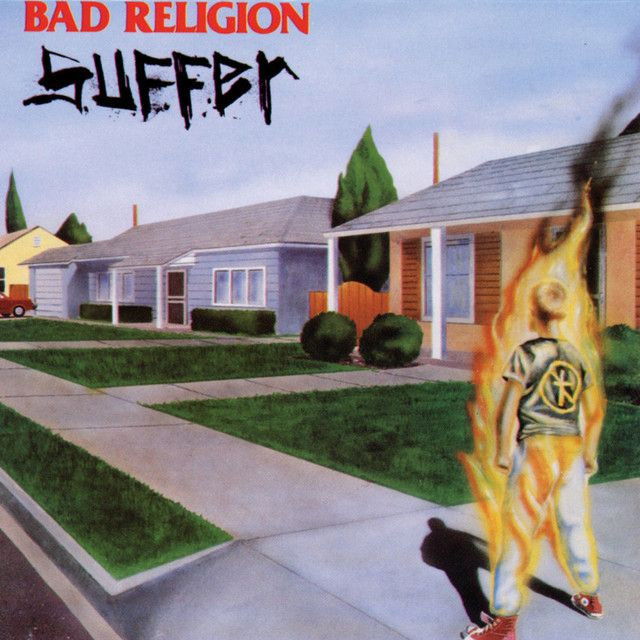
Delirium of Disorder by Bad Religion
Why This Tiny Punk Song Feels So Big
The meaning of Delirium of Disorder Bad Religion comes down to one central idea: they present human life as unstable, confusing, and hard to organize into a clean story. Even so, the song does not end in surrender. It ends in endurance.
"Delirium of Disorder" - Bad Religion
Resolving itself into words
Chaos is the score upon which reality is written
Loading lyrics...
Unable to load lyrics
We're unable to display the lyrics at this time. Please try again later.
Released on Suffer in 1988, the track is only 1:39 long, but it packs in huge images and philosophical language. That was part of what made Bad Religion stand out in punk. According to the album’s documented credits, Suffer was Bad Religion’s third studio album, released September 8, 1988, and produced by the band during a key comeback era after a hiatus (Wikipedia: Suffer).
In simple terms, the song sounds like a person trying to make sense of a mind flooded by chaos. They do not find perfect answers. Instead, they turn disorder into language.
Watch the official Delirium of Disorder
music video
The Core Message Hiding in the Noise
The first verse frames life as something that filters chaos into thought. The line about life being a sieve suggests experience does not arrive as neat truth. It comes through in broken pieces. When the song mentions my anarchy streams
, it connects inner rebellion to the act of expression itself.
That matters because the speaker is not just observing disorder. They are made of it. The next image—where chaos becomes the score on which reality is written—pushes the idea further. The song suggests disorder is not an accident that interrupts life. Interpretation: it may be the basic condition of life.
Then comes the title phrase, Delirium of disorder
. It functions almost like a diagnosis. The song gives the feeling that confusion has gone beyond everyday stress and become a mental atmosphere.
A Speaker Lost in Scale
In the second half, the song gets more personal and more cosmic at the same time. The speaker calls themselves just an atom
in an ectoplasmic sea
. That image makes them sound tiny, almost dissolved inside something too large to map.
This is classic Bad Religion writing: intellectual, compressed, and emotionally sharp. Brett Gurewitz wrote the song, and his lyrics here mix science, spirituality, and alienation into one picture. Factually, the track is credited solely to Gurewitz on Suffer (Wikipedia: Suffer track listing).
Interpretation: the song may be describing existential insignificance. The speaker cannot find stable direction or a clear reason for being. But the point is not just despair. It is also honesty about how uncertain existence feels.
I am just an atom
in an ectoplasmic sea
without direction
or a reason to exist
That short passage is the emotional center of the song. It says the quiet part out loud: they feel small, aimless, and ungrounded.
The Strange Hope at the End
The final image may be the most important. The song describes an anechoic nebula
rotating in the brain, then says it has persuaded the speaker to persist
. In plain language, the same chaos that makes life feel absurd also keeps them moving.
That twist gives the song its power. It does not solve disorder; it survives it. Rather than reaching peace, the speaker reaches continuation.
Interpretation: this can be heard as a punk version of resilience. Persistence does not come from comfort, religion, or certainty. It comes from recognizing the void and continuing anyway.
How the Music Carries the Meaning
The production on Suffer helps this message land. The album was recorded in April 1988 at Westbeach Recorders in Hollywood and engineered by Donnell Cameron and Brett Gurewitz, who was also credited as Legendary Starbolt (Wikipedia: Suffer personnel).
Musically, “Delirium of Disorder” moves with hardcore speed but melodic clarity. The guitars feel urgent, the drums push constantly forward, and Greg Graffin’s vocal delivery sounds controlled rather than wild. That contrast matters.
If the lyrics describe mental and cosmic instability, the band plays with discipline. The result is a tension between chaotic ideas and precise execution. In other words, the form of the song does what the lyrics describe: it turns disorder into structure.
Why It Matters in Bad Religion’s Catalog
This track also reflects why Suffer became so important. The album is widely regarded as a landmark in punk, and sources cited in its history note that it helped shape later melodic hardcore and third-wave punk scenes. The record did not chart high at the time, but its influence lasted, with later praise from outlets like Kerrang! and LA Weekly, while Fat Mike famously called it the record that changed everything
(Wikipedia: Suffer reception).
“Delirium of Disorder” captures that larger Bad Religion identity in miniature. It is fast, smart, anxious, and deeply concerned with meaning. Instead of simple rebellion, they offer philosophical panic.
Final Take on the Meaning
So, what is the meaning of Delirium of Disorder Bad Religion? It is about a person facing a universe that feels chaotic, impersonal, and mentally overwhelming. They see themselves as tiny within it, yet they keep going.
That is why the song still lands. It turns confusion into thought, thought into sound, and sound into survival.
Disclaimer: This interpretation is based on the song’s lyrics, musical context, and documented album history. As with most songs, listeners may hear different meanings in the same images.







