Why 'Can't Smile Without You' Still Hurts
A love song that sounds sunny but feels wounded
The meaning of Can't Smile Without You Barry Manilow comes from a simple emotional idea: they are so tied to another person that everyday joy no longer works without them. On the surface, it is a warm pop ballad. Under that shine, though, the song is about dependence, separation, and the strange way love can make another person feel like the source of one’s whole emotional weather.
"Can't Smile Without You" - Barry Manilow
I can't smile without you
I can't laugh and I can't sing
Loading lyrics...
Unable to load lyrics
We're unable to display the lyrics at this time. Please try again later.
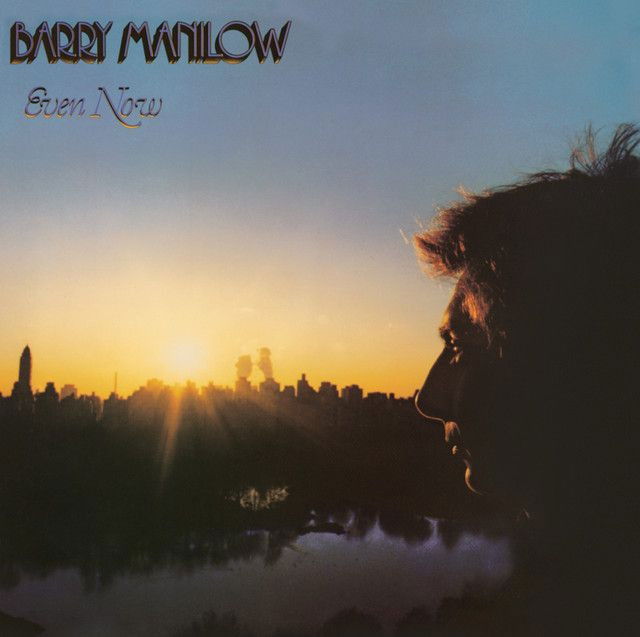
Barry Manilow’s version, released in 1978 on Even Now, became the best-known recording of the song and reached No. 3 on the Billboard Hot 100 and No. 1 on the Adult Contemporary chart, which helps explain why so many listeners treat it as the definitive version. Factually, the song was written by Christian Arnold, David Martin, and Geoff Morrow, and first recorded by David Martin before versions by the Carpenters and Manilow made it travel further.

Watch the official Can't Smile Without You
music video
The core message hides inside the chorus
At its center, the song says that happiness is no longer self-contained. The speaker does not just miss someone; they feel unable to function normally without them. When the chorus repeats can't smile without you
, it turns a common breakup feeling into a full identity crisis.
That is why the song lands so strongly. It does not describe a dramatic betrayal or a long story. Instead, it focuses on ordinary human acts—smiling, laughing, singing—and says even these small things feel blocked. The phrase hard to do anything
makes the sadness feel larger than romance. It sounds like grief moving into daily life.
Who is speaking, and what are they feeling?
The narrator speaks in first person, but the emotion is easy for almost anyone to understand. They are talking to someone who either left, drifted away, or became emotionally distant. The song never gives full details, which is part of its power. It leaves room for listeners to place their own loss inside it.
More than sadness: emotional mirroring
One of the most revealing ideas is that the speaker feels another person’s mood as if it were their own. The lines built around sad when you're sad
and glad when you're glad
show deep emotional mirroring.
Interpretation: This can be read two ways:
- As devotion: they care so much that they naturally absorb the other person’s feelings.
- As unhealthy dependence: they may have lost their own emotional center.
That tension is what keeps the song from becoming just sweet wallpaper. It is affectionate, but it also hints at imbalance.
How the verses deepen the loss
The verses explain that this love once felt magical and life-giving. The person arrived unexpectedly and made the day brighter. Then the song shifts: that bright feeling now seems far away, almost unreal.
You came along just like a song
And brighten my day
Even in this short image, the writing does something smart. Music becomes a metaphor for love itself: memorable, uplifting, and hard to replace once it is gone. That makes perfect sense for Manilow, whose style often treated melody as a direct path to feeling.
Later, the song admits that leaving love behind is taking longer than expected. It pushes back against the idea that happiness can simply be found again on schedule. The emotional message is not “I will recover tomorrow.” It is “I am still stuck in the aftershock.”
Why Barry Manilow's version feels bigger
A big part of the meaning of Can't Smile Without You Barry Manilow comes from the arrangement. Manilow and co-producer Ron Dante gave the song a soft, polished pop setting with a light opening feel and a strong rise in intensity. Contemporary reviews noticed that contrast. Billboard described it as starting sweetly with a soft whistle and building from there, while Record World called it a catchy lost-love song.
That production matters because it creates emotional double vision. The record sounds inviting, even cheerful, yet the lyric is plainly heartsick. Manilow later said he wanted to treat it with a “big smile,” using key changes, a whistle in the intro, and a big ending. That choice keeps the song from collapsing under sadness. Instead, it feels like someone trying to perform brightness while carrying pain.
The key changes tell the story too
The repeated lifts in pitch are not just show-business tricks. They make the feeling sound more urgent each time the chorus returns. As the song rises, the speaker seems less composed, not more. The tune reaches upward while the lyric admits weakness. That contrast is one reason the performance remains memorable.
Context adds another layer
The song’s origin also helps explain its directness. David Martin said the title idea came from a greeting card phrase shown to him by his wife Debbie, and he wrote the song quickly after that. That origin fits the lyric: it has the plain, immediate force of something noticed in everyday life and turned into a universal message.
It also sits comfortably in Manilow’s wider catalog. Even Now is one of his signature albums, and this track shows what made him such a strong interpreter of adult pop: he could take a simple emotional premise and make it feel theatrical without losing sincerity.
Final takeaway for listeners
So what is the song really about? Most clearly, it is about how love can become part of a person’s basic ability to feel joy. Interpretation: It may be romantic devotion, breakup grief, or even emotional overreliance. The song works because it leaves all three possibilities open.
That is why it still connects. They hear a melody that smiles, but they also hear a heart that cannot quite do the same.
Disclaimer: This interpretation separates documented facts from critical reading. Like many pop songs, its meaning can shift based on the listener’s own experience.








