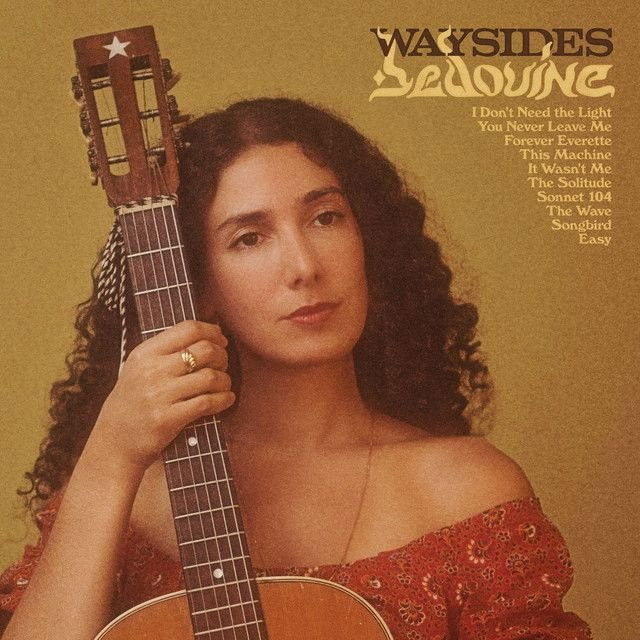
The Meaning Behind The Wave by Bedouine
Bedouine’s “The Wave” sounds soft at first, but its emotions run deep. For listeners searching for the meaning of The Wave Bedouine, the song is best understood as a grief song that also feels like a love song. It holds both at once: longing for someone who feels far away, and the painful fact that they may be unreachable.
"The Wave" - Bedouine
Not really a well, may as well be the sea
I tease the leaves of days gone by
Loading lyrics...
Unable to load lyrics
We're unable to display the lyrics at this time. Please try again later.
A key bit of context sharpens that reading. When Bedouine announced her 2021 album Waysides, reports noted that “The Wave” was written about the death of a close friend and the grief that followed. Bedouine is the stage name of Azniv Korkejian, a Syrian-born, Armenian-American singer-songwriter whose work often blends poetic detail with calm, finely shaped folk music, as outlined in this artist profile.
A Grief Song Disguised as Drift
On the page, the lyrics move like thought itself. They do not tell a strict story with dates and events. Instead, they create a feeling of floating between memory, desire, and loss.
The opening image of a future that overflows, then turns into something sea-like, suggests that time is no longer stable. Tomorrow is not a clear promise. It has become too large to hold. That matters because grief often works like that: the future stops feeling solid, while the past keeps pulling at the mind.
The speaker looks back at old days, then looks upward, then tries to borrow something from time or hope. In simple terms, they seem to want one more moment, one more chance, or one more answer. The line about not being able to hold what they feel leads directly into the refrain ride the wave
. That phrase does not sound triumphant here. It sounds like survival.

Watch the official The Wave
music video
The Speaker’s Distance From the One They Miss
One of the song’s strongest themes is separation. The speaker is not standing beside the person they address. They are searching across distance, almost as if calling to someone beyond the edge of sight.
In the second verse, sorrow is heard in the landscape itself. Bells of sorrow
ring out across the horizon, and the sky shifts color from blue to pink. These details matter because Bedouine often writes with painterly precision. The world is beautiful, but beauty does not cancel pain. Instead, the glowing sky makes the loneliness feel sharper.
The question Are you waiting
carries much of the song’s ache. It sounds simple, but it opens two paths. On one level, it can be heard as someone hoping a lost loved one is somehow still present. On another, it can be heard as the mind bargaining with absence, asking whether connection is still possible.
A Brief Lyric Snapshot
The song reaches its emotional peak when longing turns almost physical:
I'd break my bones
to swim out past the wave
I'd break my heart
to see a different way
This is not just sadness. It is willingness to suffer for contact, clarity, or change. The body and the heart are both on the line.
Why the Wave Matters So Much
The central image is the wave itself. Interpretation: the wave can stand for grief, because grief comes in surges. It rises, crashes, recedes, and returns. A person cannot fully control it. They can only endure it, move with it, or be knocked over by it.
But the wave may also represent the boundary between the living speaker and the absent other. The speaker wants to go past the wave
, which suggests that the real goal is not just emotional relief. They want to cross into a place where understanding, reunion, or peace is possible.
The image of the island adds to this reading. An island is isolation made visible. The speaker can only stare outward from where they are. That is a powerful metaphor for mourning: being stranded with feeling, unable to bridge the gap.
How Bedouine’s Sound Carries the Meaning
“The Wave” would not hit as hard if it were arranged differently. Bedouine’s style is rooted in contemporary folk, but her songs often feel suspended in time. The production around her voice is spare, clear, and patient. That restraint matters.
Instead of using a dramatic swell to tell listeners how to feel, the song leaves space around the words. Gentle acoustic textures, a slow pulse, and her controlled vocal delivery mirror the emotional state of someone trying not to come apart. The performance is tender rather than explosive, which makes lines about overwhelming feeling more believable.
That contrast is central to the song’s power. The lyrics describe emotion too big to contain, but the singing stays composed. The result feels like grief in public: intense inside, measured outside.
Artist Context Helps Explain the Song
Bedouine has long written songs that balance intimacy and mystery. Her work often uses natural imagery, movement, and quiet observation rather than blunt confession. That makes “The Wave” very much her style, even though its subject is especially raw.
Factual context also matters here. “The Wave” appeared on Waysides, a 2021 album assembled from older songs and demos that Bedouine revisited and completed. That background helps explain why the song feels timeless and inward. It sounds less like a trendy single than a private meditation finally brought into the open.
Two Strong Readings of the Song
Both of these can be true at once:
- Literal grief reading: the song addresses a friend who has died, turning distance into sea, sky, and horizon imagery.
- Broader emotional reading: the song speaks to anyone facing a separation they cannot fix, whether by death, distance, or emotional silence.
That dual meaning is why the song lasts. It is specific enough to hurt, but open enough for many listeners to enter.
What “The Wave” Finally Says
The meaning of The Wave Bedouine lies in its picture of grief as motion. The speaker cannot master loss or explain it away. They can only feel it, watch it, and try to move through it without losing the bond that remains.
In that sense, “The Wave” is less about closure than endurance. It says love does not disappear when someone does. It changes shape, becomes weather, becomes water, becomes a distance the singer keeps trying to cross.
Disclaimer: This interpretation is based on the lyrics, available artist context, and the song’s musical presentation. Like all great songs, it can support more than one valid reading.








